Turning 3D printing into a real business is very different from printing for fun.
You’re no longer asking “Can this printer make a cool Benchy?”
You’re asking things like:
- Can this printer run 10–12 hours a day without drama?
- Will my orders ship on time if I add 50 new Etsy listings?
- Is the print quality good enough that customers are happy when they open the box – every single time?
This guide is written specifically for small businesses and Etsy sellers who need prosumer-level 3D printers: machines that sit between hobby toys and industrial monsters.
The focus is on:
- Reliability – minimal babysitting, fewer failed prints
- Speed & throughput – so your time doesn’t get eaten by one big order
- Consistency – same part, same quality, day after day
- Real-world community feedback – what’s actually working in 2024–2025-2026
We’ll cover both FDM printers (great for decor, organizers, functional parts, enclosures) and resin printers (perfect for jewelry, miniatures, ultra-detailed items), then map them to typical Etsy niches and budgets.
Quick Recommendations
If you just want the shortlist and then go back to printing, start here.
Best Overall FDM: Bambu Lab X1 Carbon/Creality K2 Plus Combo
Option A: Bambu Lab X1 Carbon — Fast, Polished, Proven
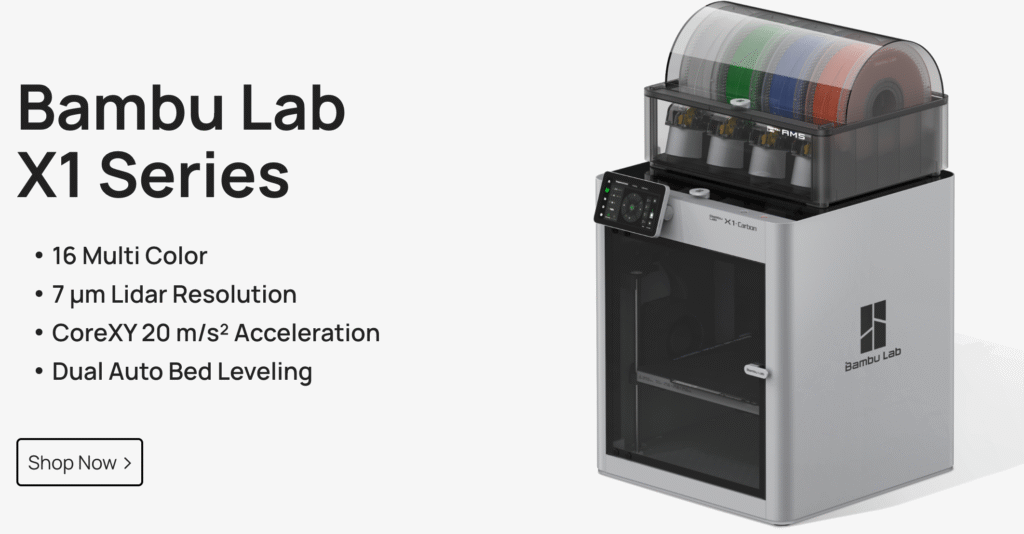
The X1 Carbon remains the most balanced prosumer printer on the market. It’s fast, extremely reliable, and requires almost no tuning.
Why it’s a top choice
- CoreXY + input shaping delivers high throughput
- Enclosed chamber minimizes warping on ABS/ASA
- AMS support enables effortless multi-color and multi-material jobs
- Excellent track record in small business print farms
- Great if you want the “plug-and-play, just works” experience
Ideal for: organizers, decor, toys, multi-color items, personalized gifts, everyday shop production.
Option B: Creality K2 Plus Combo — Larger Volume & Strong Value for Scaling

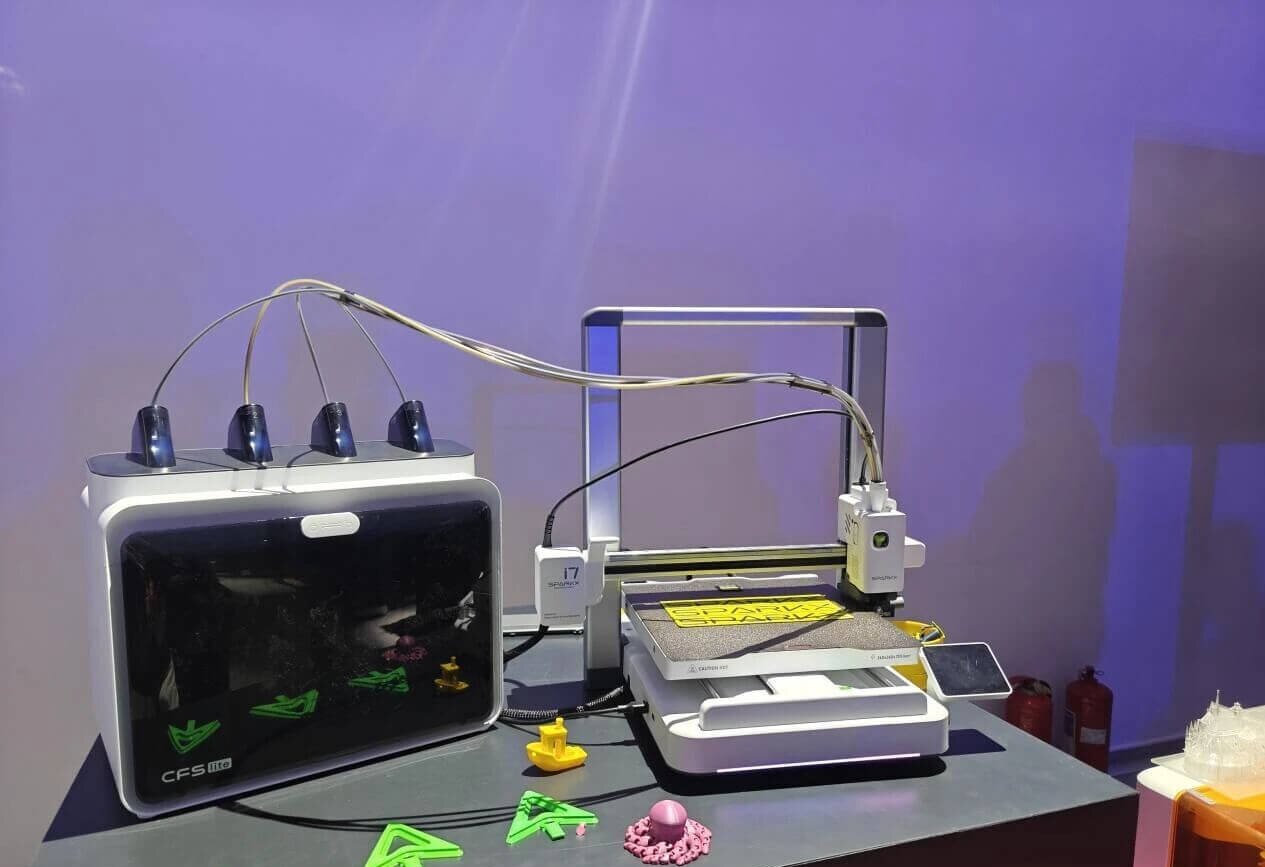
- Enjoy Printing in Multiple Colors: By hooking up as many as four CFS units together, you are able to…
- High Speed Printing: Step-servo Motor System 30000mm/s² accelaration, 40mm³/s High-flow and quiet….
- Multi Material Capability: K2 Plus Combo equipped with Actively Heated Chamber & High-temp Nozzle…
- Dual AI Cameras: K2 Plus uses an Al camera on the chamber side to watch over spaghetti failure,…
- Ingenious Anti-tilt Auto Leveling: K2 Plus features dual independently motorized Z-axes for…
The Creality K2 Plus Combo is the newer contender — offering a larger build volume, AMS-style multi-material capability, fast CoreXY motion, and a strong value proposition for business users.
Why many small-business creators consider it
- Big build area (larger than X1C) → more products per batch
- CoreXY + high-speed printing similar to Bambu’s performance tier
- Multi-material support via Creality’s AMS-style system
- Better price-to-volume ratio — especially if you’re planning to scale to 2–3 units
- Strong for shops prioritizing capacity and versatility over ecosystem polish
Ideal for: planters, large decor pieces, higher-volume production, multi-color prints, batch jobs.
Best Multi-Color / Multi-Material FDM: Bambu Lab H2D + AMS 2 Pro
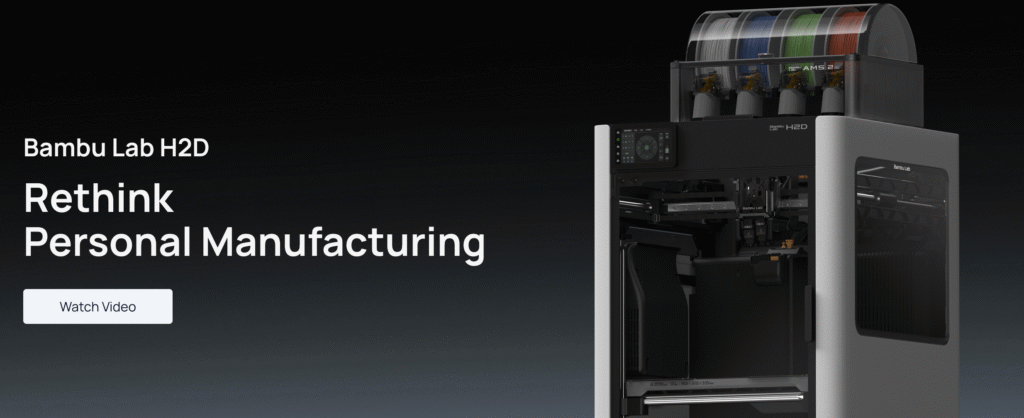
If your products are all about color, visual impact, and premium materials, the Bambu Lab H2D is the next-gen option.
- Dual-nozzle print head: two colors/materials without massive purge waste
- Active heated chamber + large build volume for serious engineering filaments
- AMS 2 Pro handles multiple spools and keeps them dry
- Optional laser / pen toolheads turn it into a multi-function production platform
Ideal if you sell: high-end multi-color prints, functional parts in ABS/nylon/CF, premium decorative pieces where color and material justify a higher price.
Best Professional FDM Quality & Farm Integration: Prusa Core One
No products found.
For creators who care more about perfect tolerances and uptime than flashy gadgets, Prusa Core One is a very serious option.
- Fully enclosed CoreXY with a focus on dimensional accuracy
- Built to run in print farms and labs, 24/7
- Integrates cleanly with PrusaSlicer + Prusa Connect to manage multiple printers
- Open, repairable ecosystem with long-term parts and firmware support
Ideal if you sell: precision parts, functional components, B2B prototypes, and anything where “it fits first try” matters more than multi-color tricks.
Best Budget FDM Workhorse: Bambu Lab P1S / P2S
If you want Bambu-level speed without X1C pricing, P1S / P2S is the entry point.
- Same CoreXY motion system and high speed as the X1C
- P1S is semi-enclosed, better for ABS/ASA than the open P1P
- Compatible with AMS for multi-color later if business grows
- Fantastic “print farm” candidate when you want multiple units instead of one expensive machine
Ideal if you sell: PLA / PETG decor, organizers, toys, simple functional prints and want high throughput on a tighter budget.
Best Large-Volume Resin: Elegoo Saturn 4 Ultra (16K)

- 【16K Magic, Precision Redefined】Designed to capture the finest details for exquisite models,…
- 【Smart Tank Heating, Flawless Prints at 30 °C】ELEGOO Saturn 4 Ultra 16K 3D Resin Printer…
- 【New AI Camera with Light for All-Day Monitoring】The AI camera offers real-time monitoring and…
- 【Auto-Leveling, Plug-N-Play】Achieve effortless precision with just a click. Saturn 4 Ultra 16K…
- 【Tilt Release Innovation, Blazing Fast】ELEGOO Saturn 4 Ultra 16K Resin Printer features advanced…
For resin sellers who want to print lots of small items in one go, the Elegoo Saturn 4 Ultra 16K hits a sweet spot.
- 16K screen, tiny XY pixel size for very sharp detail
- Decent build volume: multiple minis/jewelry pieces per plate
- Heated vat + auto-leveling reduce failed prints and cold-resin issues
- Price stays in the “prosumer” band instead of full industrial
Ideal if you sell: tabletop miniatures, jewelry masters, small figurines and collectibles at moderate-to-high volume.
Best Professional Resin: Formlabs Form 4
If you want near industrial-grade resin printing without going full factory, Formlabs Form 4 is the benchmark.
- Designed for professional studios, dental labs, jewelers
- Very high success rate and polished workflow (auto resin handling + dedicated wash/cure gear)
- Huge material library: castable, flexible, tough, biocompatible and more
- Higher upfront and material cost, but minimal time wasted on tinkering
Ideal if you sell: premium jewelry, dental models, high-detail art toys, or client work where reprints and failed jobs are more expensive than the printer.
Best Budget Resin Workhorse: Anycubic Photon Mono M5s
No products found.
If you want resin detail without killing your cash flow, Anycubic Photon Mono M5s is a very strong “prosumer on a budget” choice.
- 12K LCD with excellent detail
- Auto leveling / “no-level” design reduces setup headaches
- High speed for its price bracket, good for batch printing
- Widely available spare parts and a huge user community
Ideal if you sell: minis, charms, small props, decorative accessories, and you want to start or scale without jumping straight into Formlabs pricing.
How to Choose a 3D Printer for Your Small Business
Before you fall in love with any specific model, it’s worth stepping back and looking at your business model first.
The right printer for you depends less on hype, more on what you actually sell and how you work.
1. Start With Your Products, Not the Machine
Ask yourself a few brutally practical questions:
- Are your products small and highly detailed, or larger and functional?
- Is your brand about premium, finely crafted pieces or fast, affordable prints?
- Do you mostly print one-offs and custom orders, or repeatable bestsellers in batches?
Rough rule:
- Jewelry, miniatures, fine art, figurines → Resin
- Home decor, organizers, plant pots, cosplay props, tools → FDM
- Technical parts, enclosures, brackets, jigs → Enclosed FDM with higher-temp materials
- Visual, colorful Etsy items → FDM with AMS/dual-nozzle or resin with paints/finishes
Many successful Etsy sellers end up with one good FDM + one good resin printer to cover both ends.


2. Key Prosumer Features That Actually Matter
When you’re running a business, these features are not “nice to have” – they directly affect profit and sanity.
For FDM printers:
- CoreXY + input shaping → higher speed at acceptable quality
- Enclosed or at least closable chamber → less warping, more stable output
- Automatic bed leveling → fewer first-layer failures (and fewer all-night disasters)
- Filament runout / clog detection → saves long jobs when something goes wrong
- Multi-material options (AMS, IDEX, dual-nozzle) → more product types without manual color swaps
For resin printers:
- High-resolution LCD (8K / 12K / 16K) → sharper details in minis and jewelry
- Good build volume for your parts → more items per plate = lower labor per piece
- Heated vat or stable environment → fewer failed prints in cold seasons
- User-friendly software + exposure tools → less time trial-and-error per resin
Don’t get blinded by marketing numbers like “600 mm/s” or “16K” alone. The real business win is consistent, predictable prints that ship on time.


3. Business Considerations Most Creators Ignore
Once you treat the printer as business infrastructure, a few less sexy but crucial factors show up:
- Throughput, not just speed A very fast printer that fails one in five jobs is worse than a slightly slower machine that just quietly prints 100% of the time. Look at average success rate per week, not just a single hero print.
- Cost per part Factor in: filament/resin, supports, energy, consumables (nozzles, FEP films, LCDs), failed prints, and your time. Some ecosystems (e.g. Formlabs) have higher material cost but lower wasted time.


- Scalability / print farm potential If things go well, can you easily add a second, third, fourth unit?
- Bambu + AMS: easy to line up multiple units
- Prusa: great farm tools and very repairable
- Some cheaper brands: good single machine, painful as a farm
- Support and spare parts Killer question: If this printer breaks in Q4 peak season, how quickly can I get it running again? Brands with solid support + readily available spares are worth paying extra for.
- Workflow fit Consider your whole pipeline: design → slicing → printing → post-processing → packing → shipping. Look for printers whose software and ecosystem reduce friction in that chain instead of adding steps.
Best FDM 3D Printers for Small Business (2025-2026 Prosumer Picks)
FDM printers are the backbone for most Etsy shops producing decor, organizers, planters, toys, functional items, and personalized goods.
The goal here isn’t just pretty prints—it’s speed, reliability, business uptime, and low cost per part.
Below are the six FDM printers repeatedly recommended across Reddit, YouTube, Quora, and pro maker communities for small-business production in 2025.
Bambu Lab X1 Carbon — Best All-Around for Etsy & Small Businesses
If you want one printer that can realistically carry your shop, this is it.
The Bambu Lab X1 Carbon has become the “default prosumer choice” due to its mix of speed, stability, and automation.
Why It’s a Top Pick
- Insanely fast (CoreXY + Input Shaping) — cuts print times by 40–70% vs older bedslingers
- Enclosed chamber — excellent for ABS/ASA, PETG, CF filaments
- AMS support — load 4 (up to 16) materials for automatic color/material switching
- AI features — spaghetti detection, vibration compensation, auto calibration
- Proven in print farms — many Etsy sellers run multiple X1Cs 12+ hours/day with minimal babysitting
Community feedback is extremely consistent:
“Bambu printers just print. I run mine all day for my shop — easily the most reliable machine I own.”
Pros
Cons
Best For
- Print-on-demand shops
- Multi-color Etsy items
- Decor, organizers, toys
- Cellphone stands, electronics enclosures, gift items
Bambu Lab H2D — Best Multi-Color + High-End Engineering Printer
The H2D is Bambu Lab’s 2024 flagship and a true prosumer machine. It upgrades almost everything the X1C can do.
Why Small Businesses Choose It
- Dual-nozzle print head → multi-color without massive purge waste
- Active heated chamber → stable ABS, ASA, nylon, carbon-fiber nylon
- Huge build volume → excellent for larger products or batch printing
- AMS 2 Pro → dryer + multi-spool auto feeding
- Optional laser & plotting toolheads → turn it into a multi-function workshop
This makes the H2D ideal for shops that want to expand product types, not just print faster.
Pros
Cons
Best For
- Premium Etsy sellers
- Multi-color branding products
- High-value engineering prints
- Functional goods with ABS/nylon
Prusa Core One — Best for Precision & 24/7 Business Reliability
The Prusa Core One represents Prusa’s move back into the professional space: a true enclosed CoreXY built for production environments.
No products found.
Why Pros Love It
- Top-tier dimensional accuracy (better than Bambu in some precision tests)
- Fully enclosed temperature control → excellent for ABS/ASA
- Prusa Connect → easy farm management
- Designed for 24/7 print farms, with industrial-level support
- Strong open ecosystem (parts, firmware, slicer)
This machine shines not for marketing gimmicks, but for print-after-print consistency.
Pros
Cons
Best For
- Small businesses with repeatable SKUs
- Tight-tolerance parts
- B2B services (prototyping, mechanical designs)
- Print farms wanting stability rather than flash
Prusa MK4 — Best Sub-$1000 Reliable Workhorse
The MK4 is simply the most consistent open-frame FDM printer under $1000. It won’t match Bambu for speed, but it beats most machines for repeatability and reliability.

- With automatic calibration, always-perfect first layer, one-click printing and many other useful features, the MK4S is the best choice for your home, workshop, or company. All print profiles and configurations are in-house tested ensuring that the MK4S effortlessly delivers top-quality 3D prints at a press of a single button from the very start.
- With automatic calibration, one-click printing and an always-perfect first layer, the MK4S is the best entry into the world of 3D printing. Its open design, the result of more than 10 years of evolution, ensures easy maintenance, upgradability and great accessibility. Plus, a detailed handbook guides you through every aspect of the MK4S. When you get the assembled printer, simply take it out of the box, plug it in and once it finishes the automatic calibration, you can start printing right away
- This listing is a DIY KIT for self-assembly; We also offer a fully built and tested 3D printer.
- The printer includes a Free sample of Prusament PLA 2×25 g; Prusa Research offers lifetime technical assistance and 24 hours professional customer service.

Why Business Users Pick It
- Extremely predictable output
- Perfect first-layer thanks to Load Cell bed-sensing
- Works flawlessly with PLA/PETG (most Etsy categories)
- Open, repairable, long-term supported
Pros
Cons
Best For
- Shops with consistent PLA/PETG production
- Beginners who want stable results, not tinkering
- People planning to slowly add a farm of reliable machines
QIDI Plus 4 — Best for High-Temperature Prints on a Budget
The QIDI Plus 4 is the “budget industrial” choice: more capable than its price suggests, especially for engineering materials.

- Large Size & High-speed Printing: The X-PLUS4 has a large print size of 12 x 12 x 11in, which allows you to print multiple models at the same time, significantly increasing printing efficiency. The X-PLUS4 Inheriting the high speed Core XY structure of X-PLUS3, making it ideal for both professionals and beginners seeking faster and more efficient printing.
- Second Generation Active Chamber Heating System: QIDI PLUS4 has upgraded the chamber heating function. It has a Ultra-high heating power of 400W. And it adds air circulation design and dual-layer insulation to make the chamber temperature more balance and consisten. It can effectively reduce warping and cracking when printing high-temperature filaments and improve print quality.
- Higher printing temperature & Wide Material Compatibility: The X-PLUS4 comes with an upgraded 80W high-temperature hotend and multi-metal integrated throat nozzle, reaching a maximum temperature of 370°C. Designed for faster installation and removal, it reduces clogging risks and offers exceptional wear resistance. This setup supports a wide range of high-temp filaments, including PPS-CF, PPA-CF/GF, ABS, ASA, PC, PA, PET and more, making it perfect for diverse printing applications.
- Powerful & Easy to Operate: Unbox to print in 10 mins. Remote print, real-time progress tracking is always available through the qidi mobile app or qidi studio slicer. X-PLUS4 is also equipped with a HD camera for real-time remote monitoring and time-lapse photography. Filament wrap and break detection features reduce filament waste. It makes it easy for you to achieve total intelligent control, ensuring a safer, more efficient and convenient experience.
- Stronger and More Durable: The PLUS4 features an independent dual motor-driven Z-axis, a 6mm thickened aluminium hot bed platform, while upgraded linear shafts & lead screws to 10mm diameter. This increases the strength and flatness of the printer, ensuring high precision and quality printing.
Highlights
- 370°C high-temp hotend
- Heated chamber up to ~60°C
- Prints nylon, PC, PA-CF with excellent stability
- Large build volume for under $900
If you need a machine that prints strong, functional, technical parts, this is the best mid-budget option.
Pros
Cons
Best For
- Replacement parts
- Functional goods
- Engineering prototypes
- Etsy shops selling strong, durable items
Raise3D Pro3 — Best for Industrial-Level Production & IDEX Printing
If your business model demands dual-material, soluble supports, or long batch jobs with minimal failure, the Pro3 stands out.

- Huge Build Volume: Single: 11.8″ × 11.8″ × 11.8″ Dual: 10″ × 11.8″ × 11.8″ with built-in Hyper FFF Technology
- Maximum speed of 500 mm/s and standard speeds of 300 mm/s, 200-300 mm/s high-speed printing of Hyper Core high-performance composite materials, 100-150 mm/s speed of Industrial composite materials
- Maximum Nozzle Temp: 320ºC, Max Build Plate Temp120ºC.
- Prints with a Variety of Materials up to 320ºC Including: PLA/ ABS/ HIPS/ PC/ TPU/ TPE/ PETG/ ASA/ PP/ PVA/ Nylon/ Glass Fiber Infused/ Carbon Fiber Infused/ Metal Fill/ Wood Fill
- Auto Mesh-leveling with Flatness Detection, Flexible Steel Plate with Buildtak,
Why It’s Professional-Grade
- IDEX → two independent nozzles
- Fully enclosed → excellent layer adhesion
- Industrial reliability
- Designed for service bureaus and small-batch manufacturing
Many commercial shops use the Pro3 for PVA support prints, polymer casings, and high-value functional parts.
Pros
Cons
Best For
- Production bureaus
- Shops printing complex ABS/nylon parts with dissolvable support
- Higher-end Etsy sellers offering premium mechanical items
Best Resin 3D Printers for Etsy Sellers (2025-2026 Prosumer Picks)
If your Etsy shop sells miniatures, jewelry masters, custom figurines, charms, rings, ultra-detailed decor, molds, or boutique art pieces, resin printers are where your business actually makes money.
In 2024–2025, resin printers have improved massively in:
- Resolution (8K → 12K → 16K)
- Speed
- Heating + stability for consistent prints
- Ease of use (auto-leveling, exposure assistants, smart calibration)
Below are the resin printers most consistently recommended by Reddit users, YouTube experts, and professional makers for business use, not just hobby fun.
Formlabs Form 4 — Best Professional Resin Printer (2025)
If your shop sells premium items where failed prints = lost money, the Formlabs Form 4 is in a league of its own.
No products found.
Why It’s the Gold Standard
- 5× faster than Form 3 thanks to its upgraded LFS tech
- Auto resin management (dispensing, mixing, leveling)
- Market-leading reliability — consistently high success rate
- Ecosystem of 40+ engineered resins
- Optional Form Wash + Form Cure gives a fully automated workflow
For many jewelers and designers, the workflow alone justifies the price.
Pros
Cons
Best For
- Premium Etsy jewelry sellers
- Dental studios / mold makers
- Art toy designers, high-detail sculpting
- Shops prioritizing zero-fail workflow above cost
Elegoo Saturn 4 Ultra (16K) — Best for High-Detail Etsy Sellers Under $600
This is the prosumer sweet spot for affordable high-detail resin printing in 2025.
- 【16K Magic, Precision Redefined】Designed to capture the finest details for exquisite models, ELEGOO Saturn 4 Ultra 16K Resin 3D Printer boasts ultra-high resolution, ensuring that every model bursts with smooth surfaces, lifelike textures and impeccable precision.
- 【Smart Tank Heating, Flawless Prints at 30 °C】ELEGOO Saturn 4 Ultra 16K 3D Resin Printer features an intelligent tank heating system that continues heating the resin to keep it at a perfect 30 °C, ensuring better fluidity and layer adhesion. This drastically reduces defects like bubbles and layer separation, leading to higher success rates and better print quality.
- 【New AI Camera with Light for All-Day Monitoring】The AI camera offers real-time monitoring and instant alerts for empty build plates and warped models, enabling you to address them without delay. With a built-in chamber light, you can easily check on your print progress day or night, and the time-lapse feature lets you effortlessly capture and share your creative journey.
- 【Auto-Leveling, Plug-N-Play】Achieve effortless precision with just a click. Saturn 4 Ultra 16K Impresora 3D Resina features automatic leveling with no manual adjustment needed. Its intuitive workflows and out-of-the-box performance make it as easy to use as a smartphone, perfect for users of all skill levels.
- 【Tilt Release Innovation, Blazing Fast】ELEGOO Saturn 4 Ultra 16K Resin Printer features advanced tilt release technology, allowing for quick and effortless model peeling. With impressive speeds of up to 150 mm/h, you can bring your most intricate designs to life in no time, all while ensuring unmatched detail and quality in every print.
Why It’s a Breakout Hit
- 16K monochrome LCD with ultrafine 14×19 µm pixels
- Heated resin vat to prevent printing issues in cold rooms
- Automatic bed leveling
- Fast print modes up to 150 mm/h
- Excellent build volume → multiple pieces per batch
Community feedback highlights consistency, ease of use, and superb detail for the price.
Pros
Cons
Best For
- Miniature sellers
- Jewelry masters
- Figurines, collectibles
- High-detail small products at scale
Anycubic Photon Mono M5s — Best Budget Resin Workhorse
The M5s punches far above its price class. If you’re starting a resin-based Etsy shop or adding a farm of budget printers, this is a top choice.

- 【Ultra Fast Speed】Anycubic Photon Mono M7 Pro achieves a high speed of 170mm/h in a 0.1mm layer thickness test using high-speed resin. At the same time, the printing speed of standard resin reaches 130mm/h, breaking boundaries and greatly improving printing efficiency, achieving truly fast printing
- 【High-Precision 14K】With a 14K monochrome LCD screen with 13312*5120 resolution and 16.8 ×24.8 μm XY resolution, the Photon Mono M7 Pro prints holes as small as 0.3 mm in diameter, which is more than enough to handle fine printing tasks and make your models stand out
- 【Advanced COB LighTurbo 3.0】The COB light source system, combined with Fresnel lenses and front-facing reflectors can reach the light angle within 3°, and light uniformity is more than 90%. Anycubic LighTurbo 3.0 is also equipped with a light-off compensation algorithm, which ensures that every layer of the model is successfully exposed and removed from the mold, significantly improving the printing success rate
- 【Upgraded Assisted Features】The dynamic temperature-controlled resin vat will adjust the temperature of the resin material to maintain the optimal print temperature at all times. And resin auto-fill feature enables automatic filling and one-key recycling of remaining resin
- 【Intelligent Design】Building on component connection status detection, residue detection, resin level Detection, failed print detection, and release film lifespan management, Photon Mono M7 Pro has added build plate installation detection. 6 types of intelligent detection can achieve startup detection, simplify the printing process, and reduce problems caused by misoperation
Why It’s Smarter Than Most Budget Printers
- 12K screen (≈19×24 µm resolution)
- Auto-leveling “no-level” design
- Fast printing (70–105 mm/h)
- Huge community with proven settings
- Known for reliable batch production
It’s the “cheap printer that prints like an expensive one.”
Pros
Cons
Best For
- Miniatures, charms, small objects
- Batches of 10–40 small items per plate
- Shops prioritizing ROI and cost per part
Phrozen Sonic Mini 8K — Best for Ultra-Fine Detail & Master Models
If detail is king in your niche, the Sonic Mini 8K remains one of the best micro-precision printers available.

- Beginner Friendly – With an attractive value for money and user-friendly specifications, the Phrozen Sonic Mini 8K is the ideal 3D printer for beginners.
- Art with Precision – Immerse yourself in a world of detail with an XY resolution of 22 microns and the 8K mono LCD where every nuance of your works comes to life.
- Compact and Powerful – The resin printer offers sufficient space to let your creativity run wild with a printing volume of 16.5 x 7.2 x 17 cm and a load capacity of up to 22 lbs.
- Wide Compatibility – The support for open source software and your favourite slicers such as Lychee, Chitubox or Tango assures you the freedom to realize your ideas without restrictions.
- Sophisticated Technology – Thanks to the precise Z-axis calibration, the printer ensures even and accurate printing and takes your craft to a new level.
Why It’s Still Relevant
- 22 µm XY resolution delivers near-sculptural micro detail
- Extremely sharp edges and textures
- Trusted by jewelers and figure painters
- Very stable over long-term use
Many Etsy sellers use this for the master model, then cast or mold from it.
Pros
Cons
Best For
- Jewelry casting masters
- Ultra-detailed figurines
- Sculpting studios
Anycubic Photon M3 Max / Elegoo Jupiter — Best Large-Format Resin Printers
If your product line requires big resin pieces or printing 30–80 items in one session, these are the go-to choices.
No products found.
Pros
Cons
Ideal For
- Props, masks, large decor
- High-volume charm/micro-print farms
- Print studios that need size over tiny detail
Recommended Printer Combos for Different Etsy Niches
If you want the most cost-effective setup, these combos offer the best ROI.
For Jewelry & Casting
- Formlabs Form 4 (premium)
- or Sonic Mini 8K (budget)
For Miniatures / Figurines
- Saturn 4 Ultra + M5s backup
- Best mix of detail, speed, and cost per part
For Home Decor & Functional Prints
- X1 Carbon or H2D
- Fast, consistent, clean results
For a Balanced All-Round Etsy Shop
- FDM: Bambu X1C or P1S
- Resin: Anycubic M5s
- Reliable, affordable, scalable
For a High-Volume Production Studio
- Farm of P1S + Farm of M5s
- Cheapest, fastest path to scale
Cost Breakdown: How Much Should a Small Business Spend on a 3D Printer
Choosing the right 3D printer isn’t just about tech specs — it’s a business investment.
And like any investment, the question isn’t “Which printer is cool?”
It’s “Which printer produces profit, reliably, and at scale?”
Below is a practical cost framework based on real Etsy and small-business workflows in 2024–2025. This section is intentionally business-first, not hobbyist-oriented.
Understanding Your Cost Structure (The 5 Components)
Every 3D printing business has five cost drivers:
- Printer cost (upfront hardware)
- Material cost (filament, resin)
- Consumables & maintenance (nozzles, FEP films, LCDs, filters, beds, bearings)
- Failed prints / reprints (the “silent tax” most beginners ignore)
- Your labor (post-processing, cleanup, packaging)
The right printer helps you reduce all five — especially failures and labor.
Printer Price Tiers (What You Get at Each Level)
Under $600 – Budget Resin or Starter FDM
You’re getting:
- Good detail (especially resin)
- Basic reliability
- Slower speeds / lower throughput
- Higher manual involvement
This tier works if you:
- Are testing the market
- Have low order volume
- Can accept occasional failures
Best options here:
- Anycubic M5s (resin)
- Elegoo Mars series
- Creality K1 Air / Ender-style machines (FDM, not ideal for business scale)
$900–$1,500 – Serious Prosumer Starting Point
This is where real Etsy businesses begin.
You get:
- High speed (CoreXY FDM)
- Much higher uptime
- Good resin detail (12K+)
- Automated calibration / leveling
- Larger build volumes
If you want one machine that can actually produce products reliably, this is the tier.
Best options:
- Bambu P1S / P1P
- Anycubic M5s (resin)
- Elegoo Saturn 4 Ultra
- Prusa MK4
$1,500–$3,500 – Prosumer / Semi-Professional Tier
If you want to run a real shop, this is the sweet spot.
You get:
- Industrial-like consistency
- Fully enclosed chambers
- Multi-material systems
- Heated chambers for engineering materials
- Very low fail rates
- Better software + remote monitoring
This tier is ideal if:
- You take Etsy seriously
- You want to reduce labor
- You want to print higher-value items
Best options:
- Bambu Lab X1 Carbon
- Bambu Lab H2D
- Prusa Core One
- Raise3D E2 / entry Pro models (high price but proven)
$4,000+ – Professional / Industrial Resin & FDM
This is for businesses where:
- Time is more expensive than the printer
- You prioritize fail-proof workflow
- You’re doing client work / premium jewelry / dental-grade
Best options:
- Formlabs Form 4
- Raise3D Pro3
- Prusa XL (multi-toolhead)
Think of these as production infrastructure, not gadgets.
Cost Per Part
Below is a general cost structure based on thousands of Etsy listings and shared community data:
FDM Products (Decor, Functional Items, Enclosures)
- Material cost: $0.30–$2.50 per part
- Machine electricity: $0.05–$0.15
- Maintenance & consumables: $0.10–$0.25
- Packaging: $0.30–$1.00
Typical cost to produce a $20 Etsy item:
➡ $1.00–$4.00 total
➡ Profit margin: 70–90%
FDM is, by far, the most profitable per unit.
Resin Products (Miniatures, Jewelry, Figurines)
- Resin: $0.50–$4.00
- Alcohol / cleaning: $0.05–$0.40
- Consumables (FEP, LCD amortized): $0.20–$0.80
- Packaging: $0.20–$1.00
Typical cost to produce a $25 Etsy item:
➡ $1.50–$6.00 total
➡ Profit margin: 70–85%
Higher finishing labor → slightly lower margin.
Throughput vs Speed: What Matters for Profit
Most beginners obsess over speed.
Business owners obsess over throughput:
- How many units per day can you produce?
- How many failed prints do you have per week?
- How many jobs can you run overnight without babysitting?
Example:
A slower Prusa MK4 with 98% reliabiliy makes more money than a faster, cheaper machine with a 20–30% fail rate.
Throughput = speed × reliability × build volume × low babysitting time.
This is why X1C, H2D, Core One, and Form4 repeatedly show up in business discussions — they maximize throughput by reducing failure and labor.
Scaling Your Shop: When to Add the Next Printer
The moment you see any of these signs, it’s time for Printer #2 (or #5):
- You’re running out of overnight print capacity
- You frequently delay orders waiting for print windows
- You have top-selling SKUs that need constant restocking
- You spend more time post-processing than printing
- You sell across multiple categories (FDM + resin)
The most common scaling rule in 2025:
1 fast FDM + 1 accurate resin = best ROI.
Once demand grows, Etsy sellers typically expand into:
- Two P1S → then add one X1C or H2D
- Two M5s → then upgrade to Saturn 4 Ultra / Form 4
- Or build balanced farms (4–8 identical machines)
Realistic ROI Timeline
Average Etsy shop results (based on community data across Reddit):
If you start with one P1S or M5s:
- Break-even: 1–3 months
- Monthly net profit: $300–$1,500 depending on niche
If you start with X1C or H2D:
- Break-even: 2–4 months
- Monthly net profit: $500–$2,500
If you start with Form 4 (resin heavy):
- Break-even: 3–6 months
- Monthly net profit: $800–$3,000
- Jewelry/dental niches: very high margins
These numbers assume:
- 5–20 listings
- reasonable monthly demand
- consistent production
- 90% success rate
The key is demand + production reliability.
2025-2026 Prosumer Trends to Know Before Buying
Choosing a 3D printer in 2025 isn’t just about comparing specs — it’s about understanding where the entire prosumer manufacturing ecosystem is heading.
Machines are becoming smarter, faster, and more specialized, and these trends directly impact the profitability and workflow of small businesses and Etsy sellers.
Below are the most important 2025 trends that should guide your buying decision.
Trend 1: Enclosed & Actively Heated Chambers Becoming Standard
Three years ago, only industrial machines had heated chambers.
Today, high-end prosumer models like the Bambu H2D, Prusa Core One, and QIDI Plus 4 treat it as a must-have.
Why this matters for business:
- Eliminates warping in ABS, ASA, PC, nylon
- Better layer bonding → stronger parts
- More repeatable prints → fewer failures
- Higher throughput in batch printing
For Etsy sellers making functional parts or premium products, an enclosed chamber is quickly becoming a requirement, not a luxury.
Trend 2: Multi-Material Printing Is Going Mainstream (AMS, IDEX, Dual-Nozzle)
Multi-color and multi-material used to be a headache.
In 2025, it’s becoming plug-and-play, thanks to:
- Bambu AMS & AMS 2 Pro
- Bambu H2D dual-nozzle print head
- Snapmaker U1 multi-toolhead system
- Raise3D IDEX systems
- Prusa MMU3 (upcoming)
What this unlocks:
- Multi-color products without manual filament swaps
- Color branding (logos, names, themes)
- Soluble supports for complex geometries
- Mixed-material items (e.g., TPU + PLA)
For Etsy shops offering premium prints, gifts, custom orders, or functional prints, multi-material capability is a direct revenue booster.
Trend 3: Speed Is No Longer Optional — It’s the New Baseline
The shift from bedslingers to CoreXY + input shaping changed everything.
Modern prosumer speeds:
- Bambu X1C / P1S / H2D: 300–500mm/s
- Prusa MK4: 200+mm/s with input shaping
- Voron & high-end kits: 300–600mm/s
The same trend is happening in resin:
- Elegoo Saturn 4 Ultra: ultra-fast 150mm/h
- Anycubic Photon M5s: 70–105mm/h
- Form 4: up to 5× faster than Form 3
Why speed matters:
- Shorter turnaround = better customer reviews
- More capacity = more SKUs and batches
- Easier to handle order spikes (Q4, holidays, viral posts)
Speed does not replace reliability, but it dramatically improves throughput, which is where profit comes from.
Trend 4: Resin Printers Are Adding “Smart” Features
Modern resin machines now have:
- Heated resin vats
- Auto-leveling
- Exposure calibration assistants
- Smarter error detection
- Better WPA2 Wi-Fi & slicer integration
This is a major upgrade because resin printing used to require tinkering and temperature control.
Why this matters:
- Fewer failures: cold resin used to be a top cause of failed prints
- Higher detail consistency
- Easier scaling to 2–5 units
Machines like the Saturn 4 Ultra (16K) feel significantly more professional and stable than resin printers from even 2 years ago.
Trend 5: Reliability > Raw Specs
This is where the prosumer landscape is changing the most.
Creators have stopped chasing:
- the highest “K” number,
- the fastest claimed print speed,
- the tallest Z-height.
Instead, they prioritize:
- machines that just work,
- printers that run 10–12 hours daily without babysitting,
- low failure rate,
- consistent first layers,
- easy maintenance & spare parts,
- solid manufacturer support.
This is why:
- Bambu X1C/H2D,
- Prusa Core One/MK4,
- Formlabs Form 4, remain top choices for businesses despite not being the “cheapest” or “flashiest.”
A machine that saves you one failed 14-hour print per week pays for itself in months.
Trend 6: Print Farm Tools Are Becoming a Key Differentiator
As more Etsy sellers scale up, manufacturers are responding with better farm management tools:
- Prusa Connect (multi-printer dashboard)
- Bambu Handy App (monitor and push jobs remotely)
- Raise3D ideaMaker / RaiseCloud
- Anycubic’s ecosystem expansion (early but improving)
If you plan to grow beyond 1–2 printers, these features are huge time-savers.
What they enable:
- Queueing prints automatically
- Monitoring multiple printers remotely
- Tracking errors / materials
- Assigning jobs based on printer availability
This is exactly why print studios gravitate toward Prusa and Raise3D ecosystems.
Trend 7: Cross-Function Toolheads Are Entering Prosumer 3D Printing
Newer machines like Bambu H2D and Snapmaker U1 support swappable toolheads:
- Laser engraving
- Pen plotting
- CNC/light cutting
- Experimental toolheads
Why this matters:
It enables Etsy sellers to expand into:
- engraved tags
- jewelry boxes
- custom signage
- wooden ornaments
- engraving on finished prints
One machine = multiple product lines.
This is a notable trend because creators want multiple revenue streams from the same workstation.
Trend 8: Material Diversity Is Becoming a Serious Competitive Edge
Consumers expect more than PLA.
Businesses are responding with materials that feel premium:
- ASA for weather-proof outdoor items
- PETG for durable goods
- TPU for soft-flexibles
- PC/PA-CF for functional engineering items
- Resin: castable wax, flexible, strong ABS-like, translucent tints
With heated chambers and advanced nozzles, 2025 printers can finally print these reliably — opening doors to higher-priced Etsy categories.
Trend 9: Etsy Sellers Are Focusing on Branding + Product Photography
AI-generated product images and multi-material printing allow creators to stand out.
Many top shops now use:
- multi-color accents (AMS)
- wood/metal filaments
- painted resin miniatures
- custom logo embossing
- consistent photography backed by AI tools
This is increasingly tied to printer choice, because machines like the X1C/H2D produce parts that require minimal cleanup before photo shoots.
Comparison Tables
To help you quickly understand the landscape, here are clear, skimmable tables comparing FDM and resin printers across price tiers, use cases, and business scenarios.
Table 1 — Best FDM 3D Printers for Small Businesses (2025-2026)
Focus: Speed, reliability, multi-material capability, build volume.
| Printer | Price Tier | Build Volume | Key Strengths | Best For | Not Ideal For |
|---|---|---|---|---|---|
| Bambu Lab X1 Carbon | $$$ | 256×256×256 | Extremely fast, enclosed, AMS multi-color, reliable | Etsy bestsellers, multi-color prints, decor, organizers | High-temp engineering beyond 300°C |
| Bambu Lab H2D | $$$$ | 350×320×325 | Dual-nozzle, heated chamber, AMS 2 Pro, engineering materials | Premium décor, multi-material, ABS/PA/CF products | Beginners on a budget |
| Prusa Core One | $$$$ | ~250×220×270 | Highest precision, stable print farm machine, long-term support | B2B prototypes, functional items, high-tolerance goods | Multi-color work (until MMU arrives) |
| Prusa MK4 | $$ | 250×210×220 | Reliable, precise, open ecosystem | Shops focusing on PLA/PETG, print farms | Abs/ASA without enclosure, multi-material |
| QIDI Plus 4 | $$ | 305×305×280 | Heated chamber, high-temp hotend, strong accuracy | Engineering parts, durable goods | Visual/aesthetic multi-color items |
| Raise3D Pro3 | $$$$$ | 300×300×300 | IDEX dual extrusion, industrial reliability, closed chamber | Soluble support prints, large functional parts, prototyping bureaus | Budget-conscious shops |
Table 2 — Best Resin 3D Printers for Etsy Sellers
Focus: Detail, ease of use, resolution, reliability.
| Printer | Price Tier | Resolution | Build Volume | What It Excels At | Downsides |
|---|---|---|---|---|---|
| Formlabs Form 4 | $$$$$ | ~25 µm laser SLA | 145×145×185 | Ultra-reliable pro workflows, jewelry, dental, premium products | High printer + resin cost |
| Elegoo Saturn 4 Ultra (16K) | $$ | 14×19 µm | 218×123×250 | Miniatures, jewelry, batch printing, high detail | New model — long-term durability unknown |
| Anycubic Mono M5s (12K) | $ | 19×24 µm | 200×218×123 | Budget resin production, consistent batches, low effort | No heated vat |
| Phrozen Sonic Mini 8K | $$ | 22 µm | 165×72×180 | Jewelry masters, micro-detail, sculpting | Small volume |
| Anycubic M3 Max / Elegoo Jupiter | $$–$$$ | ~46–50 µm | Huge (260–300mm height) | Big models, high-volume farms, props | Lower resolution than 12K/16K |
Table 3 — FDM vs Resin: Which One Fits Your Business?
| Category | FDM (Filament) | Resin (SLA/MSLA) |
|---|---|---|
| Strengths | Strong, functional, large prints, low material cost, multi-color capable | Extreme detail, smooth surface, small parts, jewelry, figurines |
| Weaknesses | Lower detail, visible layer lines | Smaller build volumes, messy post-processing |
| Best Niches | Decor, organizers, toys, home goods, functional parts | Jewelry, minis, charms, models, molds |
| Throughput | High (big build volume, batch-friendly) | Medium–High depending on build plate |
| Startup Cost | $700–$2,500 for prosumer machines | $300–$1,500 typically, $4,000+ for Formlabs |
| Profit Margin | 70–90% | 70–85% |
| Learning Curve | Low–Medium | Medium (cleaning, curing, supports) |
| Scalability | Excellent for farms | Good when using multiple smaller units |
Table 4 — 2025 Printer Recommendations by Etsy Niche
| Niche | Best Printer(s) | Why |
|---|---|---|
| Jewelry / Casting | Form 4 (pro), Sonic Mini 8K (budget) | Highest detail + predictable workflow |
| Miniatures / Tabletop Gaming | Saturn 4 Ultra + M5s | Best combination of detail, cost, speed |
| Home Decor | X1C / H2D | Fast, clean, large volume, good surfaces |
| Functional Items / Engineering Parts | QIDI Plus 4 / H2D / Core One | Heated chamber + strong materials |
| Cosplay / Props | X1C (large FDM) or M3 Max (large resin) | Big build volumes |
| Custom Gifts / Multi-Color Items | X1C + AMS or H2D dual nozzle | Automated color changes |
Table 5 — Price Tier Breakdown
| Price Tier | Typical Machines | What You Get | What You Don’t Get |
|---|---|---|---|
| <$600 | M5s, Mars 4, basic FDM | High detail (resin), starter-level FDM | Speed, enclosure, professional reliability |
| $900–$1,500 | P1S, Saturn 4 Ultra, MK4 | Prosumer reliability, fast printing, great detail | Advanced multi-material, heated chamber (FDM) |
| $1,500–$3,500 | X1C, H2D, Core One | Professional quality, fast throughput, multi-color | Industrial-level ecosystems, long-term warranties |
| $4,000+ | Form 4, Raise3D Pro3 | Industrial-grade output, lowest fail rate | Budget-friendliness |
Table 6 — Prosumer 3D Printer Features Checklist (2025)
| Feature | Why It Matters | Recommended For |
|---|---|---|
| Enclosure / Heated Chamber | Stronger parts, consistent temperatures | ABS/ASA, engineering prints |
| Multi-Material (AMS / Dual-Nozzle / IDEX) | Adds value through color/material variety | Gifts, branding, custom pieces |
| Input Shaping (FDM) | Faster prints with fewer artifacts | High throughput shops |
| High-Res LCD (12K–16K) | Sharper details | Jewelry, minis |
| Auto-Leveling / Auto-Calibration | Reduces failures, less babysitting | All businesses |
| Large Build Volume | More SKUs per batch | Decor, props |
| Heated Resin Vat | Fewer layer adhesion failures | Resin farms |
| Strong Ecosystem (Slicer + Cloud) | Easier scaling | Print farms |
Final Takeaway
If you’re building a 3D printing business — not just a hobby workstation — prioritize:
- reliability
- throughput
- material versatility
- low failure rates
- ecosystem & support
Specs are nice.
Hype is temporary.
Consistency is profit.
With the recommendations above, you can confidently choose a 3D printer (or printer combo) that will support your Etsy shop or small business throughout 2025 and beyond.
FAQ — Best 3D Printers for Small Business & Etsy Sellers
1. What is the best 3D printer for starting an Etsy shop in 2025?
For most sellers, the Bambu Lab P1S or Bambu Lab X1 Carbon or Creality K2 Plus Combo offers the best balance of speed, reliability, and ease of use.
If your products require high detail (jewelry, minis), start with a resin printer like the Anycubic M5s or Elegoo Saturn 4 Ultra.
2. Which type of 3D printer is better for Etsy — FDM or Resin?
It depends entirely on your product niche:
- FDM → best for decor, organizers, tools, vases, home goods, and functional prints.
- Resin → best for jewelry, miniatures, figurines, charms, and highly detailed items.
Many successful shops use one of each.
3. Can you make money selling 3D prints on Etsy in 2025?
Yes — thousands of sellers do.
The keys are:
- Selling products people actually want
- Using reliable printers that minimize failures
- Maintaining fast fulfillment times
- Offering unique designs or custom options
Typical profit margins are 70–90% for FDM and 70–85% for resin, depending on finishing labor.
4. Which 3D printer has the lowest failure rate?
In prosumer testing and community feedback, the most reliable printers are:
- Bambu Lab X1 Carbon
- Bambu Lab H2D
- Prusa Core One
- Formlabs Form 4 (resin)
These machines are designed for continuous operation and business use.
5. What is the best budget 3D printer for Etsy sellers?
Under $600, the best options are:
- Anycubic Photon Mono M5s (resin, high detail)
- Elegoo Saturn 4 Ultra (resin, larger volume)
- Bambu Lab P1P (FDM, very fast for the price)
These are excellent entry points for new Etsy shops.
6. Do I need multiple printers to run a 3D printing business?
Not at the beginning — but as orders increase, most sellers add:
- A second FDM printer for more throughput
- A resin printer for a wider product range
- A small farm (3–6 units) for consistent income
Expansion is driven by demand, not by printer specs.
7. How fast should a 3D printer be for business use?
Aim for:
- FDM: 200–500mm/s (CoreXY + input shaping)
- Resin: 60–150mm/h
Faster printers mean higher daily output, which directly improves profitability.
8. Which 3D printer is best for jewelry-making or casting?
Best professional choice: Formlabs Form 4
Best budget choice: Phrozen Sonic Mini 8K
Best mid-range: Elegoo Saturn 4 Ultra (16K)
These printers offer extremely fine detail suitable for molds, wax casting, and micro-engraved designs.
9. Which 3D printer is best for miniatures?
For tabletop minis, figurines, and collectibles:
- Elegoo Saturn 4 Ultra (16K) — best detail + batch capacity
- Anycubic M5s — budget mini-farm option
- Formlabs Form 4 — premium detail + reliability
16K LCD printers deliver outstanding sharpness for tiny parts.
10. Do I need a heated chamber?
If you print ABS, ASA, nylon, PC, or carbon-fiber filaments, then yes — a heated or fully enclosed chamber significantly reduces warping and improves strength.
Best enclosed printers include:
- Bambu X1C / H2D
- Prusa Core One
- QIDI Plus 4
- Raise3D Pro3
11. How long does it take to recover the cost of a prosumer 3D printer?
Most Etsy sellers report 2–4 months to break even with a P1S/X1C or Saturn 4 Ultra setup.
High-value resin niches (jewelry/dental) sometimes break even in 1–2 months, especially with Formlabs.
12. Is multi-color printing worth it for Etsy shops?
Yes — if your products benefit visually.
AMS or dual-nozzle systems allow you to sell:
- Custom nameplates
- Gifts with accents
- Color-layered décor
- Premium prints with contrast
Multi-color typically increases product value and helps listings stand out.
13. Should I buy one expensive printer or two cheaper ones?
For most small businesses, two mid-range printers outperform one expensive machine:
Example:
- 2× P1S = more throughput than 1× H2D
- 2× M5s = better scaling than 1× Form 4 for volume mini sellers
But if your product is premium or detail-critical, one high-end machine is a better investment.
14. How do I scale a 3D printing Etsy shop?
The common scaling path:
- Start with 1 FDM + 1 resin
- Add a second FDM for overnight/same-day capacity
- Add a second resin for batch mini/jewelry output
- Build a “small farm” of 4–8 machines
- Standardize materials + settings
- Outsource post-processing or simplify your products
This is the blueprint many top sellers use.
15. What software do Etsy sellers use to run multiple 3D printers?
Most reliable solutions:
- Prusa Connect (MK4/Core One farms)
- Bambu Handy App (X1C/P1/H2D farms)
- RaiseCloud (Raise3D farms)
- OctoPrint for DIY network setups
These tools help automate workflows and reduce downtime.
16. Is it better to print items on demand or keep inventory?
For most Etsy shops:
- Small items (minis/jewelry): Print in batches, keep inventory
- Large items or custom orders: Print on demand
- Trending/viral products: Keep 2–3 weeks of stock ready
The ideal strategy is a mix based on demand pattern.