
Heads up — some of the links below are affiliate links. If you buy through them, I earn a small commission (at no extra cost to you), which helps cover the gear I test. Thanks!
Last updated: June 2026.
When most people start 3D printing, PLA quickly becomes the go-to filament—and for good reason. It’s easy to print, affordable, and works well for nearly 80% of beginner projects. Ready to choose? We compare the best filament by type and use case here. If those early prints still fail, the cause is often one of these beginner mistakes, not the filament itself.
But as your skills improve and your projects expand, you’ll want to explore other filaments that are tougher, more heat-resistant, UV-stable, or flexible. Heat is the one that catches people out, so it gets a guide of its own.
This guide will walk you through the five most common and useful 3D printing filaments—PLA, TPU, PETG, ABS, and ASA—explaining their strengths, weaknesses, and the best use cases for each.
Along the way, we’ll pull in real-world testing data, printability notes, and practical project examples.
Quick Reference: Which Filament Should You Choose?
| If you need… | Start with |
|---|---|
| Easy printing, rigidity, colors/finishes | PLA |
| Flexibility, shock absorption, seals | TPU |
| UV resistance, moderate heat tolerance, open printers | PETG |
| Sustained load, high heat, fast flow (enclosed printers) | ABS |
| Outdoor durability, UV/weather resistance, less odor | ASA |
PLA (Polylactic Acid)
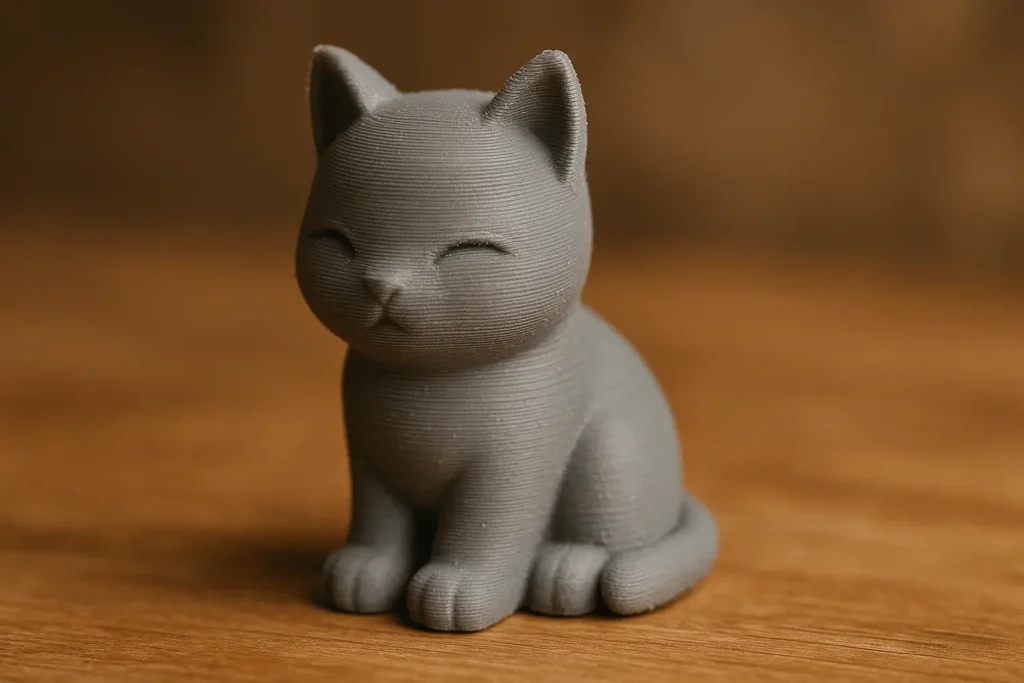
PLA is one of the most popular polymers in 3D printing—and beyond.
It’s made from renewable resources and remains the most widely consumed bioplastic in the world, topping global bioplastic demand year after year.
Also we found that PLA is the most frequently bought material on Amazon.
Strengths and Weaknesses
Pros
Cons
PLA Variants
PLA+ or “Tough PLA”: These formulations offer slightly better impact resistance or a touch of flexibility, depending on the brand.
Still, as the saying goes: “a tiger doesn’t change its stripes.” If another filament fits your project better (like ABS for heat or TPU for flex), you’re better off switching instead of relying on PLA+.
Printability & Variety
PLA is the easiest filament to print, working well even on the most basic machines.
It comes in the widest variety of colors and finishes:
- Standard solid colors
- Matte PLA (e.g., Bambu Lab’s matte line)
- Silk finishes (shiny, decorative)
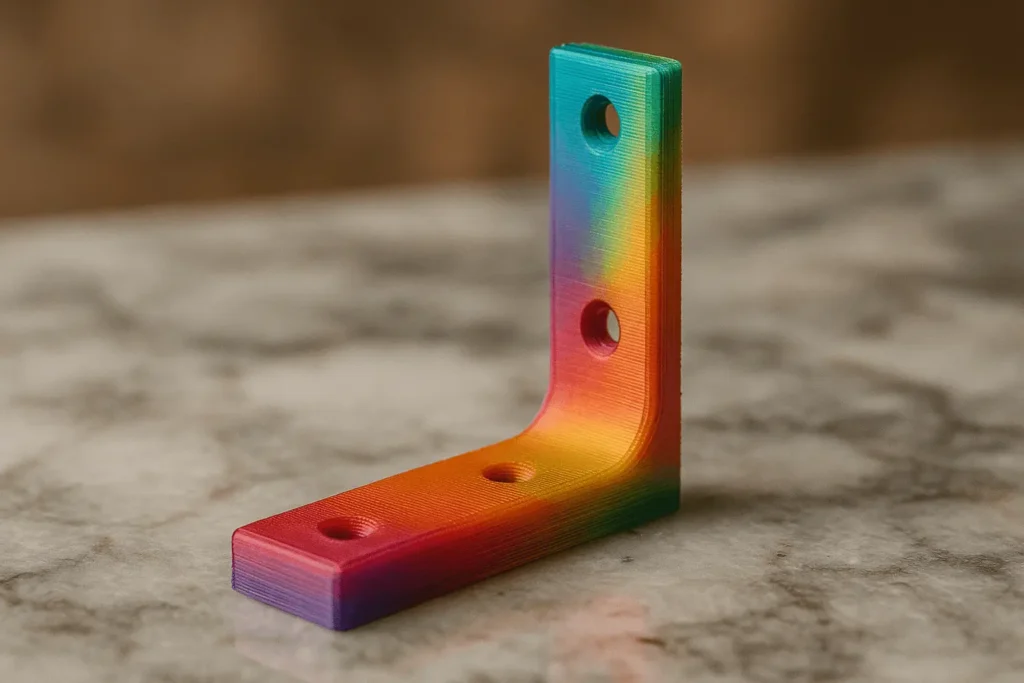
- Rainbow silk and co-extrusion blends for multicolor effects
This diversity makes it a favorite for artistic and decorative printing.
Best Uses
- Decorative prints: statues, models, toys
- Household organization: Gridfinity bins, honeycomb walls, shelf brackets
- Indoor functional parts: as long as they don’t face sustained heat or stress (e.g., trash bins, storage organizers)
Not Recommended For
- Any parts near heat sources (e.g., PC fan ducts, printer enclosures)
- Outdoor parts exposed to UV and weather
- Functional parts under constant heavy stress


 SUNLU PLA 3D Printer Filament, Black, 1KG


 ERYONE Silk PLA Filament for 3D Printer 1.75mm…
TPU (Thermoplastic Polyurethane)
TPU is the go-to flexible filament in 3D printing. While many flexible plastics exist in manufacturing, TPU dominates hobbyist and desktop 3D printing because it strikes a balance between printability and elastic performance.
Strengths and Weaknesses
Pros
Cons
Best Uses
TPU shines whenever flexibility, impact absorption, or grip are required:
- Protective Parts
- Phone cases, bumpers, vibration dampers, shock-absorbing mounts
- Door stoppers and table-corner protectors
- Seals & Functional Gaskets
- Water-tight seals or soft-fit connectors
- Dust caps or cable grommets
- Sports & Wearables
- Custom insoles, fitness straps, or grip-enhanced handles
- Household Applications
- Flexible hinges, toy tires, elastic bands, custom rubber feet for appliances
Pushing past basic TPU? Two upgrades are worth a look. PEBA (sold as elastic filaments like Siraya Tech’s line) springs back with far more energy than TPU, prints around 24% lighter, and takes more heat. That makes it a strong pick for springs, tires, and anything that bounces. And if you print fast, high-flow TPU like Polymaker’s TPU95-HF is built to keep up with modern high-speed machines.
Not Recommended For
- High-speed printing (TPU requires slow, careful extrusion)
- Parts under continuous heavy load—it will deform over time
- Very fine detail prints—elasticity makes it hard to hold crisp edges

 OVERTURE TPU 95A Flexible 3D Printer Filament…

 Geeetech TPU Filament 1.75mm, Shore 95A Flexible…
 Lotactree Grey TPU Filament 1.75mm, 95A Flexible…

PETG (Polyethylene Terephthalate Glycol)
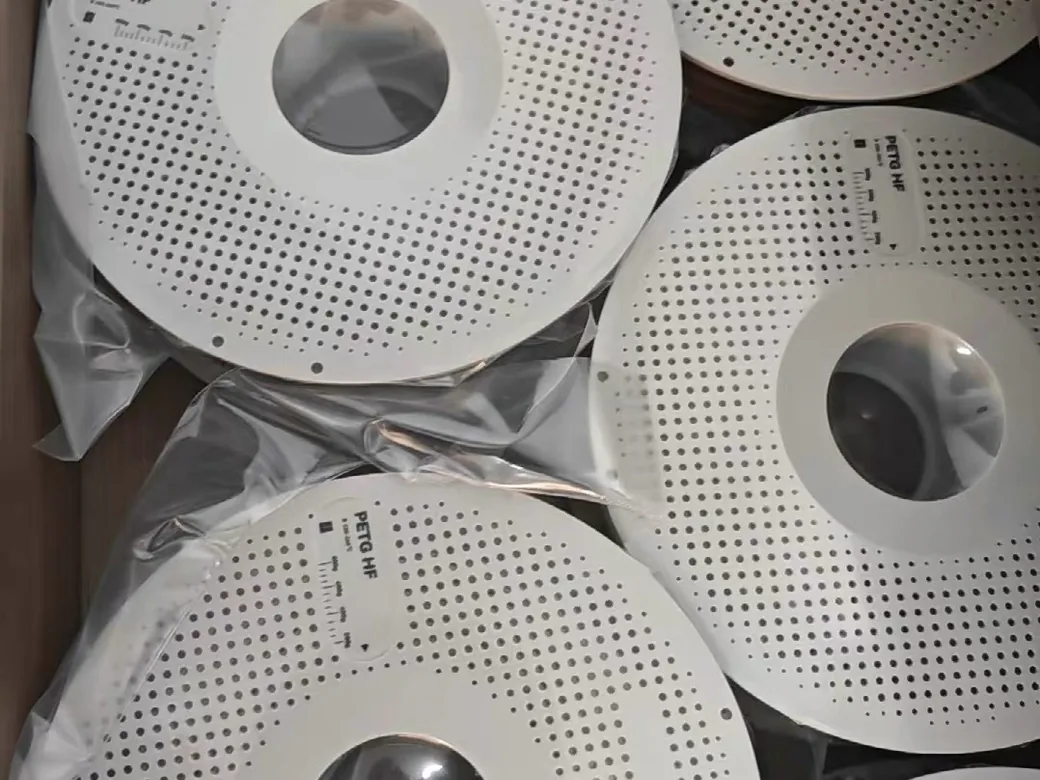
PETG is often marketed as the “next step” after PLA—tougher, more durable, and still relatively easy to print. It’s widely available and supported by most filament brands. We rounded up the PETG brands actually worth buying if you want specifics.
But here’s the truth: PETG is a mixed bag. It doesn’t really excel in any single property compared to other filaments, though it has its place.
Strengths and Weaknesses
Pros
Cons
Why PETG Became So Popular
Historically, PETG was a savior for hobbyists because:
- It prints open-air without the warping struggles of ABS or ASA
- It works at lower extrusion temps (around 230–250 °C)
- Many older printers couldn’t reach 300 °C or maintain heated enclosures—making ABS/ASA impractical
With the rise of modern enclosed, high-speed printers in 2023 and beyond, PETG’s drawbacks (slow flow, messy stringing, limited speed) are more obvious.
In fact, some manufacturers like Bambu Lab no longer push plain PETG—focusing instead on PETG-CF (carbon-fiber reinforced) for advanced users. If Bambu’s own spools feel pricey, we tested a few cheaper ones that print just as clean.
One more shift worth knowing about: a lot of makers who want PETG’s durability without the headaches are switching to PCTG. It soaks up far less moisture (in one test it sat at 50% humidity for three weeks and still printed almost string-free, while high-flow PETG failed under the same conditions), it prints happily on open-frame machines, and it’s even dishwasher-safe where PETG tends to crack. Think of it as PETG’s easy upgrade. Whatever you print, damp spools wreck the results, so it pays to keep your filament dry and stored right.
A quick warning on the other buzzword, high-flow PETG (PETG-HF): it’s tuned for speed, not strength. Testing shows standard PETG can hit three to four times the impact strength of the high-flow versions. Great for fast drafts. Not your pick for parts that need to take a beating.
Even with its limitations, PETG is a strong candidate when:
- You don’t have an enclosed printer, but need something tougher than PLA
- UV resistance is required (e.g., parts near windows, mild outdoor exposure)
- Moderate flexibility is useful (stronger than PLA, softer than ABS)
- Translucent aesthetics are desired—PETG prints clear and vibrant
- Warp-resistance matters—PETG is easier to keep flat compared to ABS/ASA
Examples:
- Vertical planters and small outdoor items (if UV exposure isn’t extreme)
- Reprack brackets and light structural parts
- Fan ducts that need slight heat resistance
- Light diffusers and lampshades (translucent PETG excels here)
- Softbox for video lighting—PETG flexes just enough to clip onto frames
Not Recommended For
- High-speed printing—flow is too slow
- Very high heat environments—ABS/ASA outperform it here
- Applications needing ultimate toughness—PETG is a compromise, not best-in-class
ABS (Acrylonitrile Butadiene Styrene)
ABS is one of the most common plastics in everyday life—think LEGO bricks, car interiors, and countless consumer products. In 3D printing, ABS stands out for its balance of impact resistance, rigidity, and thermal stability.
Strengths and Weaknesses
Pros
Cons
Printing Experience
When printing ABS on an open-frame printer, failure rates are high—warping, cracking, and poor adhesion are almost guaranteed.
Personal experience: Printing ABS on a Prusa MK3S+ with a DIY enclosure was frustrating at first. But moving to smaller enclosed printers that naturally keep the chamber warm, ABS actually became easier than PLA or PETG—as long as the panels stayed closed to trap heat.
Best Uses
ABS is a solid choice for functional parts under heat and load:
- Mechanical & Load-Bearing Parts
- Brackets, mounts, fixtures under stress
- Camera mounts inside enclosures
- Filament spool rollers
- Electronics Housings
- Cases, brackets, or holders exposed to elevated temps
- Speed Printing Projects
- Great for speed benchies or any tests pushing extrusion rates
- Vapor-Smoothing Projects
- Enclosures, cosmetic casings, or parts where seamless surfaces are desired
Not Recommended For
- Open printers without an enclosure
- Indoor printing without filtration/ventilation
- Outdoor parts—UV resistance is poor compared to ASA
ASA (Acrylonitrile Styrene Acrylate)
ASA is often described as ABS’s modern successor. It retains the toughness and heat stability of ABS while addressing many of its biggest weaknesses—particularly UV resistance and odor. When you’re ready to pick a brand, we tested which ASA filament actually holds up.
Strengths and Weaknesses
Pros
Cons
Printing Experience
While marketed as printable without an enclosure, ASA performs best in a stable, warm environment. Drafts or cold rooms can still cause warping.
Personal experience: ASA’s biggest challenge isn’t print quality—it’s first-layer adhesion. Even with well-leveled beds, many brands of ASA needed mountains of adhesion aids to stick properly. Once past the first few layers, prints tend to succeed.
Best Uses
ASA excels where ABS falls short outdoors:
- Outdoor Applications
- Garden fixtures, planters, outdoor brackets
- Enclosures for sensors or lights exposed to sunlight
- Clips, fasteners, housings exposed to weather
- Functional Parts
- Everything you’d normally do in ABS—mounts, brackets, housings—benefits from ASA’s higher durability and UV resistance
- Long-term heat exposure parts (e.g., near appliances, automotive uses)
Not Recommended For
- Projects where cost is a major factor
- Beginners who struggle with bed adhesion
- Situations where ABS is already good enough and you don’t need UV/weather resistance
Head-to-Head: How These Filaments Compare
If you’ve got three tabs open trying to pick between two materials, this part is for you. First, a myth worth killing: the jump from PLA to PETG to ABS is not a straight line from weak to strong. In one destruction test that printed the same helmet in each material, a drop test left PETG shattered worse than plain PLA, while a tough PLA Pro version only dented. Under a torch, ABS caught fire and PETG quickly softened and punched through. Choose by the job in front of you. Heat? Impact? Sunlight? That matters more than any imagined ranking. (One caveat: even PLA Pro starts softening around 60 °C, so heat is still its weak spot.)
PETG vs PLA. PLA is stiffer, prints easier, and comes in more colors. PETG bends instead of snapping and shrugs off heat and UV better. Use PLA for display pieces and indoor organizers. Step up to PETG when a part sits near a window or has to take a little abuse.
TPU vs ASA. These barely overlap, so don’t treat them as swaps. TPU is your flexible, rubbery material for phone cases and vibration dampers. ASA is a rigid outdoor material built for UV and weather. If your part needs to flex, that’s TPU. If it needs to bake in the sun, that’s ASA.
ABS vs ASA. Same family, close cousins. ASA costs roughly 50% to 100% more and buys you UV resistance, less odor, and less warping. Keeping it indoors and out of the sun? ABS is cheaper and easier to find. Headed outside? Pay up for ASA.
PETG vs ABS/ASA. This is the one that trips people up. (Those melted-PLA-bracket posts on Reddit usually land right here.) If you don’t have an enclosure but need something tougher than PLA, PETG is the safe pick. If the part faces real heat or constant load, like a bracket in a hot trailer or near an engine bay, that’s where ABS or ASA earns its keep.
Final Thoughts: Choosing the Right Filament
No single filament is “the best” for every project. The right choice depends on environment, durability needs, and print setup.
Here’s a quick at-a-glance summary:
Filament Use Case Comparison
| Filament | Strengths | Weaknesses | Best Use Cases |
|---|---|---|---|
| PLA | Easy to print, very rigid, wide color variety | Brittle, low heat tolerance, UV sensitive | Decorative models, toys, indoor organizers (Gridfinity, shelf brackets, trash bins) |
| TPU | Flexible, impact-absorbing, chemical resistant | Harder to print on Bowden, slow speeds, detail loss | Phone cases, gaskets, vibration dampers, protective parts |
| PETG | UV & heat resistance better than PLA, ductile, translucent finishes | Over-adhesion to bed, strings/blobs, absorbs moisture, slow melt | Planters, fan ducts, light diffusers, translucent lampshades, flexible brackets |
| ABS | Strong, durable, heat stable, vapor smoothing possible, fast flow | Warping, VOC fumes, requires enclosure & filtration | Functional brackets, enclosures, speed prints, Voron printer parts |
| ASA | Superior UV resistance, durable outdoors, lower odor, accurate dimensions | Pricier, adhesion challenges, fewer colors | Outdoor fixtures, housings, garden parts, sun-exposed brackets |
FAQs
Q1: Is PETG stronger than PLA?
Not necessarily. PLA is stiffer and stronger in bending, but PETG is less brittle and better at handling impacts.
Q2: Does ASA need an enclosure?
Technically, ASA can be printed open-air if you avoid drafts, but you’ll get far better results in a warm, stable environment.
Q3: What Shore hardness TPU should I buy as a beginner?
Start with 98A TPU—it’s firmer and easier to print. Softer grades like 95A or 90A require more tuning and often a direct-drive extruder.
Q4: Why does PETG damage my PEI bed?
Because PETG sticks too aggressively. Always use a glue stick or release agent as a barrier layer when printing on smooth PEI.
Q5: Should I choose ABS or ASA for functional parts?
- Indoors, away from sunlight → ABS (cheaper, easier to source)
- Outdoors or UV-exposed → ASA (superior durability, less yellowing)
Print Settings & Troubleshooting Cheatsheet
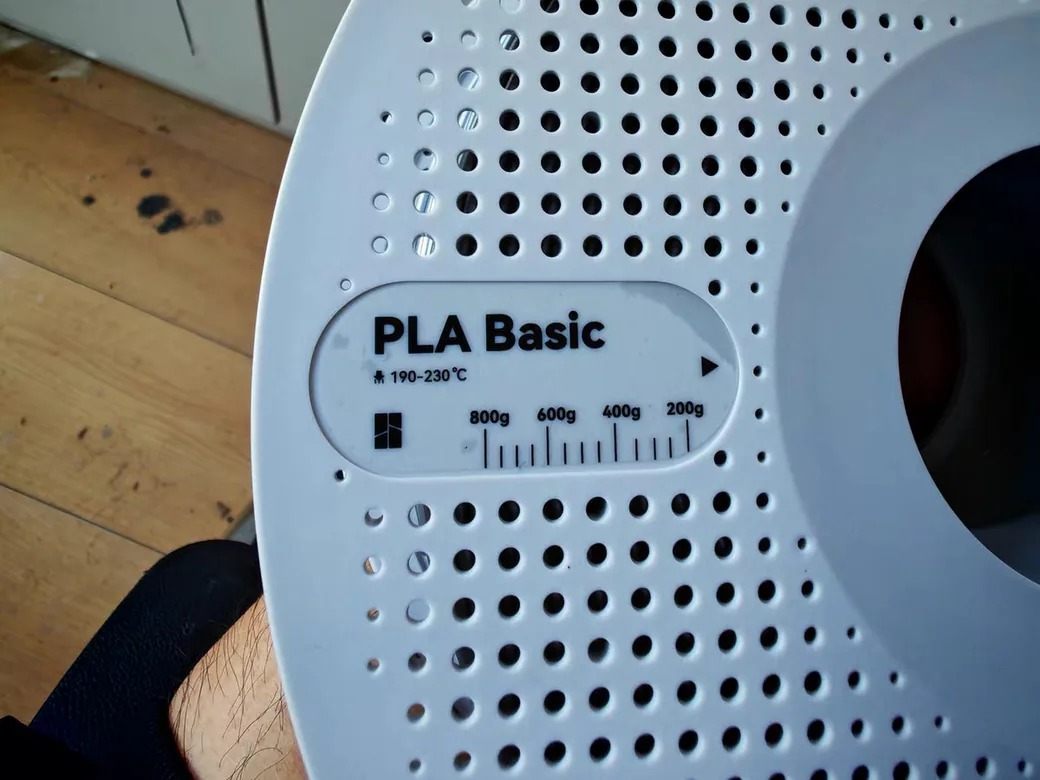
Here’s a quick reference table summarizing recommended print settings, quirks, and fixes for each filament. Keep it handy when troubleshooting.
| Filament | Nozzle Temp | Bed Temp | Enclosure | Ventilation | Speed Notes | Common Issues | Quick Fixes |
|---|---|---|---|---|---|---|---|
| PLA | 190–215 °C | 50–65 °C | Not required | Not required | High-speed friendly with good cooling | Heat creep in warm enclosures, UV degradation, creep under stress | Use part cooling; avoid hot cabinets; stick to indoor use |
| TPU (95–98A) | 215–235 °C | 30–50 °C | Not required | Not required | Slow/moderate, needs controlled filament path | Buckling in Bowden setups, stringing | Use direct-drive; constrain filament path; reduce retraction |
| PETG | 230–250 °C | 70–90 °C | Optional | Not required | Slower flow, less suited for high-speed | Over-adhesion to PEI, nozzle blobs, moisture issues | Apply glue stick as release layer; dry filament thoroughly; tune temps/retraction |
| ABS | 235–255 °C | 90–110 °C | Strongly recommended | Yes (carbon filter + venting) | Fast-flowing, great for speed printing | Severe warping; strong odor | Use enclosure; preheat chamber; add brim/raft; carbon filter |
| ASA | 240–260 °C | 90–110 °C | Helpful, avoid drafts | Lower odor, still vent recommended | Prints like ABS | Bed adhesion problems; higher cost | Use adhesion aids (glue, hairspray); stable environment; choose quality brands |
Final Verdict
Master these five materials—PLA, TPU, PETG, ABS, and ASA—and you’ll be equipped to handle nearly every hobbyist or functional 3D printing project. For exotic needs, you can later explore nylon, polycarbonate, and carbon-fiber blends.