

I earn a commission if you buy through links on this page, at no extra cost to you. As an Amazon Associate, I earn from qualifying purchases.
Table of Contents
Last updated: June 2026.
Choosing the right filament doesn’t just affect print quality. It decides whether your printer runs smoothly for months or constantly fights you with clogs, stringing, and wasted spools. Still shopping for the machine itself? Here’s choosing the right printer first.
And because Bambu Lab, Creality, and Prusa printers each behave differently with various materials, the “best filament” isn’t one universal roll. Want the bigger picture by material type and budget? Our guide to the best 3D printer filament maps it out.
It depends on your machine’s ecosystem, speed profile, AMS compatibility, and even the type of models you print.
This guide distills 2025–2026 community data from Reddit, YouTube reviews, and long-term user feedback into a practical, no-nonsense buying resource. Timing a restock? We round up the Prime Day deals on filament too.
Whether you’re using a Bambu P1S, Creality K1/K2, or a Prusa MK4/MINI+, you’ll find:
- Filaments that consistently perform well across these ecosystems
- Budget picks that are cheap without being junk
- AMS-compatible brands that reduce jams
- Premium spools that offer the cleanest surface finish
- Engineering materials that push your printer further
- Real user pain points and what actually works day-to-day
By the end, you’ll know exactly which filament to buy for your setup and why—with clear recommendations for PLA, PETG, ABS/ASA, TPU, matte/silk specialty materials, and carbon-fiber-reinforced engineering blends. If you’re fuzzy on how these materials actually differ, start with our filament guide.
Let’s start with the quick picks for users who want the fastest answer.
Quick Picks: The Best Filaments to Buy Right Now
If you’re in a hurry, these are the filaments that consistently perform well across Bambu, Creality, and Prusa printers based on print quality, stability, and real community feedback.
Best Overall PLA: Polymaker PolyLite PLA
If you want smooth extrusion, excellent surface finish, and consistent dimensional accuracy, PolyLite PLA is the safest “buy it and forget it” choice.
Works flawlessly on Bambu, Creality, and Prusa alike—fast printing included.

Best Value PLA+: eSun PLA+
A long-time community favorite. Stronger than standard PLA, inexpensive, widely available, and reliable on almost every machine. Great for functional parts and beginners learning tuning.
Best Budget PLA: Amazon Basics PLA
Surprisingly good consistency for the price. Not the prettiest finish, but dependable for prototypes, brackets, and high-volume printing


Best Matte PLA: Overture Matte PLA
Creates a premium, powder-coat look without visible layer lines. Ideal for décor models, cosplay parts, and display pieces. A favorite for Bambu X1/P1 and Creality K1/K2 users.
Best Premium PLA: Prusament PLA
Ultra-tight diameter tolerance, flawless winding, and exceptional color accuracy.
Perfect for Prusa MK4/MINI+ users—or anyone who wants hassle-free printing and doesn’t mind paying more.

Best Filament for Bambu AMS: Sunlu PLA & Polymaker PolyLite PLA
Both brands have clean winding and spool dimensions that play nicely with the AMS/AMS Lite. Dry the spool before loading for the best multi-color reliability.
Best Engineering Filament: Polymaker Nylon / PETG-CF
For users printing drone frames, mechanical parts, brackets, or anything requiring high heat resistance and strength.
Bambu X1/P1/P2 and Prusa XL handle these materials particularly well with the right enclosure.
How to Choose the Right Filament for Your Printer
Not all filaments behave the same across Bambu, Creality, and Prusa machines.
Before buying anything, match your printer’s speed, hardware, and environment with the right material.
Bambu Lab (A1 Mini, A1, P1P/P1S, X1C, P2 Series)
Bambu machines are fast, precise, and tuned for convenience. This also means they react differently to bad winding, inconsistent filament, or brittle materials.
What works best
- PLA / PLA+ — safest, cleanest results for all Bambu models
- PETG — works well for functional parts (keep speeds reasonable)
- ASA / ABS — recommended only for enclosed models (P1S, X1C, P2)
- PA6-GF / Nylon / CF blends — excellent on X1C/P2 with enclosure & drying
Special note for AMS / AMS Lite
- Needs clean winding and narrow spool dimensions
- Moisture-sensitive filaments should be pre-dried
- Brands with best AMS reliability: Sunlu, Polymaker, Overture, Elegoo (depending on spool size)
Who should follow this advice
Anyone printing mostly PLA/PETG, multi-color jobs, functional parts, or models at high speed.
Creality (Ender Series / K1 / K1 Max / K2 Series / CR Series)
Creality has two very different ecosystems:
open-frame printers (Ender) vs high-speed enclosed CoreXY (K1/K2).
Ender 3 / V2 / V3
- Ideal materials: PLA / PLA+ / PETG
- Avoid ABS unless you have an enclosure (warping risk)
- Consistent third-party filaments perform well due to moderate speeds
K1 / K1 Max / K2 Series
- Designed for fast printing → responds best to high-flow PLA & PLA+
- PETG, ABS+, ASA also print well thanks to enclosure
- Hyper PLA from Creality performs exceptionally at high speeds
CR Series (Enclosed / Larger Volume)
- Handles PETG, ABS+, ASA, and PC blends with proper temps
- Great for functional parts and engineering materials
Who should follow this advice
Budget users, tinkerers, functional part makers, and anyone using open-frame Creality machines.
Prusa (MK4 / MK3.5 / MINI+ / XL)
Prusa printers are famous for reliability and forgiving profiles. They handle third-party filaments better than almost any other ecosystem.
What works best
- PLA — Prusa’s strongest material category; extremely stable
- PETG — perfect for functional parts, brackets, enclosures
- ASA/ABS — possible with enclosure (MK4/XL recommended)
Surface adhesion notes
- PLA sticks very strongly to the smooth PEI sheet
→ A thin layer of glue stick is recommended to prevent damage
Premium but worth it
- Prusament offers near-perfect dimensional accuracy and color consistency
Who should follow this advice
Users who want consistency, low tuning effort, and professional-grade surface finish.
Best Filaments for Bambu Lab Printers

Bambu printers are built for speed, surface quality, and automation.
Because of this, they behave differently from typical Cartesian printers—and they’re more sensitive to filament quality, moisture, and spool geometry.
Below are the filaments that consistently perform well across A1 Mini, A1, P1P/P1S, X1C, and P2 Series.
Best PLA for Bambu Lab
Polymaker PolyLite PLA (Best Overall)

Polymaker remains one of the safest choices for Bambu machines.
- Excellent dimensional accuracy
- Clean, consistent winding
- Works smoothly with Bambu’s high-speed profiles
- Reliable with AMS/AMS Lite (spool fits most slots)
Prints come out clean even at aggressive speeds, and color selection is wide without sacrificing quality.
Bambu Basic PLA (Best Official Experience)

If you want zero guesswork, Bambu’s own Basic PLA pairs perfectly with factory presets.
- Seamless integration with profiles
- Very clean layer lines
- Ideal for beginners who want consistent results
Downside: slightly more expensive, and some users report occasional refill-spool winding issues.
eSun PLA+ (Best Value Performance)

Great for everyday projects and functional prints.
- Stronger than basic PLA
- Very forgiving on Bambu’s high-speed mode
- Widely available and inexpensive
Most users treat it as the “daily driver” filament—cheap enough to experiment with but consistent enough for good results.
Sunlu/Elegoo PLA (Best AMS-Friendly Budget Option)

Both brands have spools that tend to work well with the AMS/AMS Lite as long as they’re dry.
- Clean winding
- Low tangle rate
- Good for high-volume printing
- Affordable for multi-color jobs
Perfect for users who want cheap, trouble-free PLA for multi-color runs.
Best PETG for Bambu Lab
Polymaker PETG (Best Balance of Strength & Ease)

Prints reliably on Bambu printers without the excessive stringing that cheaper PETG often brings. If you’re weighing brands, see how the leading PETG brands compare.
- Excellent for functional parts
- High durability
- Works well on P1S, X1C, P2 Series
Overture PETG (Budget-Friendly, Good Surface Finish)

Surprisingly solid for the price:
- Good layer bonding
- Low brittleness
- Available in large spools
Best for users printing enclosures, brackets, and daily-use functional prints.
Best ABS/ASA for Bambu Lab (Enclosed Models Only)
Sunlu ABS+ (Best for New ABS Users)

Much less warping than traditional ABS, and works well in P1S/X1C/P2.
- Better adhesion
- Less odor
- Stronger end-use parts
Polymaker ASA (Best Outdoor/UV-Resistant Option)

If you’re printing functional outdoor parts:
- UV and weather resistant
- Stronger than most ABS
- Very clean surfaces when printed in an enclosure
Great for RC parts, brackets, and outdoor mounts.
Best Specialty Filaments (Matte / Silk / Marble)
Overture Matte PLA (Best Matte Finish Overall)

Produces a premium, “powder-coated” look that hides layer lines extremely well.
Ideal for décor, cosplay, and display models.
Bambu Silk PLA & Bambu Marble PLA

These work flawlessly with Bambu’s built-in material profiles.
- Shine and color depth are excellent
- Minimal tuning required
- Good for aesthetic models or display pieces
Best Engineering Filaments for Bambu Lab
Polymaker PA6-GF (Glass-Fiber Nylon)

One of the few advanced filaments officially noted for AMS compatibility.
- Extremely strong
- High heat resistance
- Perfect for brackets, fixtures, mechanical parts
Requires drying and stable enclosure temps.
Polymaker Nylon / PETG-CF (Best for Strength-to-Weight)

Carbon-fiber blends print beautifully on Bambu X1/P2 Series:
- Stiff
- Light
- Strong under load
- Matte technical surface
Ideal for FPV drones, RC parts, and engineering prototypes.
Best Filaments for Creality Printers
Creality printers are used by more people worldwide than any other brand—so the range of “good” filaments is huge.
But what actually works best depends heavily on whether you’re using an open-frame Ender or a high-speed enclosed CoreXY (K1/K1 Max/K2). Not sure which Creality you should be on in the first place? Here’s the best Creality for each kind of maker.
Best Filaments for Ender Series (Ender 3 / V2 / V3 / V3 KE)
Ender printers are open-frame, entry-level machines.
They excel with beginner-friendly materials and don’t behave well with high-warp or high-temp filaments unless you add an enclosure.
Best PLA for Ender (Daily Use)
Sunlu PLA (Best All-Round Budget Pick)

Widely recommended across Reddit and YouTube for Ender machines.
- Cheap but reliable
- Good dimensional accuracy
- Works on stock Ender profiles
- Great for beginners
Perfect for test prints, décor pieces, prototypes, and volume printing.
eSun PLA+ (Best Value Performance)

If you want stronger functional parts:
- Significantly tougher than cheap PLA
- Smooth extrusion
- Ideal for brackets, phone stands, mechanical toys
A good “upgrade” filament once you start printing more demanding models.
Overture PLA (Best Color Variety)

Overture’s PLA works consistently well on Ender 3 machines, especially newer variants like V3 KE.
- Good first-layer behavior
- Minimal clogging issues
- Available in matte/silk combos
Great for aesthetic models.
Best PETG for Ender
Polymaker PETG (Best Overall)
PETG can be tricky on open-frame printers, but Polymaker’s formulation is forgiving:
- Less stringing
- Stronger layer adhesion
- More predictable bed adhesion
Use for brackets, outdoor parts, or items needing light flexibility.
Overture PETG (Budget-Friendly Strength)

A reliable and inexpensive option for PETG beginners.
- Good toughness
- Easy to source
- Works well on heated beds (≥70°C)
Best ABS/ASA for Ender (With Enclosure Only)
ABS/ASA is not recommended on a bare Ender due to warping. For ASA specifically, here are the brands worth buying.
If you do have an enclosure:
Sunlu ABS+
- Lower warp
- Cleaner adhesion
- Strong for functional parts
Polymaker ASA
- Outdoor-friendly
- UV and weather resistant
- Great for mounts, RC bodies, and brackets
Best Filaments for Creality K1 / K1 Max / K2 Series
K1/K1 Max/K2 printers are fast, enclosed, and CoreXY—meaning they benefit from higher-flow and higher-quality filaments, especially at speed.
Best PLA for K-Series (High-Speed Printing)
Creality Hyper PLA (Best for Speed)

Frequently praised by high-speed users:
- Tuned for 300–600 mm/s printing
- Great flow and layer bonding
- Minimal stringing
- Excellent for large or functional models
The downside is price—but performance justifies it.
Polymaker PolyLite PLA (Best Premium Alternative)
If you want a non-Creality brand that still handles high speed well:
- Smooth layers
- Highly consistent extrusion
- Works well with Creality’s speed-oriented profiles
eSun PLA+ (Best Affordable Choice)
Strong and stable even at moderate high speeds.
Budget-friendly option for daily use.
Best PETG for K-Series
Polymaker PETG
- Clean bridging
- Strong for functional prints
- Easy to tune
Ideal for brackets, tools, fixtures, and structural components.
Overture PETG
If you want a cheap but reliable PETG, Overture is consistently solid.
Best ABS/ASA for K-Series (Enclosed Chamber Advantage)
Sunlu ABS+ (Best for Beginners)
Less warping = more successful prints.
Great for mechanical parts.
Polymaker ASA (Best Professional Option)
- UV-resistant
- Surface finish is excellent
- Ideal for FPV, automotive, and outdoor use
Best Engineering Filaments for K-Series
These printers can handle more advanced materials if properly dried:
Polymaker Nylon / PETG-CF
- Stiff yet lightweight
- Excellent for brackets, drones, gears
- Requires drying + chamber heat
Polycarbonate (PC blends)
For users needing serious heat resistance—only recommended for experienced users.
Best Filaments for Prusa Printers (MK4, MK3.5, MINI+, XL)
Prusa printers are known for their predictability and profile reliability.
They handle third-party filaments better than almost any ecosystem, but certain brands perform exceptionally well due to Prusa’s precise temperature tuning and PEI sheet behavior. Bambu’s AMS is fussier about off-brand spools, though. We ran a batch through ours to see which Bambu filament alternatives actually hold up.
Below are the filaments that repeatedly deliver top results on MK4, MK3.5, MINI+, and XL.
Best PLA for Prusa
Prusament PLA (The Gold Standard)

If you want the cleanest layers, the most consistent diameter, and the least wasted time, Prusament is unmatched.
- 100% traceability (every spool has QC data)
- Excellent color accuracy
- Incredibly reliable first layers
- Perfect compatibility with default profiles
Downside: the price. But professional users still choose it because it simply performs every time.
Polymaker PolyLite PLA (Best Third-Party Alternative)
Many MK4 and MINI+ owners use PolyLite PLA as their “daily driver” because the quality is close to Prusament at a lower cost.
- Clean winding
- Consistent extrusion
- Wide color variety
- Works perfectly on smooth PEI, textured PEI, and satin sheets
A great choice for balanced quality and price.
eSun PLA+ (Best Budget Functional Material)
If you need tougher prints without paying Prusament pricing:
- Stronger than standard PLA
- Good layer adhesion
- Works exceptionally well on Prusa’s PEI sheets
Ideal for brackets, tools, and mechanical parts.
Surface Adhesion Notes (Important for Prusa Users)
PLA sticks very aggressively to Prusa’s smooth PEI sheet, especially with high-quality brands like Prusament and Polymaker.
For long print lifespan, apply:
- A thin layer of glue stick as a release agent, or
- Use the textured PEI sheet for aggressive filaments
This small detail prevents sheet damage over time.
Best PETG for Prusa
Prusament PETG (Most Reliable PETG Experience)

Prusament PETG offers:
- Strong layer bonding
- Beautiful surface finish
- Excellent adhesion without excessive stringing
If you print functional parts regularly, this is the most trouble-free PETG you can buy.
eSun PETG (Great Budget Companion)

A widely used alternative:
- Good strength
- Reliable bridging
- Slightly more stringing than Prusament, but manageable
Perfect for daily use.
MatterHackers PETG (Premium U.S. Favorite)
If you’re in the U.S., MatterHackers PETG is often cited as a top-tier filament:
- Very clean winding
- High durability
- Great color consistency
Works especially well for large functional parts on MK4 and XL.
Best Budget Alternatives (High Compatibility)
For users who want low cost without sacrificing reliability:
Sunlu PLA / PLA+
- Good first-layer behavior
- Budget-friendly
- Great for prototypes and volume printing
Overture PLA
- Huge color variety
- Good for display models
- Works well on both smooth & textured PEI
Amazon Basics PLA
- Consistent diameter
- Decent finish
- Ideal for testing, calibration prints, and quick jobs
These brands work perfectly on MINl+, MK4, and XL with minimal tuning.
Best Engineering Filaments for Prusa
Prusa printers—especially the XL and enclosed MK4 setups—can handle more advanced materials with the right conditions.
Atomic Filament ABS/ASA (High-End Professional Choice)
Often recommended in r/prusa3d for:
- Superior color uniformity
- Strong mechanical performance
- Excellent outdoor durability (ASA)
Great for RC parts, brackets, and functional components.
Polymaker Nylon / Nylon-CF / PETG-CF (Engineering-Grade Strength)
These materials are ideal for mechanical parts that require stiffness, toughness, or heat resistance.
- Lightweight yet strong
- Clean, matte technical finish
- Works well with Prusa XL & MK4 (with enclosure & drying)
Recommended for robotics, drones, fixtures, and structural assemblies.
Filament Brand Comparison Table
Below is a structured comparison of the most commonly recommended filament brands across Bambu, Creality, and Prusa ecosystems.
This table focuses on real-world performance, winding quality, AMS compatibility, and price-to-performance ratio.
Top Filament Brands Compare
| Brand | Best For | Key Pros | Key Cons | AMS Compatible? | Price Level | Recommended For |
|---|---|---|---|---|---|---|
| Polymaker | High-quality PLA/PETG; engineering materials | Excellent diameter consistency; clean winding; wide color range | Slightly pricier than eSun/Sunlu | Yes (most spools) | $$ | Bambu, Creality K-Series, Prusa |
| eSun | Strong PLA+ for functional parts | Very tough; easy to print; widely available | Occasional batch inconsistency; needs drying in humid climates | Medium (spool size OK) | $ | Ender users, beginners, functional prints |
| Sunlu / Jayo | Budget PLA for volume printing | Cheap, reliable, good for AMS Lite | Winding sometimes varies; colors can be limited | Yes (popular AMS pick) | $ | Bambu AMS, Ender, Creality |
| Overture | Matte PLA & PETG | Great matte finish; reliable PETG; clean color options | Silk variants less consistent; spools slightly wide | Partial | $ | Bambu, Creality, Prusa |
| Elegoo | Budget PLA (popular with Bambu users) | Good extrusion quality; affordable; AMS-friendly | Not suitable for all AMS variants; color selection average | Medium | $ | Bambu users, beginners |
| Prusament | Premium PLA/PETG | Best diameter tolerance; perfect winding; professional finish | Expensive; PETG can string slightly | Not designed for AMS | $$$ | Prusa MK4/MINI+/XL |
| Bambu Filament | Perfect integration with Bambu printers | Optimized profiles; clean print quality; good appearance | Refill spools sometimes windy; higher price | Yes | $$–$$$ | Bambu A1/P1/X1/P2 |
| Amazon Basics | Low-cost PLA | Consistent enough for budget users; dependable | Mediocre color accuracy; average finish | Medium | $ | Beginners, prototypes |
| MatterHackers | Premium PETG/Nylon | Strong, durable, pro-grade | Expensive; U.S.-centric | Not AMS-focused | $$–$$$ | Prusa XL, engineering users |
| Atomic Filament | ASA/ABS for outdoor & pro use | Extremely strong; stable; high-end colors | Pricey; niche availability | Not AMS-designed | $$$ | Prusa users, functional/engineering |
How To Choose Quickly
- If you want the safest “buy once, print forever” choice → Polymaker.
- If you’re budget-conscious → Sunlu / eSun / Overture.
- If you’re printing on Prusa → Prusament remains king.
- If you use Bambu AMS → Sunlu, Polymaker, Overture are most reliable.
- If you print functional parts → Polymaker PETG / Nylon / CF lines.
- If you print décor → Overture Matte / Bambu Silk.
Common Printing Issues & How to Fix Them
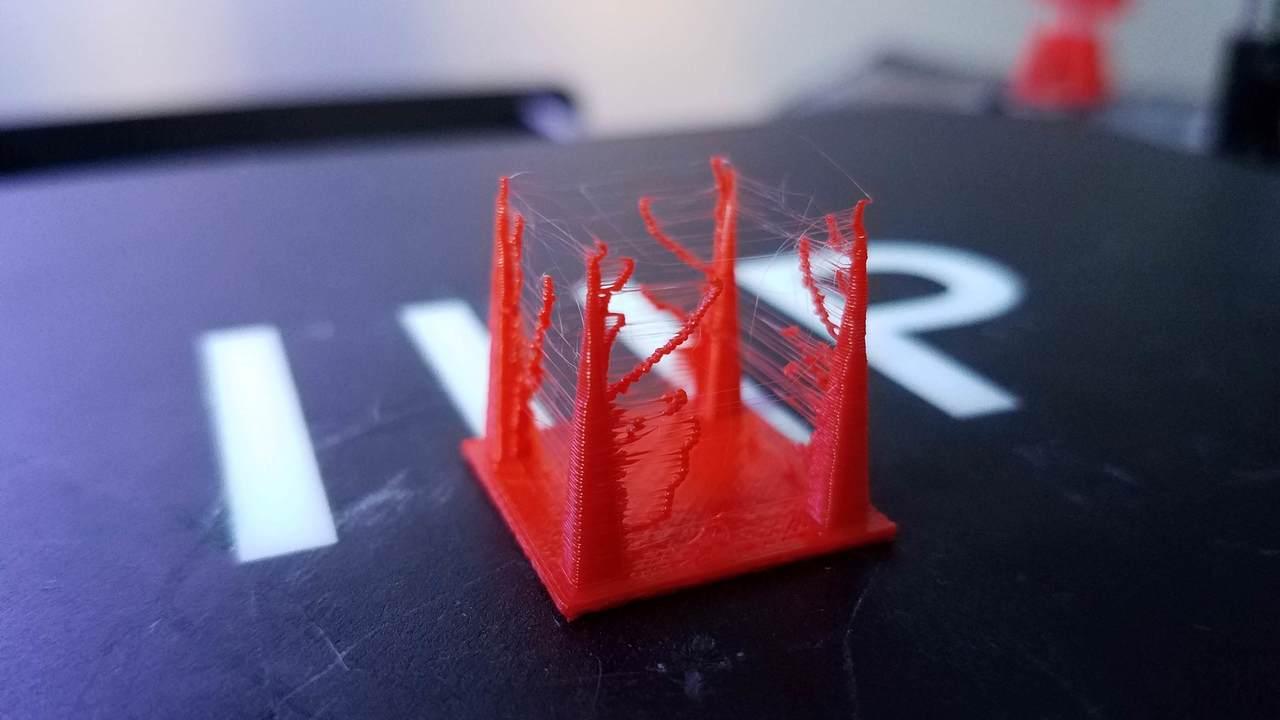
Even with high-quality machines like Bambu, Creality, and Prusa, certain filament problems appear again and again.
Here are the most common failure points—and the straight answers on how to fix them.
1. Brittle PLA (Snaps Easily or Breaks in AMS)
Symptoms:
- Filament snaps during feeding
- Brittle segments when unspooled
- AMS/Lite jams or feeding errors
Causes:
- Moisture absorption (PLA is hygroscopic)
- Old/expired spools
- Poor storage conditions
Fix:
- Dry the spool at 45–50°C for 4–6 hours
- Store filament with desiccant
- Use a dry box for AMS printing
Best brands for avoiding brittleness: Polymaker, Overture, Prusament.
2. Stringing (Common with PETG & Silk PLA)
Symptoms:
- Hair-like plastic strands between travel points
- Blobs or zits on the surface
Causes:
- High printing temperature
- Insufficient retraction
- Humid filament (especially PETG)
Fix:
- Lower temperature by 5–15°C
- Increase retraction distance & speed
- Enable “Combing Off” or “Avoid Travel through Holes”
- Dry PETG for best results (65°C for 6 hours)
Best PETG brands for low stringing: Polymaker PETG, MatterHackers PETG.
3. AMS / AMS Lite Jams or Filament Not Feeding
(Specific to Bambu users)
Symptoms:
- Filament stuck at spool entrance
- Clicking sounds
- “Filament Error” messages
Causes:
- Wide spool rims
- Poor winding → knots
- Moisture → inconsistent pulling force
- Soft, low-quality PLA snapping
Fix:
- Choose AMS-friendly brands (Sunlu, Polymaker, Overture)
- Dry filament before loading
- Use spool adapters if needed
- Avoid paper-core spools unless rewound
Pro Tip:
AMS behaves best with clean winding + dry filament + narrow flanges.
4. Warping (Especially ABS / ASA / Nylon)
Symptoms:
- Corners lifting
- Layers separating
- Parts detaching halfway
Causes:
- Printing high-temp materials without enclosure
- Drafts and cold ambient temperature
- Fast cooling fan settings
Fix:
- Use an enclosure (mandatory for ABS/ASA)
- Increase bed temp (ABS: 100°C / ASA: 105°C)
- Reduce part cooling
- Add brim or draft shield
Best anti-warp materials: Polymaker ASA, Sunlu ABS+, Atomic ASA.
5. Poor First-Layer Adhesion
Symptoms:
- First layer won’t stick
- Elephant’s foot
- Rough, inconsistent lines
Causes:
- Wrong Z-offset
- Dirty build plate
- Incorrect bed temperature
Fix:
- Recalibrate Z-offset
- Clean plate with 99% IPA
- Use textured PEI for PLA or glue stick for smooth PEI
- Increase first-layer temp by +5 to +10°C
6. Layer Separation / Weak Layer Adhesion
Symptoms:
- Layers splitting apart
- Weak functional parts
- Cracking under load
Causes:
- Low printing temperature
- Excessive cooling
- Printing fast with poor-quality filament
Fix:
- Increase nozzle temperature by +10°C
- Reduce fan speed
- Dry filament (very important for PETG/Nylon/Cf materials)
- Use brands known for strong bonding (Polymaker, eSun PLA+, MatterHackers Nylon-X)
7. Over-Extrusion / Under-Extrusion
Over-Extrusion Symptoms:
- Blobs, zits, raised edges
- Jagged corners
Fix: - Lower flow to 95–98%
- Check filament diameter
Under-Extrusion Symptoms:
- Gaps in walls
- Clicking extruder
Fix: - Raise temp 5–10°C
- Clean nozzle
- Use higher-quality, well-wound filament
8. Color Inconsistency Across Prints
Causes:
- Poor pigment dispersion (common in very cheap brands)
- Mixing batches
- Printing at inconsistent temps
Fix:
- Stick to reputable brands for visible models
- Keep temps stable across batches
- Note batch numbers for large multi-part projects
FAQ: Common Questions About 3D Printing Filaments
1. What filament works best with Bambu AMS?
Best overall AMS-compatible options:
- Polymaker PolyLite PLA
- Sunlu PLA / PLA+
- Overture PLA
- Elegoo PLA
Why?
- Narrow spool rims
- Clean winding
- Low tangle rate
- Good dimensional consistency
Avoid:
- Paper-core spools
- Poorly wound budget filaments
- Filaments stored in humid environments
For multi-color jobs, dry the spool before loading for the most reliable AMS performance.
2. Is eSun PLA+ good for beginners?
Yes—eSun PLA+ is one of the best beginner filaments available.
Advantages:
- Stronger than standard PLA
- Very forgiving
- Works on Bambu, Creality, and Prusa
- Inexpensive
If you need a reliable, tough, daily-use filament, this is one of the easiest choices.
3. Is Prusament worth the price?
For many users, yes.
Prusament is premium-priced but offers:
- Industry-leading diameter tolerance
- Perfectly consistent color
- Excellent winding
- Minimal tuning required
If you’re using a Prusa MK4, MINI+, or XL, Prusament delivers the most predictable results.
But for budget users, Polymaker PolyLite or Sunlu provide excellent alternatives.
4. What is the strongest filament for desktop 3D printers?
For most consumer 3D printers:
- Nylon-CF (Carbon Fiber Nylon)
- PETG-CF
- PA6-GF (Glass Fiber Nylon)
These offer:
- High stiffness
- Excellent impact resistance
- Heat resistance
- Lightweight mechanical strength
Great for drones, brackets, tools, and engineering parts.
Just ensure the filament is properly dried before printing.
5. PLA vs PLA+ — which should I buy?
PLA
- Better surface finish
- More color variety
- Easier for beginners
PLA+ (usually modified PLA or PLA-blend)
- Stronger and tougher
- Better for functional parts
- Slightly higher printing temps
Simple rule:
- Models / décor → PLA
- Functional parts / brackets → PLA+
6. Can Creality K1/K2 print ABS or ASA?
Yes—K1, K1 Max, and K2 have enclosed chambers, making them capable of:
- ABS
- ABS+
- ASA
- PC blends (for advanced users)
For best results:
- Use a 100–110°C bed temperature
- Reduce cooling
- Ensure consistent enclosure temperature
ABS/ASA is not recommended for open-frame Ender models unless you add an enclosure.
7. Is PETG better than PLA?
Not always.
Choose PETG when you need:
- Better durability
- Higher heat resistance
- Outdoor/weather resistance
Choose PLA when you need:
- Best surface finish
- Fast printing
- Easy tuning
- Aesthetic models
Most new users start with PLA, then move to PETG for functional parts.
8. What filament should I use for miniatures, figures, or décor prints?
Best options:
- Overture Matte PLA (hides layer lines beautifully)
- Bambu Silk PLA (for shine and color depth)
- Polymaker PolyLite PLA (clean surface and consistency)
Avoid using PLA+ for miniatures—it’s stronger, but surface detail is not as crisp as standard PLA.
9. Do I really need to dry filament?
For certain materials, yes—especially:
- PETG
- Nylon
- TPU
- Carbon fiber blends
Drying dramatically improves:
- Layer adhesion
- Stringing control
- Surface finish
- AMS reliability
PLA needs drying only if it becomes brittle or fuzzy.
10. Why do some filaments clog more than others?
Common reasons:
- Poor diameter consistency
- Impurities in pigment
- Dirty or rough internal nozzle surface
- Printing temperatures too low
- Moist filament
For fewer clogs, stick to:
- Polymaker
- Prusament
- Bambu Filament
- MatterHackers
- eSun PLA+
Still can’t decide? Here’s the simplest rule:
PLA = Aesthetic prints
PLA+ = Functional everyday parts
PETG = Durable parts
ABS/ASA = Heat + outdoor use
Nylon/CF = Engineering and strength
CERTAIN CONTENT THAT APPEARS ON THIS SITE COMES FROM AMAZON. THIS CONTENT IS PROVIDED ‘AS IS’ AND IS SUBJECT TO CHANGE OR REMOVAL AT ANY TIME.
Price details
Product prices and availability are accurate as of the date/time indicated and are subject to change. Any price and availability information displayed on Amazon.com at the time of purchase will apply to the purchase of this product.