
Heads up — some of the links below are affiliate links. If you buy through them, I earn a small commission (at no extra cost to you), which helps cover the gear I test. Thanks!
- The best PETG filament for most people is Overture PETG. It’s consistent, easy to find, and fairly priced.
- Want maximum strength? Polymaker leads the data. Want flawless consistency? Prusament. Tightest budget? Sunlu or eSUN.
- High-speed PETG trades real mechanical strength for print speed. Skip it for load-bearing parts.
- PETG’s worst enemy is moisture, not brand. Drying and calibration matter more than the logo on the spool.
If you’ve spent any time shopping for filament, you already know the problem. Every brand claims to make the best PETG filament, the reviews all sound identical, and the forum threads turn into brand wars within three replies. PETG should be the easy upgrade from PLA. Tougher parts, better heat resistance, still beginner-friendly. Yet picking a spool feels like guesswork.
I’ve printed a lot of PETG over the years, and here’s what most guides won’t tell you. The brand matters far less than how you store and tune the filament. To back up my own experience with hard numbers, I leaned on independent lab-style testing from makers I trust, plus real community feedback. Below are seven PETG filaments worth your money in 2026, ranked by what they’re actually good at, with the testing credited to the people who ran it.
Best PETG Filament at a Glance
| Filament | Best For | ≈ Price / kg | Diameter Tolerance | Standout Trait |
|---|---|---|---|---|
| Overture PETG | Overall pick | ~$15 | ±0.02 mm | Reliable all-rounder, easy to buy |
| Sunlu PETG | Tight budget | ~$15 | ±0.02 mm | High toughness, low stringing |
| eSUN PETG | Beginners | ~$10 (2-pack) | not stated | Forgiving and cheap per spool |
| Polymaker PETG | Maximum strength | ~$19 | not stated | Highest tested layer adhesion |
| Hatchbox PETG | Color choice | ~$25 | ±0.03 mm | Widest color range |
| Bambu Lab PETG Basic | Bambu / AMS users | ~$18–20 | not stated | RFID, tuned for outdoor parts |
| Prusament PETG | Consistency | ~$37 | ±0.02 mm | Per-spool QC report |
Prices are approximate and move often. Each pick below explains who it’s really for, so jump to the section that matches your printer and your project. For a wider view of how PETG sits next to other materials, see our guide to how PETG compares to PLA, ABS, and ASA.
What Actually Makes a PETG “the Best”?
A “best” PETG isn’t the one with the loudest marketing. It’s the one that prints clean on your machine and survives the job you built it for. Four things decide that.
Consistency and diameter tolerance. Tight, even filament diameter means fewer flow problems and cleaner walls. Premium brands like Prusament hold an exceptionally tight diameter and publish per-spool reports. Cheap no-name spools are where consistency goes to die, and I’ve thrown out enough off-brand rolls to take this seriously.
Layer adhesion and real strength. PETG’s whole appeal is toughness. But strength varies a lot between formulas, and the spec sheet rarely tells the full story. I lean on independent destruction and tensile testing here, not brand claims, because marketing numbers and real-world breakage don’t always match.
Stringing and moisture behavior. PETG loves to absorb water and string. A good filament strings less out of the box and dries back to clean performance. A bad one fights you forever. This is where most of my early PETG frustration came from, and it was almost always moisture. That’s about the spool on your shelf. The printed part is a different question, and we answered whether PLA holds water separately.
Availability and value. The best spool is one you can reorder next month at a fair price. Boutique filament you can never restock is a workflow trap.
One honest truth from years at the printer: a well-tuned machine running average filament beats a sloppy machine running premium filament. Consistency, diameter accuracy, and dry storage outrank the brand name almost every time.
The Best PETG Filaments of 2026
1. Overture PETG — Best Overall
Overture PETG is the spool I point most people to first. It hits the sweet spot of price, quality, and availability.
The diameter stays tight and consistent, the spools are neatly wound, and it prints clean once you dial in temperature. On my machines it’s been a no-drama filament, the kind you load and forget. It’s stocked almost everywhere, so reordering is never a problem, and that reliability matters more than people expect when you print regularly. Independent buying guides routinely rank it at or near the top, and most makers treat it as their safe default.
Where it shines is everyday functional work: brackets, mounts, enclosures, organizers. It won’t win a strength contest against Polymaker, and the color range is narrower than Hatchbox. But for general-purpose printing that needs to just work, it’s hard to beat.
- Tight, consistent diameter for clean walls
- Widely stocked and easy to reorder
- Forgiving across a range of printers and settings
- Strong value for a dependable all-rounder
- Fewer exotic colors than Hatchbox
- Not the strongest formula on this list
- Hygroscopic like all PETG, so drying is a must
Best For: Most makers printing general functional parts who want one spool that just works.
Nik’s Take: If you’re not sure where to start, start here. Overture is boring in the best way. It doesn’t surprise me, and for a workhorse filament that’s exactly what I want.

- [High Speed Printing Up to 300mm/s] Engineered for high-speed printers like Bambu Lab, Creality K1, and Voron. While others chase extreme numbers…
- [AMS Friendly & Tangle-Free] Perfect for Multi-Material Systems (AMS). We understand the frustration of a failed 20-hour print due to a snag. OVERTURE…
- [High Precision & Toughness] Engineered for functional parts with an industry-leading +/- 0.02mm tolerance, ensuring perfect fit for mechanical…
- [Consistent Quality & Vivid Colors] OVERTURE PETG filament bundles are designed for print farms and batch production. Our PETG features zero color…
- [Pro Support & Technical Settings] Smooth Printing with recommended parameters: Nozzle Temp: 230-260°C, Bed Temp: 65-70°C, and Speed: 30-300mm/s…
2. Sunlu PETG — Best Budget
Sunlu PETG delivers genuine toughness at a price that makes bulk printing painless.
Beyond the low cost, the strength data is what earns Sunlu its spot. In an independent roundup by perspektive3D, standard Sunlu PETG measured an impact strength around 17 kJ/m², three to four times higher than the high-speed PETGs in the same test. That tracks with what I’ve seen: Sunlu parts take a knock without cracking. Sunlu’s High-Speed Matte version was also the closest visual match to Bambu’s PETG-HF that the tester could find, which makes it a smart swap if you liked that matte look.
The one consistent caveat is moisture. Even after drying, that matte spool still showed small bubbles in testing, and I’ve seen the same thing when a roll sits open too long. Keep it sealed with desiccant and it behaves. Quality control is good for the price, just not Prusament-level, so expect the occasional minor inconsistency across spools.
- Excellent toughness for the price (~17 kJ/m² impact in independent testing)
- Low stringing and high value for bulk buyers
- High-Speed Matte option mimics a pricier matte finish
- Sensitive to moisture, needs proper drying
- Quality control is good but not premium-tier
- Occasional spool-to-spool variation
Best For: Budget-conscious makers who print a lot and want tough parts without paying premium prices.
Nik’s Take: Sunlu is my budget workhorse. For everyday brackets and enclosures it punches well above its price. Keep it dry and it rewards you.

- ①【PETG Filament 1.75mm】SUNLU PETG 3D Printer Filament combines the advantages of both PLA and ABS 3D printer filament, making 3D printing more…
- ②【Excellent Layer Adhesion】PETG filament offers excellent layer adhesion, reducing the risks of warping and ensuring smooth, strong prints with…
- ③【Enhanced Toughness】Known for its toughness, PETG outperforms many other filaments in durability, making it ideal for creating sturdy and…
- ④【High Impact Strength】With its high impact resistance, PETG is perfect for printing parts that need to endure bumps and drops, ensuring…
- ⑤【Robust Durability】PETG prints are robust and maintain their properties over time, making them suitable for both indoor and outdoor…
3. eSUN PETG — Best for Beginners
eSUN PETG is the most forgiving way to print your first PETG parts.
It runs a glossy, high-toughness formula and is one of the most widely available filaments anywhere. The common Amazon listing is a two-spool pack, which drops the per-kilogram price to roughly the cheapest in this guide. That low cost is exactly why I recommend it for learning. When a spool is this affordable, a failed print barely stings, and you can experiment with temperature and retraction without watching your wallet. It earns a spot on independent buying guides too.
Print behavior is friendly. It’s tolerant of slightly-off settings, which is what a first-time PETG user needs while they’re still learning the material’s quirks. The glossy surface does show layer lines and imperfections more than a matte finish, so it’s better for functional parts than show pieces. And like every PETG here, it still wants to be dry.
- Very low cost per spool in multi-packs
- Forgiving and easy to print for first-timers
- Broadly available in common colors
- Glossy surface shows imperfections
- The cheap listing is a 2-pack, not a single spool
- Still needs drying like any PETG
Best For: Beginners moving up from PLA who want a cheap, low-stress introduction to PETG.
Nik’s Take: Learn PETG on a cheap, forgiving spool before you spend on premium. eSUN is the training filament I’d hand a beginner.

- 【High-Performance PETG】Economical PETG is a filament which combines the advantages of PLA and ABS, offering you high cost-performance while…
- 【Rich Color & High Toughness】eSUN PETG has high toughness, capable of withstanding impacts and deformations , ensuring the durability and…
- 【Excellent Printing Performance & Glossy Surface】eSUN PETG has superior printing performance with glossy printing finish and good dimensional…
- 【Multifunctional Material with Multi-industry Application】PETG is widely used in various industries such as lighting fixtures, electronics…
- 【High Brightness & Dimensional Stability】Its high brightness and dimensional stability make it excellent for manufacturing transparent or…
4. Polymaker PETG — Best for Strength
If your parts need to take real load, Polymaker’s high-speed PETG is the strongest spool I’ve come across.
Polymaker’s newer high-strength formula prints fast, up to 300 mm/s, and the mechanical numbers are the headline. In testing by perspektive3D, it reached roughly 376 kg tensile in the XY plane and near 100% layer bonding, beating every other high-speed PETG in the comparison. Near-100% layer bonding is the number I care about most, because weak layer adhesion is what makes functional parts split along the print lines under stress.
One important caveat. The same test found its heat deflection temperature runs about 10°C lower than the older Polylite formula, only slightly better than PLA. So if you need heat resistance, this isn’t your filament. Reach for ASA instead. Strength and heat resistance are different problems, and this spool solves the first one, not the second. The glossy surface also shows flaws, so I save it for parts where function beats looks. Many makers reach for Polymaker as a strong alternative to printer-brand filament, much like the Bambu Lab filament alternatives we covered separately.
- Highest tested layer adhesion (near 100%) and tensile strength
- Fast printing up to 300 mm/s
- Excellent, warp-free print behavior
- Heat resistance is weaker than older formulas
- Glossy finish reveals surface flaws
- Premium-leaning price for a PETG
Best For: Functional and load-bearing parts where strength beats heat tolerance.
Nik’s Take: When a part has to not break, this is my pick. Just don’t mistake strength for heat resistance. Those are separate problems, and this one only fixes strength. Here’s where each material actually gives up, with the load and the metric spelled out.

- 【Up to 500mm/s High Speed Printing】 With enhanced fluidity, Polymaker High Speed PETG filament melts rapidly and flows smoothly, supporting…
- 【Combining PLA and ABS Advantages】 Polymaker PETG 3D printer filament combines the ease of use and excellent printability of PLA with the durable…
- 【Toughness for Durable Prints】 With excellent toughness, Polymaker PETG helps printed parts withstand bending, mechanical stress, and everyday…
- 【Impact Resistance for Functional Parts】 Designed to handle bumps, drops, and sudden mechanical stress, Polymaker PETG provides reliable impact…
- 【High Speed PETG Recommended Settings】 Recommended hot bed temperature: 60–70°C; nozzle temperature: 240–260°C; printing speed: up to…
5. Hatchbox PETG — Best for Color Selection
Hatchbox PETG is the pick when the look of the part matters as much as the strength.
Hatchbox has long been the color king, with one of the widest palettes in the hobby. If you’ve ever needed a specific shade to match a project, Hatchbox usually has it. The current spools use a high-speed formula and hold a ±0.03 mm tolerance. That tolerance is a touch looser than Overture or Prusament, and in practice that means it’s slightly less forgiving on fine detail, though for most prints you won’t notice.
It prints cleanly and reliably, with the color range being the real reason to choose it. For display pieces, cosplay parts, and anything visible, having the exact color you want beats a marginally tighter tolerance. For a hidden bracket, though, you’re paying a small premium for color you don’t need.
- Huge range of colors
- Reliable, established brand
- High-speed formula prints quickly
- ±0.03 mm tolerance is looser than the ±0.02 mm picks
- Mid-to-upper price without class-leading strength
Best For: Makers printing visible or decorative parts who want a specific color.
Nik’s Take: I pick Hatchbox when the color is the point. For a hidden bracket, I save the money.

- FAST PRINTING DONE RIGHT: Supercharge your 3D printing with our High Speed PETG Filament! Designed to maximize productivity and slash long-term costs…
- SPEED UP YOUR PRODUCTION: Get projects done in record time with our Rapid PETG! Deliver stunning detail and precision while speeding up your workflow…
- FLAWLESS PRINTS, EVERYTIME: Say hello to consistent, top-tier quality and goodbye to printing headaches! With advanced tech powering our Fast Printing…
- RELIABLE 3D PRINTING: From industrial parts to artistic masterpieces, our PETG Filament delivers versatility like no other. Durable, flexible…
- EASY AND READY TO USE: No more clogged nozzles or frustrating setups! Our 3d printer filament is incredibly easy to use—just load it up and go. With…
6. Bambu Lab PETG Basic — Best for Bambu Lab Owners
For AMS users, Bambu Lab PETG Basic is the cleanest fit thanks to RFID auto-recognition.
PETG Basic isn’t just ordinary PETG with a Bambu sticker. It’s tuned with improved strength, toughness, and heat resistance, and Bambu positions it for structural and outdoor parts. The RFID tag is the quiet convenience here. Load it into the AMS and the printer sets the profile automatically, with no manual fiddling, which genuinely speeds up multi-color and multi-material work.
When Bambu discontinued the popular PETG-HF, one long-time HF user found PETG Basic nearly identical in surface quality, with better mechanical performance and a higher heat deflection temperature at the same price. A simple rule of thumb from Bambu’s own lineup: choose PLA for fine detail, PETG Basic for strength and outdoor use, and High-Flow when you want a matte look at speed.
One honesty note. Genuine Bambu filament sells mainly through bambulab.com, not Amazon, where most listings are third-party “compatible” refills. So buy this one direct from Bambu instead of a marketplace look-alike, because the clones don’t carry the same RFID data or quality guarantee.
- RFID tag for seamless AMS recognition
- Tuned for strength and outdoor durability
- Replaces PETG-HF with better mechanicals at the same price
- Best bought direct from Bambu, not Amazon
- Slightly pricier than generic budget PETG
- Real value is mostly inside the Bambu ecosystem
Best For: Bambu Lab and AMS users who want plug-and-play PETG for tough parts.
Nik’s Take: If you live in the Bambu ecosystem, the RFID convenience is worth it. Just buy genuine, not a marketplace clone.
7. Prusament PETG — Best for Consistency
Prusament PETG is the choice when you want every spool to behave exactly the same.
This is the consistency benchmark. Prusament holds a ±0.02 mm diameter, strings very little, bonds layers strongly, and ships with a per-spool quality report you can look up by batch. That report is more than marketing. When you’re running a long print or a small production batch, knowing each spool measures the same removes a whole category of failure. Independent guides call it the precision choice, and the community treats it as the tolerance standard to beat.
The trade-off is obvious: it costs roughly twice as much as the budget options. For casual prints that’s overkill, and I won’t pretend otherwise. But for precision parts, repeatable results, or anything you’re selling, the repeatability is the product. You’re paying to remove a variable, and sometimes that’s exactly worth it.
- Tight, verified tolerance with published QC data
- Low stringing and strong layer bonding
- Extremely repeatable spool to spool
- Costs roughly double the budget picks
- Overkill for casual prints
Best For: Makers printing precision parts who need predictable, repeatable results.
Nik’s Take: When I can’t afford a surprise mid-print, Prusament removes one variable. That peace of mind is what you’re paying for.
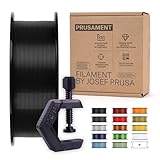
- [STRONG PETG FILAMENT FOR FUNCTIONAL 3D PRINTS] Prusament PETG is ideal for mechanical parts, brackets, clamps, tool holders, and replacement…
- [ULTRA-PRECISE DIAMETER ±0.02 mm] Each filament spool is manufactured with extremely tight diameter tolerances for consistent extrusion and smooth…
- [PERFECT FOR LARGE PRINTS WITH MINIMAL WARPING] PETG has very low shrinkage and warping, allowing you to print larger objects without deformation…
- [OUTDOOR & WATERPROOF APPLICATIONS] PETG is highly resistant to moisture and temperature changes. This makes it ideal for outdoor projects such as…
- [MANUFACTURED BY PRUSA RESEARCH] Prusament is produced in-house by the 3D printer manufacturer Prusa Research. Every spool is individually tested for…

The High-Speed PETG Trap
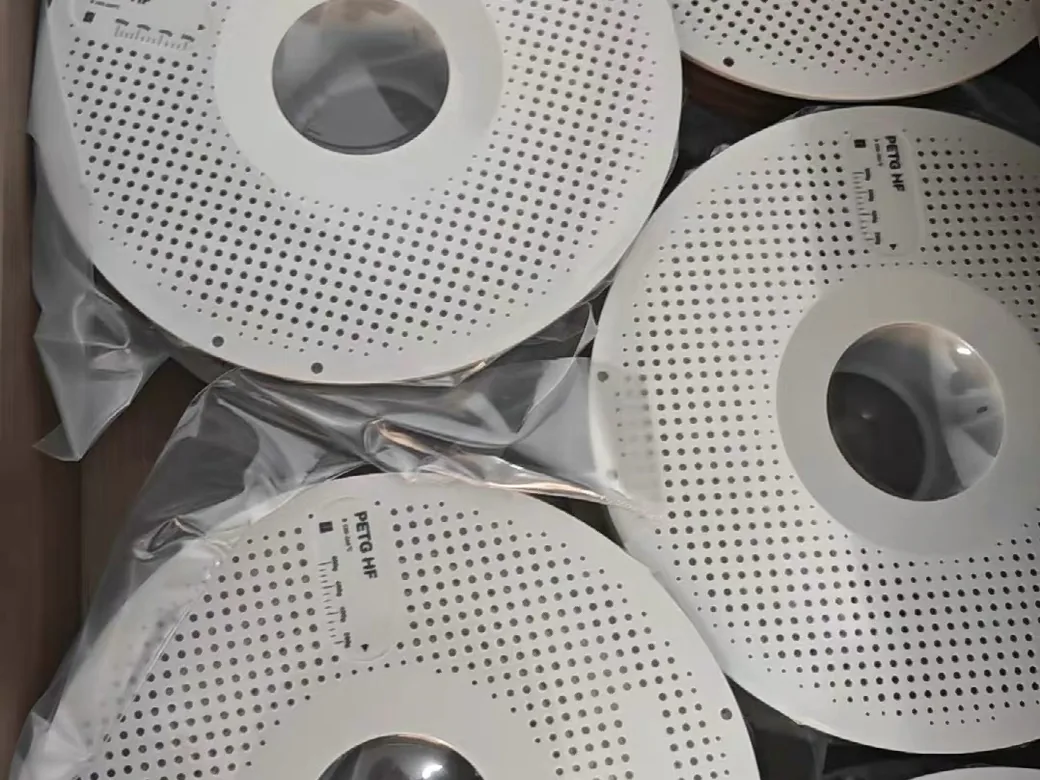
High-speed PETG is everywhere now, and the label hides a real trade-off. These filaments (Bambu PETG-HF, Elegoo Rapid, Creality Hyper, Sunlu High-Speed) flow faster and often look great with a matte finish. But that high flow comes at the cost of mechanical strength, and that surprised me the first time I saw the numbers.
The data is blunt. In perspektive3D’s testing, standard PETG showed three to four times the impact strength of the high-speed versions. Bambu’s PETG-HF actually measured lower stiffness and tensile strength than standard Sunlu and Jayo, trading rigidity for flow.
It gets more counterintuitive. In a separate destruction test by Loyal Moses, a thin-walled PETG part shattered on impact, performing worse than plain PLA. That came from thin walls and low infill, so thicker parts will hold up better. Still, the lesson stands: PETG’s tough reputation has limits, and “high-speed” on the label is a hint that some of that toughness was traded away.
The takeaway is simple. For decorative or visible parts, high-speed PETG is fine and looks good. For functional or load-bearing parts, choose standard PETG and slow down. The few extra minutes per print buy you a part that won’t crack under load. Decorative parts usually end up painted anyway. Here’s the paint and primer setup that works on PETG.
Beyond PETG: PCTG and PC-PETG
If standard PETG keeps letting you down in humidity or heat, two upgrade materials are worth knowing.
PCTG is essentially a better-behaved PETG. In one test by KHA Entertainment, PCTG that had sat at 50% humidity for three weeks still printed with almost no stringing, while PETG-HF in the same conditions failed badly. A PCTG container even survived a dishwasher cycle intact, while the PETG one cracked. For humid workshops or kitchen-adjacent prints, that moisture tolerance is a genuine upgrade, though I’d still avoid direct food contact with any layered FDM print for hygiene reasons.
PC-PETG goes the engineering route. In testing by My Tech Fun, a 50% polycarbonate blend showed layer adhesion even better than pure PC and a heat deflection temperature around 122°C, though it stays somewhat brittle. It’s a smart middle ground when you want more heat tolerance and strong bonding but not extreme impact toughness. It does print hotter and prefers an enclosure, so it’s a step up in effort.
You don’t need either for most prints. But when humidity or heat is the recurring problem, they solve it in a way that no amount of brand-switching within plain PETG will.
How to Print PETG Well
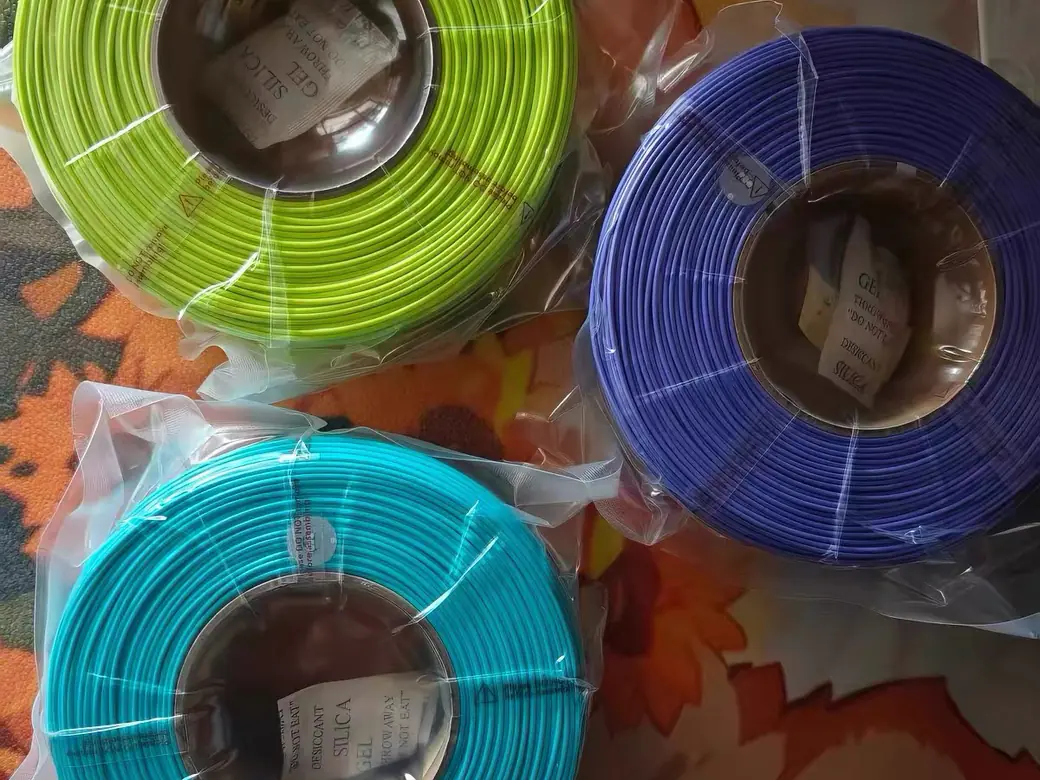
Most PETG complaints come down to settings and storage, not the filament. Get these right and almost any decent spool prints clean. These are the habits that fixed PETG for me.
Temperatures. Run the nozzle around 230 to 250°C and the bed around 70 to 85°C, with cooling turned down. PETG bonds better with less fan than PLA, so resist the urge to crank cooling for “cleaner” prints.
Stringing. Stringing is PETG’s signature annoyance. Slow your travel and print speeds slightly and tune retraction. Switching brands? Recalibrate flow first instead of trusting the old profile, since two PETGs from different makers rarely want identical settings.
Hardened nozzle? Plain PETG doesn’t need one. Only abrasive blends like carbon-fiber PETG require a hardened or ruby nozzle.
Drying and storage. This is the big one, and the single biggest fix in this whole guide. PETG absorbs moisture fast, and wet filament strings and turns brittle. Store spools in a sealed box with desiccant, and dry before important prints. New to dialing things in? Our beginner’s guide to filament settings walks through the basics.
A money-saving trick. Because PLA and PETG barely stick to each other, cheap PETG makes an excellent support interface for PLA prints. Set the support gap to zero and the supports still peel off cleanly. Even a bargain spool earns its keep that way, which is why I keep a cheap roll around just for supports.
Don’t Buy PETG If…
PETG is versatile, but it’s not always the right answer. Skip it when:
- You need heat resistance above roughly 85°C. Choose ASA or ABS instead.
- You want maximum rigidity and the crispest fine detail. PLA prints sharper.
- You can’t dry your filament and your space is very humid. Consider PCTG.
- You need a thin-walled part to survive repeated sharp impacts. Rethink the geometry or the material.
Frequently Asked Questions
What brand makes the best PETG filament? For most people, Overture offers the best balance of price, consistency, and availability. If you need maximum strength choose Polymaker, and for the tightest tolerances choose Prusament. There’s no single winner, only the best fit for your project and printer.
Is PETG actually stronger than PLA? In most ways yes. PETG has higher tensile strength, better heat resistance, and more flexibility before breaking. But independent destruction testing shows thin-walled PETG can shatter on sharp impact, sometimes worse than PLA. Wall thickness and infill matter as much as the material itself.
What is the strongest PETG filament? In the independent testing I tracked, Polymaker’s high-speed PETG led on tensile strength and layer adhesion. Just remember high-speed PETG generally trades some strength for flow, so standard formulas can be tougher on impact. The “strongest” PETG depends on whether you mean tensile, impact, or layer adhesion.
Does PETG need a hardened nozzle? No, standard PETG prints fine with a normal brass nozzle. Only abrasive blends such as carbon-fiber PETG need a hardened steel nozzle.
Why is my PETG so stringy? Usually moisture or under-tuned retraction. Dry the filament, slow your travel speed, and calibrate retraction. Stringing almost always improves once the spool is properly dry, so start there before changing anything else.
Does PETG need a dry box? It really benefits from one. PETG absorbs moisture quickly, which causes stringing and brittle layers. A sealed container with desiccant, or an active dryer, keeps prints consistent over time. If you’d rather buy than build, here are the filament dryers we’d actually pick.
What temperature should I print PETG at? Aim for roughly 240°C on the nozzle and 75 to 80°C on the bed as a starting point, with reduced part cooling. From there, run a temperature tower to fine-tune for your specific spool. Two spools can specify ranges 60°C apart, which is why PETG print temp is so hard to pin down.
Is PETG food safe? Raw PETG resin is widely used in food packaging, but a 3D printed PETG part is a different story. The layer lines trap bacteria and most filaments aren’t certified food-grade. For anything touching food, treat printed PETG as not reliably food safe. Bambu won’t publish a food contact document for its PETG either, which we get into here.
Can you print PETG without an enclosure? Yes. Unlike ABS, PETG prints well in the open air without major warping, which is part of why it’s such a popular PLA upgrade. An enclosure isn’t required.
How long does PETG last in storage? Sealed with desiccant, PETG keeps for a very long time, easily a year or more. Left open in humid air it can absorb enough moisture to print poorly within days. Storage, not shelf age, is what usually ruins a spool.
Is PETG or PLA better for outdoor use? PETG, in most cases. It handles UV, moisture, and heat far better than PLA, which gets brittle and warps in sun and heat. For sustained outdoor exposure ASA is better still, but PETG is the easy, printable middle ground.
For a broader look across machines, see our best filaments for Bambu, Creality, and Prusa guide.
Last updated June 2026. Prices and availability change often, so confirm current pricing before you buy.