
I earn a commission if you buy through links on this page, at no extra cost to you. As an Amazon Associate, I earn from qualifying purchases.
You bought your first spool of filament, weighed it, and the scale read 1.2 kilograms. So why does the label say 1kg? That mismatch confuses almost every new maker. The good news: you don’t need a chemistry degree to sort it out. The short answer for any standard roll is 1,000 grams, and this guide explains the part that trips people up, starting with why your scale disagrees with the label.
Table of Contents
- The Short Answer: 1kg = 1,000 Grams
- Net Weight vs. Gross Weight: Why Your Scale Reads More Than 1kg
- Not Every Roll Is 1kg: Standard Spool Sizes
- Same Grams, Different Length: Why Density Matters
- How Much Can You Actually Print With One Roll?
- How to Tell How Much Filament Is Left on a Partial Roll
- Is It Cheaper to Buy Bigger Rolls or Refills?
- Frequently Asked Questions
The Short Answer: 1kg = 1,000 Grams
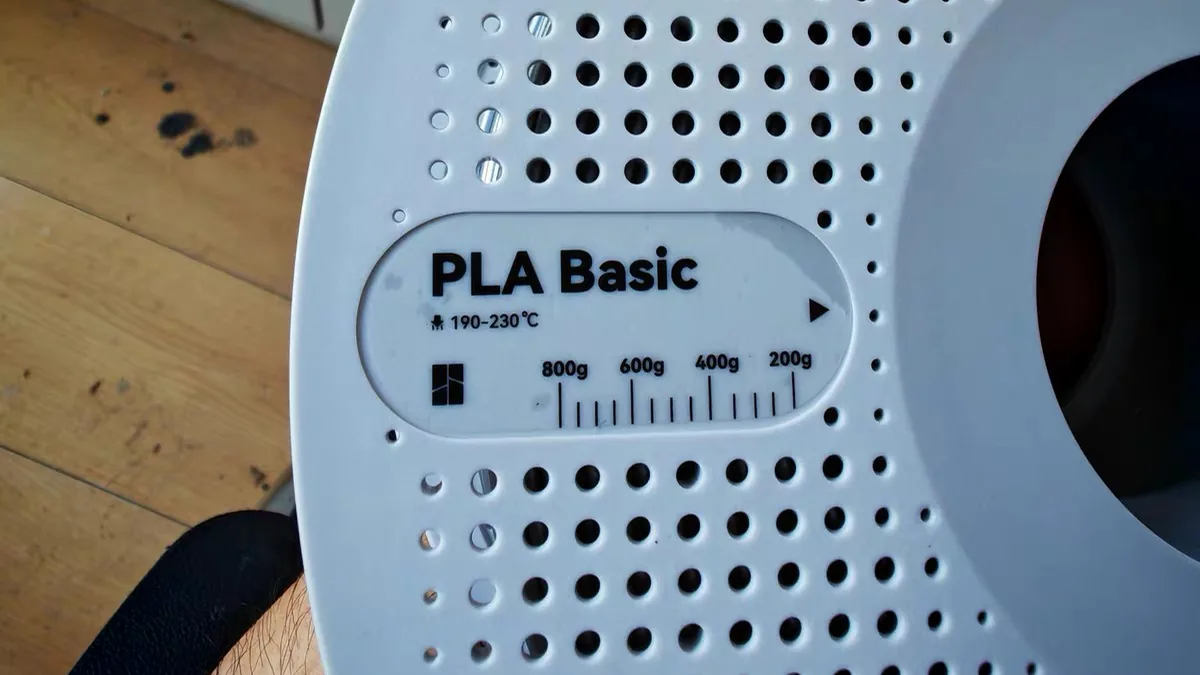
So, how many grams of filament are in a roll? A standard spool holds 1,000 grams, which is one kilogram. That number is the net weight: the usable plastic and nothing else.
Why 1kg? It hit the sweet spot decades ago. A kilogram is easy to price, easy to ship, and fits a spool small enough for most printers. The industry standardized around it, and it stuck.
Think of it like a roll of tape. The label describes the tape, not the cardboard core it wraps around. Filament works the same way. The gram count is the material you’ll actually melt and print.
Net Weight vs. Gross Weight: Why Your Scale Reads More Than 1kg
Here’s the single biggest point of confusion. Net weight is the filament alone. Gross weight is filament plus the empty spool.
Put a fresh kilogram roll on a kitchen scale and you’ll see something like 1,150 to 1,300 grams. That extra mass is the spool: the plastic or cardboard hub the filament winds onto. It’s real weight, but it isn’t printable.
The clearest proof comes from Bambu Lab’s refill system. A refill is filament wound onto a cardboard core with no plastic spool at all. You snap it onto a spool you already own. That design exists specifically because the spool is separate from the material you paid for. In fact, a printable Bambu spool alone uses about 235 grams of plastic, which shows just how much weight the empty hub adds.
Spool weight varies by type. Use this table as a rough guide:
| Spool type | Typical empty weight |
|---|---|
| Standard plastic (1kg roll) | 200–250 g |
| Bambu Lab reusable plastic | ~235 g |
| Cardboard / eco spool | 130–180 g |
| Refill (no spool) | 0 g (filament only) |
Want to confirm what you actually have? Weigh the full roll, then subtract the empty spool weight. The difference is your real filament in grams. Keep the tare number written on the spool and you’ll never guess again. If you’re still getting comfortable with the basics, our beginner’s guide to filament covers the rest of the setup.
Not Every Roll Is 1kg: Standard Spool Sizes
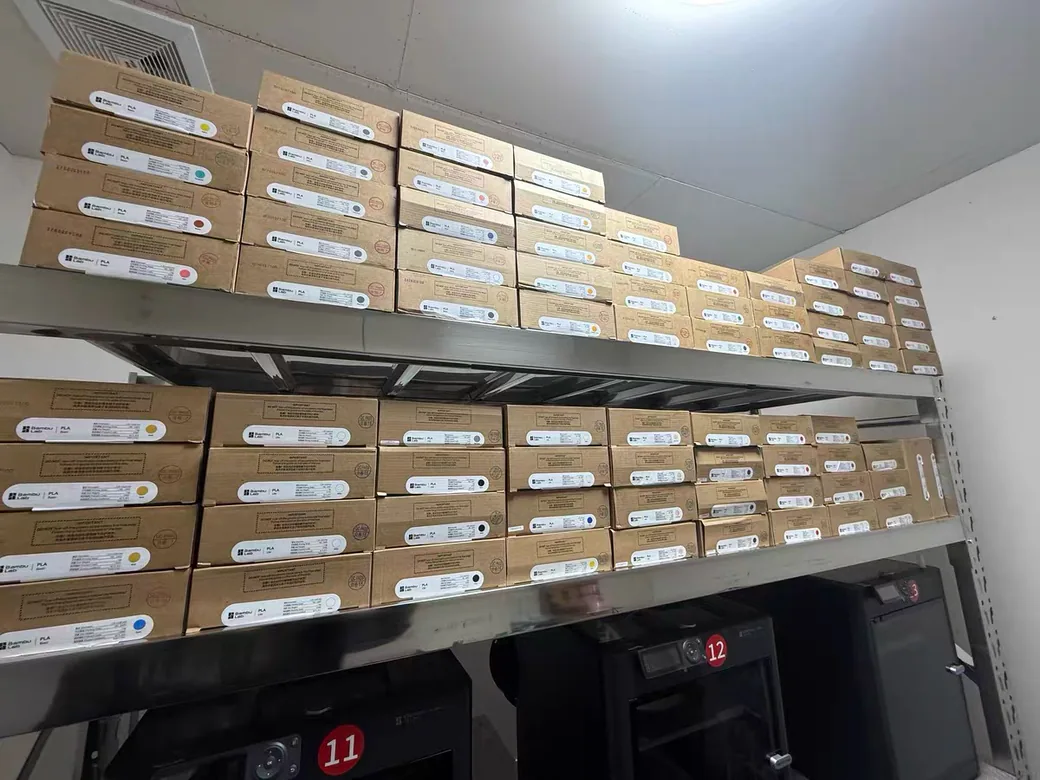
While that kilogram is the default, it’s far from the only option. Sizes range from tiny sample spools to bulk rolls built for print farms.
| Spool size | Grams of filament | Best for |
|---|---|---|
| 250 g | 250 g | Sampling a new color or brand |
| 500 g | 500 g | Small projects, specialty materials |
| 750 g | 750 g | Some nylon and engineering filaments |
| 1 kg | 1,000 g | The standard for almost everything |
| 2–3 kg | 2,000–3,000 g | Large prints, light print farms |
| 5 kg+ | 5,000 g+ | Production and heavy-use setups |
One trap catches buyers off guard: high-performance filaments often ship in smaller spools. Nylon, for example, commonly comes in 500g or 750g rolls, not 1kg, even at $50 to $100 per kilogram. Always check the net weight before comparing prices.
Will a Big Roll Even Fit Your Printer?
Bigger isn’t automatically better. A 3kg or 5kg roll is wider and heavier than a standard spool. It may not fit inside an enclosed printer or an AMS, and it can strain a lightweight spool holder.
There’s a second compatibility catch. Cardboard eco spools sometimes don’t seat properly in an AMS, which is why re-spooling tools exist to transfer that filament onto a plastic hub. If you run a multi-material system, confirm the spool dimensions, not just the weight.
Same Grams, Different Length: Why Density Matters
Two rolls can both weigh a kilogram and still give you very different lengths of filament. The reason is density. Denser materials pack more grams into fewer meters.
Length matters because your slicer estimates jobs in both grams and meters. Here’s roughly what a kilo gives you in 1.75mm filament:
| Material | Density (g/cm³) | Approx. length per 1kg (1.75mm) |
|---|---|---|
| PLA | 1.24 | ~335 m |
| PETG | 1.27 | ~330 m |
| ABS | 1.04 | ~400 m |
| TPU | 1.21 | ~340 m |
The math is simple: mass equals density times volume. ABS is lighter per cubic centimeter, so a kilogram of it stretches further than a kilogram of PETG. Additives shift this too. Carbon fiber and wood-filled filaments change the density, so their length per kilogram won’t match plain PLA. To pick the right material for a job, our filament guide comparing PLA, PETG, and ABS breaks down the trade-offs.
How Much Can You Actually Print With One Roll?
This is what most people really want to know. The honest answer: it depends on model size and your wall and infill settings. But real numbers help you plan.
In one hands-on test, a full kilogram roll of silk PLA printed seven different models plus a time-lapse tower, with a little filament left over. The slicer settings were standard: three walls, 0.2mm layer height, six top layers, four bottom layers. Change those and the count swings hard.
A cleaner rule of thumb: a 100-gram model gives you about ten copies per kilogram spool, assuming no failed prints. Scale that to your own parts and you get a quick budget. Print cost calculators do the same math automatically if you’d rather not eyeball it.
Watch for hidden waste. A time-lapse tower quietly ate 27 grams in that same test, filament you might not have planned for. And every roll ends with a stub: typically 10 to 20 grams too small for a real print. That’s not much. For scale, a filament clip weighs about 0.8 grams and a small NFC-tag holder around 3 grams, so even the leftovers have uses.
How to Tell How Much Filament Is Left on a Partial Roll
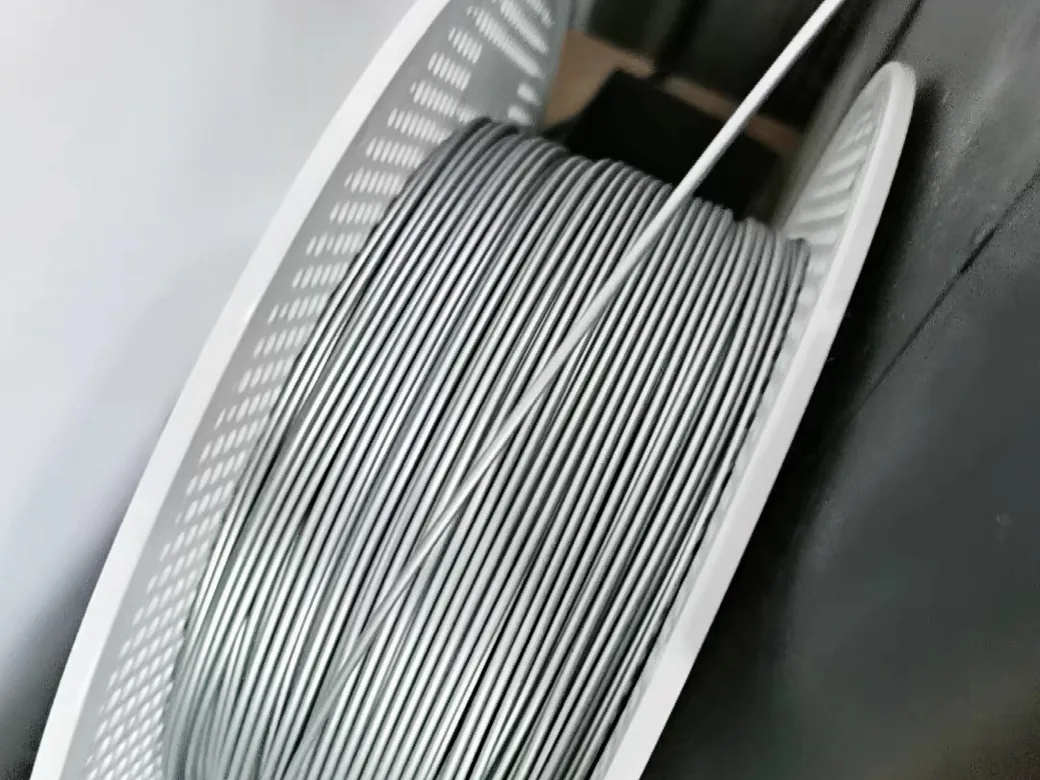
Sooner or later you’ll stare at a half-used spool and wonder if there’s enough for the next job. Two methods answer that.
The most accurate is a kitchen scale. Weigh the new spool once and subtract the known tare (the empty spool weight) to bank your baseline. After that, weigh the roll anytime and take that tare figure back off. What’s left is your remaining filament in grams. A $10 scale is the single best accessory for this.


The second method is automatic estimation. A Bambu Lab AMS, for instance, doesn’t weigh anything. It uses a filament odometer to measure how much length passes through, plus an RFID tag that triggers once per spool rotation. As a spool empties, its diameter shrinks, so each rotation releases less filament. Comparing those counts gives a percentage estimate.
It’s clever, but it’s an estimate, not a gram-level reading. Uneven winding or an oddly shaped spool can skew it, and so can a bit of slipping. The RFID tag also stores only the material type and color, never the amount remaining, which is why a refill’s tag keeps working even on a reused spool. For a deeper look at automatic handling, see how Bambu manages filament runout. When you need a precise number, trust the scale.
Is It Cheaper to Buy Bigger Rolls or Refills?
Since a roll is priced by the gram, it’s worth knowing the per-gram cost. A typical 1kg PLA spool runs $10 to $30, so one gram of PLA is worth roughly two cents. Go below about $12 a roll and you risk diameter inconsistencies that cause jams, so rock-bottom pricing isn’t always a win.
Two moves lower your real cost per gram. First, refills. Skipping the plastic spool saves money and plastic: a Bambu PLA refill runs a few dollars less than the spooled version, and membership pricing widens that gap to around $9 per roll. Second, bulk. A 3kg or 5kg spool spreads shipping and packaging across more material, dropping the price per gram.

Frequently Asked Questions
Does a 1kg roll include the spool weight? No. The 1kg figure is net weight, meaning 1,000 grams of filament only. The empty spool adds another 150 to 300 grams on top, which is why your scale reads more than a kilogram.
How long is a 1kg roll of PLA? About 335 meters in 1.75mm diameter. The exact length varies slightly by brand and by material density, so PETG runs a touch shorter and ABS noticeably longer.
How much does an empty filament spool weigh? Usually between 150 and 300 grams. Plastic spools sit near 200 to 250 grams, cardboard eco spools weigh less, and a reusable Bambu-style plastic spool is around 235 grams.
How many grams is a Bambu Lab filament roll? 1,000 grams of filament, the same net-weight standard as other brands. Bambu also sells refills, which are the filament only, with no plastic spool included.
How do I know how much filament is left on a partial roll? Weigh it and take off the spool’s tare weight to get remaining grams. An AMS can also estimate what’s left, but it’s an approximation, so a scale is more accurate.
How much is one gram of PLA worth? Roughly two cents at typical prices. A $20 spool holds 1,000 grams, which works out to about $0.02 per gram of usable filament.
CERTAIN CONTENT THAT APPEARS ON THIS SITE COMES FROM AMAZON. THIS CONTENT IS PROVIDED ‘AS IS’ AND IS SUBJECT TO CHANGE OR REMOVAL AT ANY TIME.
Price details
Product prices and availability are accurate as of the date/time indicated and are subject to change. Any price and availability information displayed on Amazon.com at the time of purchase will apply to the purchase of this product.