Why Most P2S Owners Buy the Wrong Accessories First
If you just bought the Bambu Lab P2S Combo with AMS 2 Pro, you’re already ahead of most beginners.
This machine arrives with a fully enclosed chamber, active ventilation, multi-material capability, and an automatic drying system built directly into the AMS.
In other words: the P2S is one of the few printers on the market that doesn’t require a pile of upgrades on day one.
Yet if you search Reddit or YouTube, you’ll see the same pattern over and over:
- New users rush to buy 20-piece “3D printing accessory kits.”
- They stock up on exotic nozzles they never use.
- They buy build plates they don’t understand.
- And after a week, they end up saying:
“I spent $100+ on accessories… and none of them improved my prints.”
The truth is simple: With the P2S Combo, most accessories can wait — but a few make a huge difference from the very beginning.
This guide breaks everything down into three clear lists:
- What you should buy first (high impact essentials)
- What you might buy later (once you know your style)
- What you should not buy yet (overhyped or unnecessary)
Everything here is based on real community feedback, verified reviews, and actual user experience, not sponsored hype.
What You Should Buy First (High-Impact Essentials)
These are the accessories that make an immediate, noticeable difference.
They solve real problems new P2S owners face in their first week — filament handling, cleanup, maintenance, and moisture control.
1) Quality PLA Filament (Your Real Day-One Essential)
If you’re new to 3D printing, the single most impactful “accessory” you can buy isn’t hardware — it’s reliable PLA filament.
The P2S Combo comes calibrated for Bambu’s own PLA out of the box, which means you can start printing within minutes. But you will burn through filament faster than you think. Benchies, poop chutes, calibration prints, tool trays, organizers — these all add up.
Why PLA should be your first purchase:
- It prints perfectly with the P2S factory profile.
- It hides mistakes better than PETG or ABS.
- It doesn’t need high chamber temperatures.
- It is ideal for learning slicer settings, tolerances, and supports.
How much to buy?
Start with 3–6 rolls of PLA Basic or PLA Matte. You’ll use all of them.
Brands worth considering:
- Bambu Lab PLA Basic / Matte
- Any brand with dimensional accuracy ±0.02–0.03 mm
- Avoid ultra-cheap, unbranded Amazon spools — inconsistent tolerances cause the AMS to jam.
Bottom line:
PLA is how you learn your printer. Don’t overthink it. Stock a few colors and start printing.


2) A Real Tool Kit (Not the Cheap Amazon Bundle)
Every P2S owner eventually discovers the same truth: Good tools make troubleshooting easier.
You’ll be removing supports, trimming brim edges, tightening screws, and occasionally opening the toolhead.
The “free tools” that come with most printers are usable in an emergency, but they’re uncomfortable and imprecise.
Tools you will use weekly:
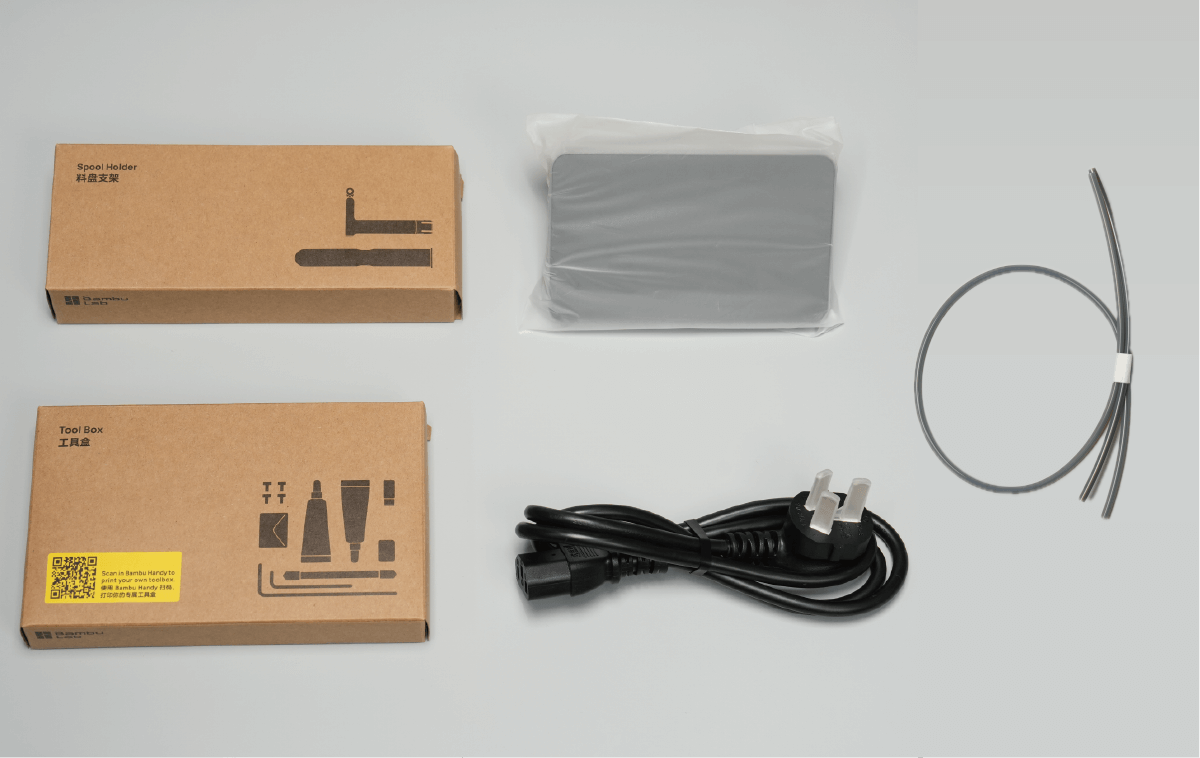
- 1.5 mm & 2.0 mm hex drivers (Wera/Wiha style, not L-shaped keys)
- Flush cutters (for trimming filament, removing supports)
- Needle-nose pliers (for gripping tiny pieces)
- Hobby knife / precision blade
- Mini file set (for cleaning tight tolerances)


Why not buy a huge 20-piece kit?
Because you’ll only ever use 5–6 items. Everything else rusts in a drawer.
Bottom line:
Spend on a few high-quality tools instead of buying a giant, low-quality multi-pack.
3) Desiccant + Humidity Control (How the AMS 2 Pro Works Best)
The AMS 2 Pro has active ventilation and heated drying, but it isn’t magic.
It maintains low humidity while printing, but it can’t keep your filament perfectly dry if the ambient humidity is high.
That’s where desiccant comes in.
Even Bambu’s own documentation encourages using it. Most experienced users do the same: they place dry desiccant beads inside the AMS and inside their filament storage boxes.
What to buy:
- Orange reusable silica gel beads
(avoid blue beads — unnecessary chemicals, harder to monitor) - 2–3 mini hygrometers
(throw them into the storage box to verify humidity < 20%)

- Desiccant Deads Size: VOISEN silica beads are 3-5mm in size and have a bright orange color. Desiccant beads have a strong hygroscopic property and can effectively absorb moisture in the air, keeping items dry and preventing moisture damage to the items, thus protecting the quality of the items.
- Color Indication: Orange silica gel will change to Dark Green when 50-60% absorbed with moisture; Still almost half more capacity is left to absorb moisture even after color change. Recommended to check the color of silica gel beads regularly to ensure their effectiveness
- Reusable:Once desiccant beads turn dark green, can be reactivated by placing in the oven for 0.5 to 2 hours at 200 to 250F Or Microwave for 10 Minutes at defrost mode; They may take shorter than the recommended time, please check the color of the silica beads periodically
- Easy to Use: Our silica desiccant beads are stored in a sealed plastic container for long-term preservation and protection. During use,you can put the silica beads in organza bags, muslin bags, or any other breathable bags to use and observe, so that they can effectively play their role.
- Widely Application: Reusable desiccant beads can be widely used in daily life. You can use it to effectively prevent moisture damage to 3D printer filament, Electronic Devices, Camera, Documents, Jewelry, Gun Safe, clothes and many other valuables.
Why it matters:
PLA absorbs moisture slowly, PETG absorbs it faster, and nylons even faster. Drying cycles can help, but it’s far easier to keep filament dry than to re-dry it every time.
Bottom line:
Desiccant + hygrometers = cheap, effective filament management.
Works perfectly with the AMS 2 Pro’s built-in drying cycle.
4) Simple Filament Storage (Vacuum Bags or Airtight Boxes)
The P2S Combo encourages you to try multiple colors and materials — which means you’ll eventually have more spools than your AMS can hold.
A clean storage method prevents moisture damage before it becomes a printing issue.
Two low-cost solutions:
Option A: Vacuum Bags + Hand Pump (Best for small spaces)
- Inexpensive
- Space-efficient
- Ideal for PLA and PETG
- Works great if you have fewer than ~8 rolls on hand


Option B: Airtight Storage Box + Desiccant (Best for larger collections)
Popular choices from the community include:
- Ezy Storage IP-67 boxes
- Sterilite gasketed boxes
- Any rigid bin with a silicone seal
These keep humidity stable and dramatically reduce the need for frequent re-drying cycles.
Bottom line:
If you own more than 4 rolls of filament, storage becomes as important as the filament itself.


Accessories You Might Need Later (After You Print for a While)
Not every upgrade needs to happen on day one.
The P2S Combo is already a mature, fully featured machine — so most accessories only become useful once you actually understand how you print.
Below are the upgrades that matter after you’ve printed enough to know your workflow, materials, and pain points.
5) Hardened 0.6 mm Nozzle (Only if You Print CF/GF)
Let’s clear up a huge misconception: A hardened nozzle is not a beginner accessory.
You don’t need it for PLA.
You don’t need it for PETG.
You don’t need it for daily printing.
You only need it if you decide to use abrasive materials like:
- Carbon-fiber reinforced PLA / PETG
- Glass-fiber filaments
- ABS-GF / ASA-GF
- Nylon-CF / PAHT-CF
Why 0.6 mm?
Because abrasive materials tend to clog 0.4 mm nozzles more easily, and the wider orifice provides better flow and fewer jams.
When to buy:
- When you actually purchase CF/GF material
- When you start making functional, load-bearing parts
- When you’re ready for more advanced materials
When not to buy:
- When you only print PLA
- When you’re still learning slicer basics
- When you just think “upgrades = better prints” (they don’t)
Bottom line:
A hardened nozzle is a performance accessory, not a starter accessory.
6) Extra Hotend (Convenient, but Not Mandatory)
A spare hotend is like an insurance policy:
You don’t need it until you really, really need it.
Situations where an extra hotend makes life easier:
- You switch between abrasive and non-abrasive materials frequently
- You clog a nozzle the night before a deadline
- You want to test different nozzle sizes without disassembling the whole toolhead
- You print for clients or run the printer commercially
Why it’s not essential on day one:
- Bambu hotends are reliable
- Most new users print only PLA for weeks or months
- A single default toolhead is enough for learning, tuning, and calibrating
Bottom line:
A spare hotend becomes useful only when your production volume increases or you start experimenting with advanced materials.

- 【Compatible 3D Printers】: This 2pcs extruder hotend replacement kits are compatible with Bambu Lab H2S/H2D/P2S/H2D Combo/A1/A1 Mini FDM 3d printers, not for other 3d printer models. Please confirm your 3d printer model before ordering.
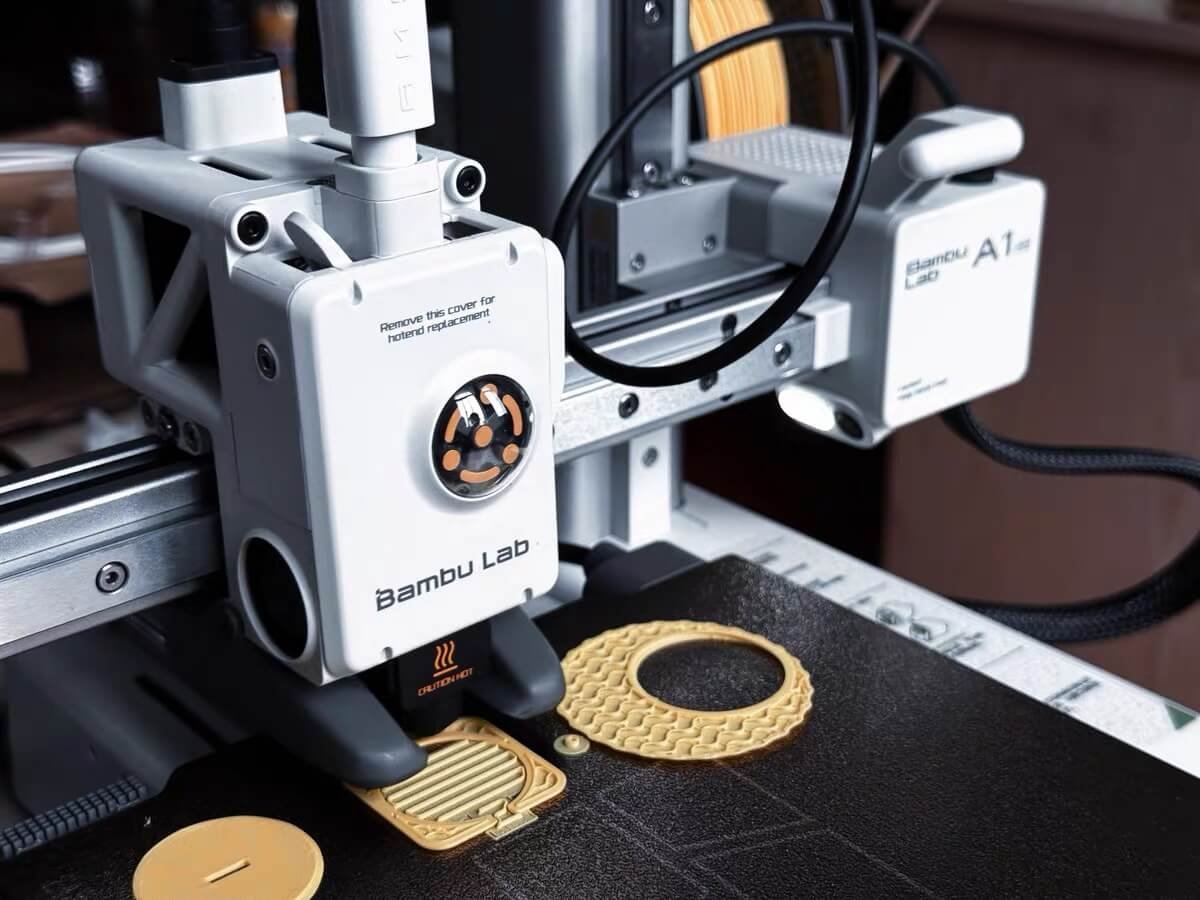
- 【Easy Installation】: Compact form factor, the heater block, heatbreak and silicone socks come with modular design, eliminating the need for wiring and stripping work. Therefore, this assembled printhead hotend is very easy to install on Bambu Lab H2D 3D printers.
- 【High Quality 3D Printer Accessories】: Includes 2 packs assembled 0.4mm hotend kits: high precision nozzle, throat tube, heater block and silicone socks for smoother printing and better 3D printed models.
- 【Support High Speed Printing】: Semi-assembled hotend with all-metal throat design makes the print head heated evenly and the filament flows smoothly in the throat nozzle to support high speed printing. And produced by a rigorous design and testing team, no leakage and clogging, you can easily start your 3D printing experience.
- 【Hardened Steel Nozzle】: The maximum working temperature of hardened steel nozzle can reach 500-650 ℃, much higher than stainless steel (350 ℃) and brass (300 ℃), and supports printing of high-temperature filaments, such as PEEK and PEI.
7) Alternative Build Plates (Smooth PEI, Engineering Plates, Cool Plates)
The P2S ships with a textured PEI plate that covers 90% of printing scenarios perfectly.
However, every build plate has its personality:
Smooth PEI Plate
- Best for glossy, “glass-like” bottom surfaces
- Great for display models
- More sensitive to fingerprints and oils
- PLA sticks hard if not prepped properly
Engineering Plate
- Designed for engineering filaments
- Higher adhesion for warping materials
- Overkill for PLA-only users
Cool Plate / High-Temperature Plates
- Niche use cases
- Mostly for tricky filaments or specific surface finishes
When to upgrade:
- When you want a cleaner, shinier bottom finish
- When you print PETG/ABS/ASA regularly
- When you feel limited by the default plate’s texture
When to wait:
- When you’re still learning
- When your default PEI plate works perfectly
- When your only reason is “everyone buys extra plates”
Bottom line:
Extra plates are useful only after your workflow stabilizes.
8) Multi-Roll Filament Dryer (Environmental or High-Volume Use)
The AMS 2 Pro already includes a heated drying cycle, which is more than enough for PLA and light PETG use.
But external dryers shine in two specific cases:
Case 1: You live in a very humid region
If your ambient humidity is consistently above 55–60%, then even PLA absorbs enough moisture to cause:
- Stringing
- Popping
- Matte surface when it should be glossy
- Weak layer adhesion
In this case, a Sunlu S4 / Eibos / Sovol multi-roll dryer can reduce frustration dramatically.

- 4 Spool Capacity: SUNLU 3D printer filament dryer S4 can dry up to four 1kg 3D printer filaments, enhancing drying efficiency and printing quality when drying while printing.
- 3D printer Filament Dryer S4 Size: SUNLU filament dryer S4 is notably large in size. External size – 460(L) * 220(W) * 310(H)mm, internal size – 450(L) * 175(W) * 207(H)mm, net weight – 4KG.
- 8 Filament Exit Holes: SUNLU filament dryer S4 features eight filament outlets, ideal for multiple printers and various filament loading angles, smoother loading and printing.
- 350W PTC Heater: SUNLU filament dryer S4 is equipped with a 350W PTC heater, offering safety and higher heating efficiency (50% higher than the FilaDryer S2).
- 3 Circulation Fans: Three high-quality fans circulate air inside, ensuring consistent temperature across the entire area for more even drying, 360° surround heating.
Case 2: You keep more spools than the AMS can hold
Once you own 8–12+ rolls, rotating them through a dryer becomes tedious.
A multi-roll dryer lets you revive multiple spools at once.
When it’s not needed:
- If you print in a climate-controlled room
- If you own fewer than 4 spools
- If you only print PLA and rarely encounter moisture issues
Bottom line:
External dryers complement the AMS — but they’re only worthwhile when humidity or volume demands it.
Recommended Shopping List (Simple & Practical)
After dozens of hours reading real user feedback and testing the P2S myself, this is the definitive shopping list that balances cost, usefulness, and long-term value.
No fluff. No hype. Just what actually makes printing easier.
I’ve divided everything into three groups depending on how quickly you’ll benefit from them.
Essential (Buy These First)
These items have the biggest day-one impact. They prevent common issues and make the P2S experience smoother.
✔ High-quality PLA filament (3–6 rolls)
The machine is pre-tuned for PLA, and you’ll use more filament than you expect.
Whether it’s calibration prints, poop chutes, organizers, or your first serious models, PLA is where all P2S journeys begin.
✔ Precision hex drivers (1.5 mm & 2.0 mm)
Comfortable, durable screwdrivers make toolhead maintenance and frame adjustments far easier than the default L-keys.
✔ Flush cutters + needle-nose pliers
Great for removing supports and trimming brims cleanly.
✔ Orange silica gel (reusable)
Works with the AMS 2 Pro’s drying system and prevents moisture-related print issues.
✔ Mini hygrometers
Let you verify humidity levels in your filament storage (<20% is ideal).
✔ Vacuum bags or a gasketed storage box
Keeps spare filament dry and reduces the frequency of AMS drying cycles.
Secondary (Useful Once You Print More)
Buy these when you know your printing habits and have a few weeks of experience.
✔ 0.6 mm hardened nozzle
Essential for carbon-fiber or glass-fiber filaments.
Not needed for PLA.
✔ Spare hotend
Useful for heavy users, small businesses, or those who print multiple materials weekly.
✔ Smooth PEI plate
Only if you want glossy bottom surfaces.
Overkill for beginners.
✔ Multi-roll filament dryer (Sunlu S4, Eibos, Sovol)
Helpful in humid climates or if you maintain a large filament collection.
AMS 2 Pro users may not need this immediately.
Final Recommendation: How to Choose the Right Accessories in 30 Seconds
Most new P2S owners overthink accessories.
Here’s the simplest, most accurate way to decide what to buy — based entirely on your situation.
If you’re a complete beginner
Buy only these:
- PLA filament
- Hex drivers
- Flush cutters
- Desiccant + hygrometers
- Basic filament storage
Skip everything else.
You don’t need nozzles, plates, hotends, or fancy upgrades yet.
If you print in a humid environment
Add these:
- Vacuum bags or airtight storage box
- Extra desiccant (AMS + storage)
- Optional: external dryer (Sunlu S4, Eibos)
Humidity will cause way more issues than hardware limitations — fix it early.
If you want multi-material reliabilit
Focus on AMS stability:
- PTFE clips
- Filament entry guides
- Desiccant rollers
- Poop chute to keep purge waste tidy
These give the AMS a smoother, more consistent workflow.
If you plan to print advanced materials (CF/GF, PETG-CF, Nylon)
Then — and only then — buy:
- 0.6 mm hardened nozzle
- Spare hotend
- Engineering plate
For everyday PLA printing, you don’t need any of these.
If you care about organization or aesthetics
Print these (free on MakerWorld):
- P2S riser
- Tool drawer
- Cable comb
- Spool holder
They make your setup cleaner without spending money.
⭐ The 30-Second Rule
If you can’t clearly explain why you need an accessory, you don’t need it yet.
The P2S Combo is already one of the most complete consumer printers ever made.
Start simple, learn your machine, then upgrade with purpose.
FAQ: Common Questions About P2S Combo Accessories
Q1. Do I need a filament dryer if I already have the AMS 2 Pro?
Not at the beginning.
The AMS 2 Pro has an excellent built-in drying cycle and active ventilation system.
However, if you live in a humid region or store more than 4–6 spools, an external dryer becomes useful for “resetting” multiple rolls at once.
Beginners: Not required
Humid climate / advanced materials: Very helpful
Q2. Should beginners buy extra nozzles for the P2S?
No.
Stick with the stock 0.4 mm nozzle.
You only need a 0.6 mm hardened nozzle when you start printing carbon-fiber or glass-fiber materials.
Q3. What accessories improve print quality the most for new users?
Just three things:
- Good PLA filament
- A set of proper hex drivers and cutters
- Dry filament (desiccant + basic storage)
Everything else affects convenience, not print quality.
Q4. What should I print first after unboxing the P2S?
Start with these free MakerWorld models:
- Poop chute: keeps purge waste contained
- Tool drawer: organizes your workspace
- Bed level test: verifies print consistency
- Tolerance test: checks accuracy
These give instant improvements to cleanliness and calibration.
Q5. Does the P2S need a smooth PEI plate for better surfaces?
Only if you want glossy bottom surfaces.
The stock textured PEI plate is excellent for adhesion and works for 90% of materials.
Smooth PEI is optional, not essential.
Q6. Does the P2S need a smooth PEI plate for better surfaces?
Almost never.
These bundles are filled with low-quality tools you will replace later.
Buy fewer, better tools instead: good hex drivers, flush cutters, a hobby knife.
Q7. How can I improve the reliability of multi-color printing?
These printable accessories help most:
- PTFE tube clips
- Filament entry guides
- AMS desiccant roller
- A proper poop chute
They reduce jams, improve feed angles, and keep everything clean.
Q8. Do I need a spare hotend for the P2S?
Not for normal use.
Get one only if:
- You print daily
- You run CF/GF materials
- You want instant swap-outs for downtime-sensitive work
Otherwise, the stock hotend will last a long time.
Q9. How many spools should I store before upgrading storage?
If you own more than 4 rolls, basic storage (vacuum bags or airtight boxes) becomes worthwhile.
Above 10 rolls, humidity control becomes essential.
Q10. Are printable accessories safe for the P2S?
Yes — as long as you follow these rules:
- Use PLA or PETG for non-heated areas
- Use PETG for AMS or risers exposed to warmth
- Avoid putting PLA prints inside the AMS during drying cycles
- Never block ventilation paths
MakerWorld models labeled “P2S” or “P2 Series” are usually well tested.
Q11. What is the cheapest but most effective upgrade for the P2S?
Dry filament.
One $10 bag of reusable orange silica gel will prevent 90% of moisture-related failures.
Q12. What is the most overrated accessory for new P2S owners?
Nozzle packs.
Most beginners never use them — they also cause the most accidental damage.
Q13. Which accessories help reduce noise?
- P2S/AMS risers (reduce vibration)
- Printed anti-vibration feet
- Ensuring the printer sits on a rigid, flat surface
The P2S is already quiet; small tweaks help but aren’t required.
Q14. What’s the very first upgrade I should print?
The poop chute.
It keeps your workspace clean from the first multi-color print.
Q15. What if I only want to buy one thing today?
Buy PLA + a proper hex driver set.
These two items have a bigger impact on real-world usability than any hardware upgrade.