We’ll update this post with full specs after the official launch.
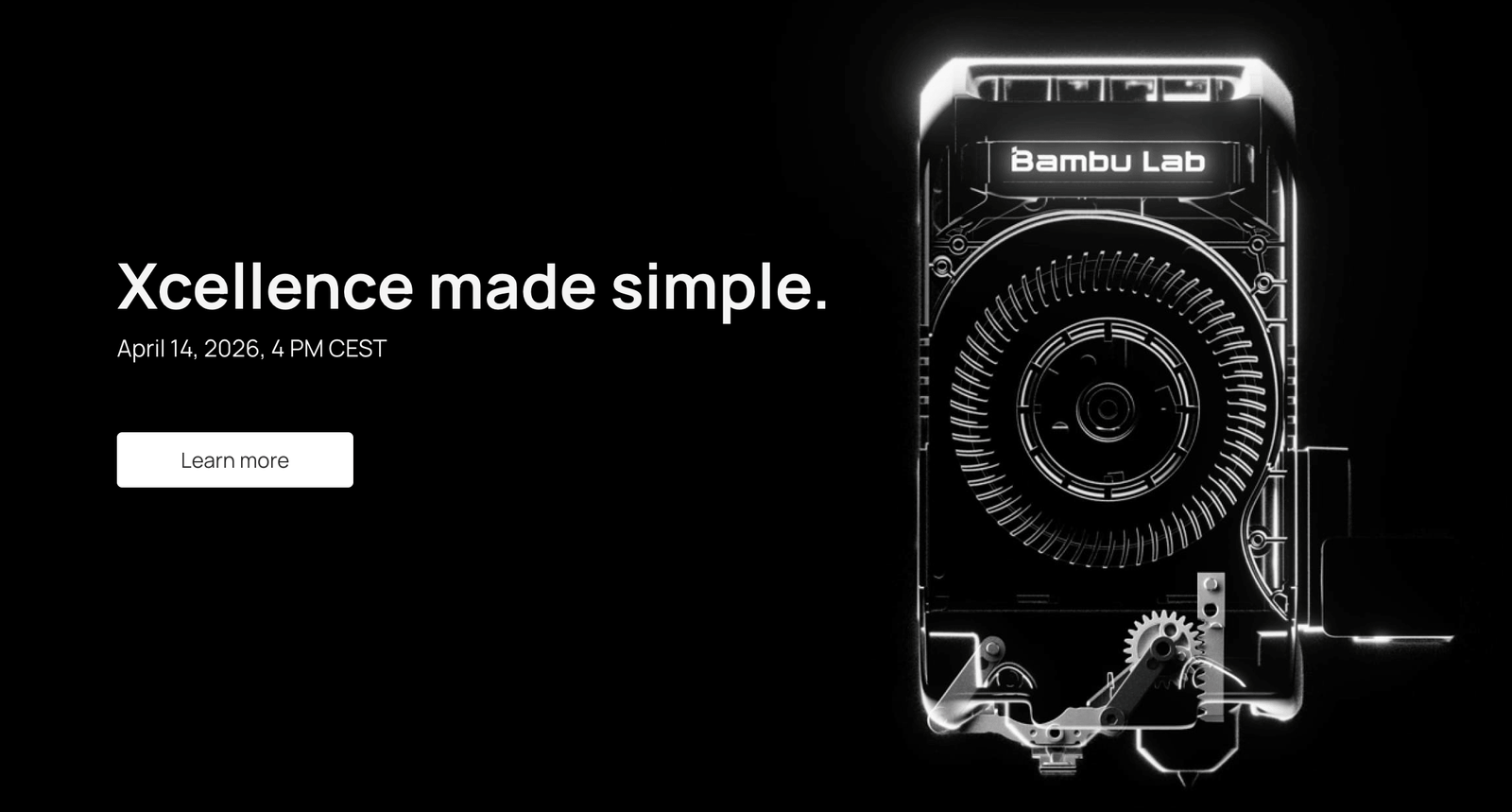
The 3D printing community has been buzzing for weeks. Bambu Lab quietly retired the entire X1 series — the X1, X1 Carbon, and X1E are all officially end-of-life — and almost immediately, a teaser appeared on the Bambu Lab homepage under the banner “Xcellence made simple.”
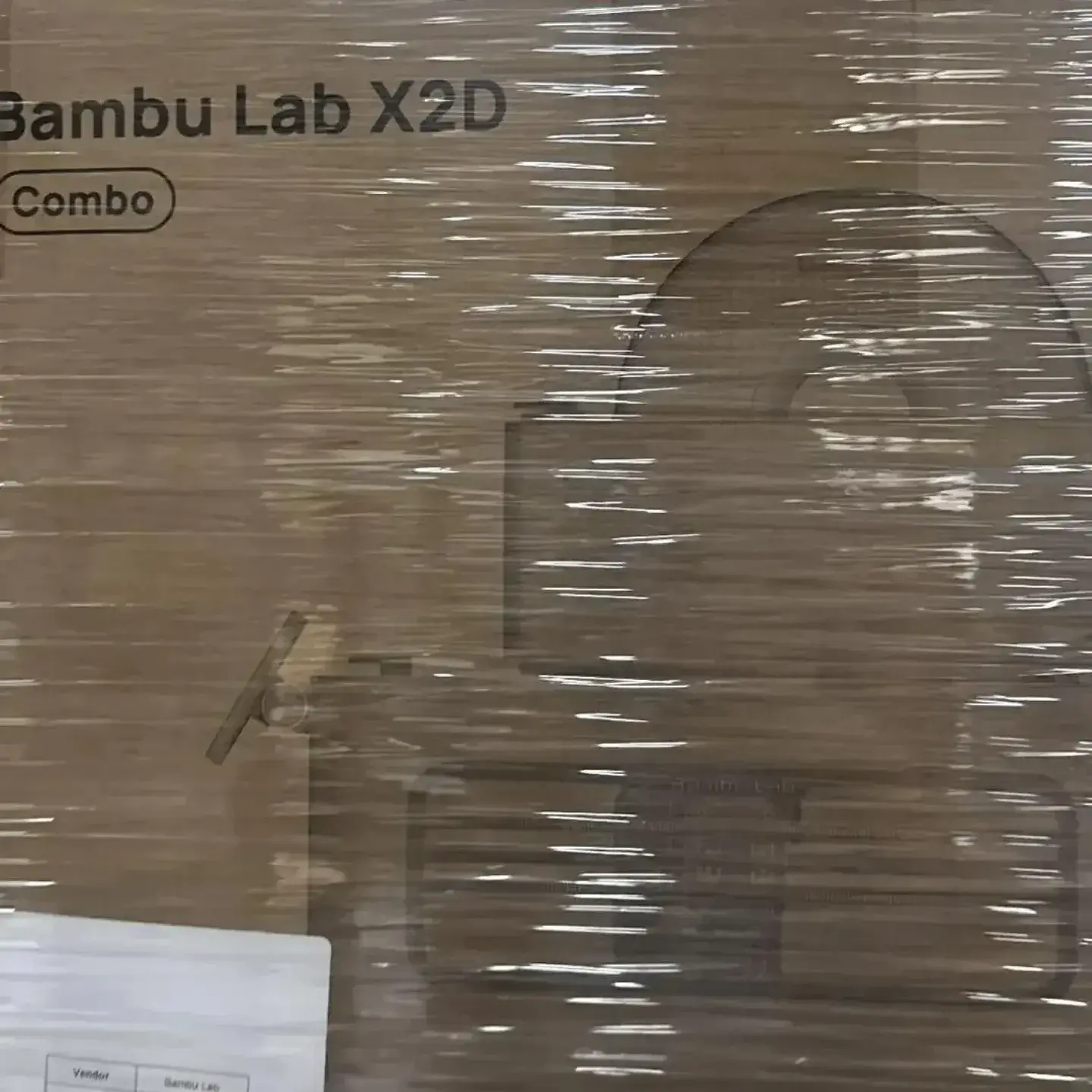
Then earlier this week, photos surfaced on Reddit of a Bambu Lab X2D box sitting in a US Microcenter warehouse. The machine is real. The launch is April 14.
Here’s everything we know right now.
Why the X2D matters
The X1 Carbon wasn’t just a printer — it was the benchmark. For years, it was the answer to “what should I buy if I’m serious about 3D printing?” Fast, enclosed, LiDAR-assisted, and reliable enough for demanding materials. When Bambu Lab discontinued it, they left a real gap in their lineup.
The P2S fills part of that gap — it’s an excellent machine at a competitive price. But it’s single-nozzle. The H2D, launched in early 2025, brought dual extrusion to Bambu Lab’s lineup but at a large footprint and a premium price point starting at $1,899.
The X2D looks like the machine positioned squarely between them: dual extrusion in a compact, X1-sized body, aimed at makers who want H2D-level material capability without the H2D’s size and cost.
What we know about the specs (pre-launch)
Based on leaked images circulating on Reddit and Chinese platforms, plus Bambu Lab’s own teaser page, here’s what’s been pieced together:
Body and build volume
- Same footprint as the P2S — compact compared to the H2D
- Build volume expected at 256 × 256 × 256mm, matching the X1 Carbon
- Left side active cooling fan included as standard — an optional add-on on the P2S
Print head
- Dual hot ends — the defining feature, and what the “D” in X2D stands for
- LiDAR module visible in Bambu’s teaser render — an X1-series feature the P2S doesn’t have
- In-position filament cutting and retraction: the toolhead handles material changes at its current position rather than traveling to a fixed zone, significantly simplifying multi-material swaps
Material handling
- AMS compatible, with dual filament buffers at the back
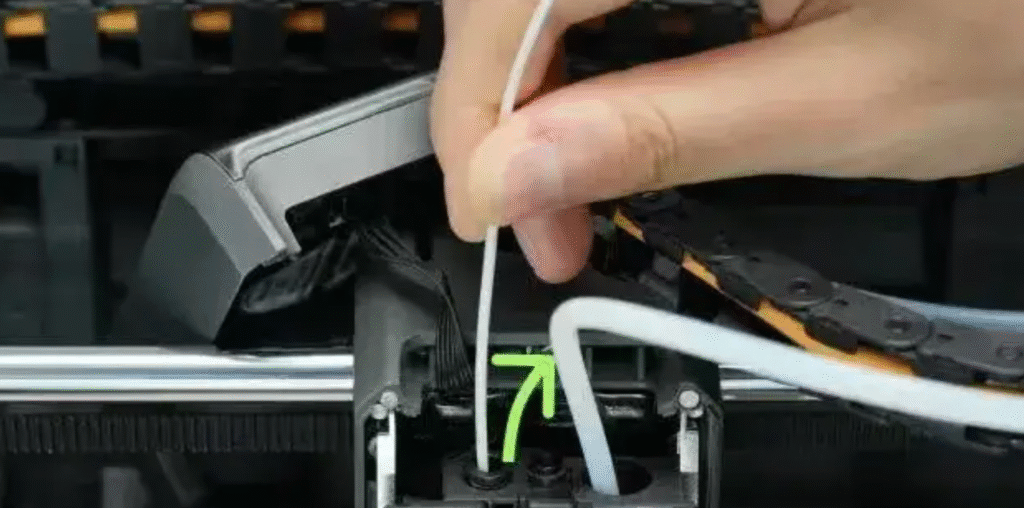
- Dedicated TPU feeding system — this is the headline upgrade for flexible filament users (more on this below)
Hardware refinements
- Carbon fiber rods replaced with stainless steel linear rails — easier maintenance, similar precision
- Full camera suite expected (consistent with X1-series feature set)
The TPU story — why it’s a bigger deal than it sounds
If you’ve tried printing TPU through a standard Bambu AMS setup, you know the frustration. Flexible filaments bind, slip, and clog in ways rigid filaments don’t. Most Bambu users end up running TPU directly from an external spool, bypassing the AMS entirely, and manually swapping whenever they need a flexible section.
The X2D’s reported dedicated TPU feeding mechanism is designed to solve this at the hardware level — a specialized intake system built for soft filaments that addresses the three main failure modes: slow feeding, jamming at the feeder, and slipping under tension.
If this works as described, it’s not just a feature — it’s fixing a workflow that’s been frustrating Bambu users since the AMS launched. And if the accessory turns out to be compatible with other Bambu printers (as some in the community are speculating), that’s a much bigger deal for the entire ecosystem.


How does it fit against the current lineup?
Here’s the honest positioning picture:
X2D vs P2S
The P2S is excellent and costs less. But it’s single-nozzle, which means multi-material printing relies entirely on the AMS purge system — wasteful and slow for complex jobs. The X2D adds true dual extrusion, the LiDAR module, and the TPU system. If you print multi-material regularly or work with flexible filaments, the upgrade is meaningful.


X2D vs H2D
The H2D is a larger, more capable machine — bigger build volume, servo extruder system, optional laser modules. It’s also significantly more expensive and physically larger. The X2D trades build size and some high-end features for a more familiar X1-class footprint and presumably a lower price point. For most desktop users, the X2D’s 256mm cube is more than enough.
X2D vs Snapmaker U1 / Bambu H2C
This is where the community debate gets interesting.
Both the H2C (Bambu’s Vortek-equipped model) and the Snapmaker U1 offer multi-material printing with dramatically less purge waste than traditional AMS setups — the H2C achieves zero purge waste for up to 7 materials via hotend swapping.
The X2D’s dual-nozzle system should produce significantly less purge waste between its two materials as well — though we don’t yet know whether it uses a true IDEX architecture (like the H2D, where each head parks independently) or a simpler fixed dual-nozzle setup.
That distinction matters for how much waste is actually eliminated. For makers who want truly waste-free multi-color printing across many colors, the H2C might be the smarter buy regardless. For those who primarily need reliable dual-material capability — think rigid + flexible, or model + soluble support — the X2D’s approach looks clean and practical.

Who should buy the X2D?
The X2D looks like a strong fit for:
- TPU and flexible filament users who want AMS-level convenience without the headaches
- X1 Carbon owners looking to upgrade — familiar footprint, meaningful new capabilities
- Makers who do dual-material work (rigid + flexible combinations, soluble supports) and find the H2D overkill
- Anyone who found the P2S compelling but wanted dual extrusion
It’s probably not the right call for:
- Makers who primarily do multi-color printing with 4+ colors — the H2C’s Vortek system or AMS-heavy workflows will serve you better
- Those who need a larger build volume — the H2D’s 350 × 320 × 325mm footprint is in a different class
- Budget buyers — the P2S or A1 series will do what you need for less
What we don’t know yet
- Pricing — no leaks have confirmed a number, though the community is expecting something in the $800–$1,200 range for the base unit, with the Combo likely higher
- Exact TPU system specs — how it integrates with AMS, whether it ships in the box or as an accessory
- Heated chamber — some speculation it carries over from X1E/H2D, not confirmed
- Dual-nozzle architecture — whether X2D uses true IDEX (independent carriages, like the H2D) or a fixed dual-nozzle on a single toolhead; this significantly affects purge waste and print modes like duplicate/mirror
When and where to buy
The official announcement is April 14, 2026 at 10 AM EDT (4 PM CEST / 10 PM China Standard Time). Based on previous Bambu launches, pre-orders typically open the same day as the announcement. Expect availability through:
- Bambu Lab’s official store (bambulab.com)
- Microcenter (US) — units are already in warehouses
- Authorized resellers in EU, AU, and other regions
We’ll be updating this post with full specs, pricing, and first impressions immediately after the April 14 announcement. Bookmark it or follow us for the update.