Table of Contents
Introduction
Christmas gifting is getting harder each year. Everyone already has a Kindle, smartwatch, and wireless earbuds. But a 3D printer?
That’s different. It’s creative, practical, and surprisingly fun if you choose the right one.
The problem is: the 3D printing market exploded in the last two years. Speeds jumped from 60mm/s to 500mm/s. Auto-leveling became standard. Multi-color features went from “expert-only hack” to “anyone can do it.” Even $250 printers today outperform $600 printers from just a few seasons ago.
This is great news for gift buyers…
But it also makes the decision confusing.
Is a 3D printer a good Christmas gift?
Which type is right—FDM or resin?
How much should you spend without overthinking it?
Will the recipient actually use it—or abandon it after New Year’s?
In this guide, you’ll get a clear, honest, real-world breakdown of everything you must know before gifting a 3D printer in 2025/2026. No hype. No manufacturer jargon. Just practical advice, grounded in real user experiences from Reddit communities, YouTube reviews, and hobbyist forums.
Let’s start with the most important question of all.
Should You Gift a 3D Printer This Christmas?
When it’s a fantastic gift
A 3D printer is a genuinely memorable gift when the recipient fits one of these profiles:
They like DIY or hands-on hobbies
If they enjoy building things, custom gadgets, small repairs, gaming setup accessories, or “tools that make more tools,” they’ll get hooked on 3D printing fast.
They’ve mentioned it before—or watched 3D printing videos
A scroll through their YouTube watch history revealing “3D printing tips,” “satisfying timelapses,” or “Bambu/K1/Kobra reviews” is your green light.
Teenagers interested in STEM, design, robotics
Teachers and parents consistently report that teens quickly turn 3D printing into school projects, science fair models, or creative hobbies.
Makers who already own one and want a second printer
This group is more common than you’d think. Many hobbyists keep one machine tuned for fast PLA, another for high-detail or specialty materials.
When it’s not the right gift
A 3D printer is not a universal gift. In fact, gifting it to the wrong person can backfire:
They’re not patient or easily frustrated by tech
Real user sentiment from Reddit repeats this theme again and again:
“3D printing isn’t plug-and-play like a paper printer. You will have to tweak things.”
If the recipient hates troubleshooting—even small things—this might not be ideal.
Their living space can’t handle noise or extra equipment
3D printers are quieter than before, but not silent. Not every machine works well in a bedroom or tiny apartment.
They don’t have interest in learning lightweight software
Even with great slicers today, a little learning is unavoidable.
You’re buying it for a very young child without planning to supervise
A 3D printer is a family device—not a toy. Kids can enjoy it, but an adult must handle setup and hot components.
What they will realistically do with a 3D printer (first 30 days)
Most recipients don’t print complicated stuff right away. Their first month typically includes:
- Christmas ornaments, custom tags, and decorations
- Simple home organizers (hooks, holders, drawer inserts)
- Keychains, toys, nameplates
- Phone stands, desk accessories, tripod mounts
- Replacement parts: clips, knobs, hinges
- Tabletop miniatures or gaming accessories
- Small gifts for friends
These early wins matter—they build confidence and keep motivation high.
Before You Buy: What Most People Wish They Knew About 3D Printing
Buying a 3D printer is not like buying a toaster or a Bluetooth speaker.
It’s closer to gifting someone a hobby — one that mixes creativity, small victories, occasional frustrations, and a surprising amount of learning during the first couple of weeks.
Most beginners don’t regret getting a printer…
But many admit they wish someone told them these things upfront.
If you’re gifting a printer, these truths will help you set the right expectations.
1. It’s not plug-and-play — even the “easy” printers require a learning curve
Modern printers have improved a lot. Auto-leveling, guided calibration, pre-tuned slicer profiles… all fantastic.
But the idea that a 3D printer works like a paper printer?
Not true.
Beginners quickly learn that the first few days involve:
- understanding bed leveling (even auto-level needs one initial check)
- dialing in Z-offset
- adjusting nozzle temps
- figuring out why that cute Baby Yoda print detached halfway
- learning slicing basics (supports, infill, orientation)
This isn’t a bad thing — most users actually enjoy the process once they get the hang of it. But if the recipient expects “print button → perfect result,” you need to manage expectations.
A Reddit beginner summed it up perfectly:
“It’s fun, but don’t expect perfect prints on day one. Treat it like a hobby, not an appliance.”
2. Failed prints are absolutely normal — and part of the experience
Nobody talks about this in marketing materials, but the community is blunt about it:
Every 3D printer, cheap or expensive, will occasionally fail.
Support snaps.
A corner warps.
Filament tangles.
The first layer doesn’t stick.
This is all part of the hobby.
Users who understand this tend to love 3D printing.
Users who get frustrated at the first failure… usually stop.
A good gift becomes a great gift if you tell the recipient:
“You’re supposed to fail sometimes. That’s how everyone starts.”
3. Filament and accessories cost more than people think
A 3D printer is only the beginning.
New users quickly learn there are small, recurring costs:
- PLA filament (~$15–$25/spool)
- A proper scraper
- Spare nozzles
- A PEI or textured build plate
- A filament dry box (PLA absorbs moisture over time)
This doesn’t mean 3D printing is expensive — it’s actually one of the cheaper hobbies — but it’s not $0 after the initial purchase.
One Redditor said it best:
“I spent more money on filament in my first three months than on the printer itself. Zero regrets.”
If you’re gifting the printer, consider adding two spools of PLA.
It removes friction and lets the recipient begin printing immediately.
4. Software is part of the hobby — slicing is where beginners grow
The hardware is only half the story.
Every print goes through slicing software (Bambu Studio, OrcaSlicer, Cura, etc.).
New users often underestimate how important this step is.
This is where they’ll learn:
- layer height & surface quality
- infill strength
- support settings
- print orientation
- speed vs quality trade-offs
Once beginners understand slicing, everything “clicks.”
They stop relying on luck and start creating prints intentionally.
This is also the moment many beginners say:
“Wow, I didn’t expect to enjoy the software side this much.”
So yes — it takes 1–2 evenings to get used to it, but it’s worth it.
5. Space, noise and ventilation matter more than people expect
Even quiet printers still produce fan noise and occasional high-frequency sounds.
They also need some space:
- a stable table
- room for Y-axis or lid movement
- somewhere to store filament
- a spot that isn’t right next to someone sleeping
For FDM printers:
Ventilation is nice-to-have but not mandatory, especially if printing PLA.
For resin printers:
Ventilation is absolutely essential — which is why they’re rarely “gift-friendly” unless the recipient already knows what resin printing involves.
6. The first successful print is life-changing — and this is why people stay
Almost every beginner remembers their first successful print.
It might be a simple calibration cube or a small Christmas ornament, but it ignites something:
“Oh wow… I made this.”
“I can fix things instead of throwing them away.”
“I can print gifts for friends.”
“I can turn digital ideas into real objects.”
This emotional payoff is why 3D printing sticks as a long-term hobby.
Help your gift recipient reach this moment, and the printer becomes one of the best gifts they’ve ever received.
FDM vs Resin: Which Is the Better Christmas Gift?
One of the biggest mistakes Christmas shoppers make is assuming that “a 3D printer is a 3D printer.”
They look similar in photos, but the experience could not be more different.
Choosing the wrong type is the fastest way to turn an exciting gift into a frustrating one.
Here’s the reality—simple, honest, and based on what actual users say:
FDM Printers (Filament)
Best for 90% of gift recipients
FDM (Fused Deposition Modeling) printers are the ones most people think of when they imagine 3D printing: a spool of plastic filament melts and lays down layers to form the object.
Why FDM is the best Christmas gift (for most people)
Clean and low-mess
PLA filament is clean, odor-light, and easy to handle.
No chemicals.
No gloves.
No sticky curing process.
This is what makes FDM safe and family-friendly.
Great for beginners
Most “first printers” people rave about online are FDM.
This is where 99% of Reddit’s beginner recommendations sit.
And there’s a reason: beginners get their first wins faster with FDM.
Prints larger, practical items
Want an organizer, plant pot, storage tray, toys, cosplay parts, home repairs?
That’s FDM’s world.
Safe for families and teens (with basic supervision)
The only hot part is the nozzle/hot bed.
Kids can watch, help unload prints, choose colors—while adults handle anything hot or sharp.
Cheaper supplies
PLA filament is usually $15–$25/spool and lasts surprisingly long.
What FDM is not ideal for
- Ultra-tiny detailed models (faces, armor plates, tabletop miniatures)
- Anyone expecting perfect smoothness without sanding or tuning
But for everyday life and general creativity?
FDM wins. Easily.
Resin Printers (SLA / MSLA)
Best only for a very specific type of recipient
Resin printers use liquid photopolymer resin cured by light.
They produce astonishing detail—far beyond what FDM can do—but they come with real trade-offs.
Why resin printers impress hobbyists
Insane detail levels
Miniature painters, figurine collectors, tabletop gamers rave about resin.
Armor lines, facial features, scales, micro-textures—resin can capture them all.
Smooth, “finished” look from the first print
Less layer-line appearance.
Ideal for modeling, sculpting, art pieces.
But these benefits come with warnings…
Why resin is rarely a good Christmas gift for beginners
✘ Chemicals + gloves + post-processing
You need:
- nitrile gloves
- IPA alcohol baths
- UV curing
- safe resin disposal
- a workspace that can handle spills This is not what most people expect from a Christmas gift.
✘ Strong smells / ventilation requirement
Resin fumes are unpleasant and must be handled correctly.
Small apartments and bedrooms?
Not suitable.
✘ Not kid-friendly
Resin is absolutely not something you hand to a younger teen without close adult supervision.
✘ More complex workflow
After printing, the model is wet and must be washed and cured before it’s usable.
✘ Resin + alcohol + UV curing = storage and safety concerns
Not everyone wants these materials around pets or children.
So unless the gift recipient already knows they want a resin printer (miniature painter, model maker, sculptor), this is a high-risk gift choice.
So… which should you buy as a gift?
Here is the no-nonsense version:
Choose FDM for:
- Kids & teens
- Families
- First-time beginners
- Anyone who wants practical or decorative prints
- Apartment households
- “I’ve always wanted to try 3D printing” people
- People who might not have a dedicated workshop
Choose resin only for:
- Experienced makers
- Miniature painters (Warhammer, D&D, model collectors)
- Artists focused on ultra-detailed sculpts
- Someone who explicitly said: “I want a resin printer”
If you feel even 1% unsure which type they want?
Buy FDM.
You won’t be wrong.
How Much Should You Spend? (Realistic Budget Guide)
Picking a 3D printer by price alone can be misleading.
A $250 machine today can outperform a $500 machine from two years ago.
And a $700 model isn’t “overkill” if the recipient uses it heavily or values convenience.
So instead of thinking “How much should I spend?”
A better question is:
“What experience do I want the recipient to have?”
Below is a realistic breakdown of budget tiers based on how people actually use these machines—not marketing claims.
Under $250 — “It works, but expect some compromises”
Who this tier is for:
- Curious beginners
- Teens starting STEM hobbies
- Casual users who want a simple starter machine
What you can expect at this price:
- Decent print quality with PLA
- Basic auto-leveling or semi-automatic leveling
- Slower printing speeds
- Smaller build volume
- Slightly more tuning and patience needed
What beginners often discover:
Machines here can produce fantastic results, but they rarely deliver the “effortless” experience you see in YouTube ads.
If the recipient is patient and excited to learn, this tier is perfectly fine.
If they’re easily frustrated or short on time?
Consider the next level.
$250–$450 — “The beginner sweet spot”
This is where the magic happens for most gift buyers.
Who this tier is best for:
- First-time users who want a smooth start
- Adults with limited time but strong curiosity
- Families sharing one printer
- Anyone who wants fewer headaches
What you get at this tier:
- Reliable auto-leveling
- Fast set-up (often under 20 minutes)
- Good community support
- Strong print quality without heavy tuning
- Better firmware and more stable mechanics
This is the zone where the printer becomes a joy, not a chore.
Most “best beginner printer” recommendations online fall into this range for a reason:
They give users a smooth first month, which matters more than any spec sheet.
$450–$700 — “High-speed, low-stress, quiet, and polished”
If you want the gift to feel premium without going overboard, this is the tier.
Best for:
- Adults who will print frequently
- Hobbyists who appreciate better engineering
- Households that value quiet machines
- Users printing functional or large models
What improves at this level:
- High-speed CoreXY or advanced mechanics
- Quieter operation
- Enclosed or semi-enclosed bodies
- More consistent bed leveling and first-layer success
- Larger build volumes
- Sleeker UX (screens, app control, cloud features)
This is where the printer becomes something the recipient lives with comfortably—not something they tolerate.
$700+ — “Premium, multi-color, hobbyist-level gear”
This tier isn’t necessary unless the recipient specifically wants advanced features.
Ideal for:
- Serious hobbyists
- Users who print every week
- Multi-color fans (AMS/CFS systems)
- Makers who need both speed and quality without compromise
What you’re paying for:
- Multi-material printing
- Stronger frames, better motion systems
- Ultra-fast speeds
- Automated calibration routines
- Top-tier slicer integration
- More consistent reliability and fewer weird failures
This tier is like gifting someone a “professional-grade creative tool.”
It’s amazing—but only when the user will fully appreciate it.
Accessories you should budget for (regardless of printer price)
Even the best printer needs a few extras to unlock its full potential:
Filament (PLA)
$15–$25 per spool.
Buy at least 2–3 colors so the recipient can experiment immediately.
Basic toolkit
Scraper, side cutters, nozzle cleaning needles.
These often cost $10–$20.
Spare build plate
A PEI or textured sheet helps beginners succeed faster.
Filament dry box (optional but recommended)
PLA absorbs moisture over time, so a dry box keeps prints consistent.
For resin printers only:
Cleaning alcohol (IPA), gloves, curing station, safety gear.
(Which is exactly why resin printers are rarely beginner-friendly gifts.)
Safety, Age, and Home Setup: What Parents Need to Know
If you’re buying a 3D printer for a child or teen, this is the section you absolutely should not skip.
The good news: FDM 3D printers are much safer than most parents initially assume.
The other good news: a few simple precautions go a long way.
Let’s break it down honestly—what’s safe, what’s not, and how to set everything up so the printer feels like a positive addition to the home rather than a hazard.
1. Are 3D printers safe for kids
✔ Yes, for kids who are supervised
✘ No, for kids who expect to use it completely alone
You can think of a 3D printer like you would think of a hot glue gun + a robot arm.
It’s not inherently dangerous, but you don’t hand it to an 8-year-old unsupervised.
Most parents online agree on this rule of thumb:
- Under age 10 → full adult supervision
- Age 10–14 → supervised setup, but kids can run prints and remove models
- Age 14+ → safe to operate mostly independently (FDM only)
Children love designing keychains, figures, nameplates, and school projects.
The educational value is huge—problem solving, geometry, patience, creativity.
But adults still need to handle the parts that involve heat and tools.
2. FDM vs Resin for households with kids
FDM printers (filament)
Safe for families, because:
- No chemicals
- No toxic fumes when printing PLA
- No sticky cleanup
- No resin spills
- No gloves/masks needed
- Only one hot area (the nozzle)
Most family-friendly printers even have thermal protection to prevent overheating and auto shutdown features.
Resin printers
Not recommended for kids, because:
- Liquid resin is a skin irritant
- Resin requires gloves, IPA alcohol, and UV curing
- Strong odors require ventilation
- Post-processing has multiple steps (wash → cure)
- Spills are a real issue with kids/pets around
Unless the child is a 16–18-year-old miniature painter who specifically requested resin printing, it’s best to stick to FDM.
3. Heat, moving parts, and what kids should NOT touch
Even with FDM printers, there are a few rules every household should follow:
Hot end (nozzle / heat block)
Reaches 200°C+
Kids must never touch this directly.
Most accidents happen during cleaning or filament loading—tasks adults should handle.
Heated bed
Often between 50–70°C
Not dangerous, but can cause minor burns if touched immediately after printing.
Sharp tools
Scrapers, flush cutters, and craft knives sometimes come with printers.
Store these away from young kids.
Moving gantry
Teach kids to keep hands away from moving parts, just like with a 3D pen or small CNC device.
4. Where should you place a 3D printer in a home?
Choosing the right spot makes the entire experience safer and more pleasant.
The best places:
- Home office
- Study room
- Hobby/craft room
- Garage or maker corner
- A sturdy desk away from clutter
What you want:
- A stable surface
- Enough clearance for the printer’s motion (front/back movement or lid opening)
- Nearby power outlet
- Somewhere that won’t disturb sleep (noise considerations)
Where not to put it:
- Bedrooms (noise + heat + potential fumes)
- Dining table (vibration + kids’ hands)
- Carpeted floor (poor stability)
- Completely enclosed tiny cabinet with no airflow
A printer needs space to breathe—Heat + Dust + Vibration = trouble.
5. Noise levels: what families should expect
Modern printers are quieter, but not silent. You’ll hear:
- Stepper motors humming
- Cooling fans
- Occasional high-pitch “coil whine”
- Movement noise during fast prints
If it’s in a shared living space, pick a model known for quiet operation.
If it’s in a bedroom… expect sleep interruptions.
For families, the best choice is usually:
A semi-enclosed or fully enclosed FDM printer
It dampens noise and adds a layer of safety.
6. Ventilation: real-world guidance (not fear-based)
For FDM + PLA, ventilation is nice to have but not critical.
PLA is one of the most “house-friendly” materials.
For PETG/ABS printing, mild fumes appear—but most beginners don’t touch these materials for several weeks or months.
For resin, ventilation is non-negotiable.
Which again is why resin printers rarely make good Christmas gifts for children.
7. Safety upgrades parents love
These small add-ons make the household setup smoother:
- Magnetic PEI build plate (safer & easier than prying models off glass)
- Enclosure (noise + dust + little hands)
- Webcam monitoring (some printers have built-in cameras)
- Smoke detector in the room (extra precaution, not necessity)
- Power-off timers or smart plugs (peace of mind)
None are mandatory—but they improve safety and reduce stress.
How to Choose a 3D Printer (Key Features That Actually Matter)
Most people who regret their first 3D printer didn’t pick the wrong brand—they picked the wrong features.
Or worse, they didn’t know which features truly matter and which ones are meaningless marketing noise.
Specs are easy to list.
Experience is harder to evaluate.
This section translates confusing technical specs into real-world differences you can actually feel.
1. Reliability: “Does it just work?”
This is the single most important factor—far more important than raw speed, fancy screens, or “14K resolution.”
A reliable printer means:
- the first layer sticks
- prints finish overnight
- you’re not constantly re-leveling the bed
- filament loads smoothly
- calibration doesn’t drive you crazy
- firmware updates fix things instead of breaking them
Most beginners don’t need the “fastest” printer.
They need a printer that doesn’t turn Christmas joy into January frustration.
A simple rule:
If the community says a machine is “finicky,” do not buy it as a gift.
2. Auto Bed Leveling (ABL): Don’t even consider printers without it
Five years ago, manual leveling was normal.
Today, it’s outdated—and unnecessary pain for beginners.
Without ABL:
- You twist four screws
- Slide a paper around
- Re-level every few prints
With ABL:
- Press one button
- The machine measures the entire bed
- Perfect first layers become the default
For gift buyers:
Auto-leveling = non-negotiable.
If the recipient is a beginner, this feature alone can determine whether they enjoy the hobby or give up.
3. Print Speed: Important, but not the way people think
Today’s market is full of “600 mm/s” claims.
It sounds impressive—but here’s the truth:
Real-world print speeds matter more than advertised speeds
A well-tuned 200–300 mm/s machine will outperform a “600 mm/s” machine that shakes, rings, or messes up the first layer.
Speed matters when the user prints often
- Cosplayers printing armor plates
- Families printing lots of toys
- Hobbyists printing daily functional parts
- Students doing school projects These people appreciate speed.
Speed does not matter for delicate models
You can’t rush high-detail aesthetic pieces anyway.
So the gift rule is:
Speed is nice-to-have, not must-have—unless the recipient will print very often.
4. Noise Level: Crucial for apartments & shared spaces
A mistake many buyers make:
They underestimate the noise.
Even quiet printers have fans, stepper vibrations, and occasional high-pitch sounds.
For a hobby room, no big deal.
For a bedroom or studio apartment?
It matters a lot.
How to evaluate noise from a product page:
Look for:
- “32–45 dB printing noise”
- Enclosed chamber
- Silent stepper drivers
- User reviews mentioning “quiet”
Avoid:
- open-frame printers with cheap fans
- machines known for “coil whine”
- printers with long, fast travel moves if placed near sleeping areas
Noise determines whether the gift feels delightful—or intrusive.
5. Filament Freedom (Open Material Compatibility)
Some printers require proprietary filament chips or RFID tags.
These systems are convenient but limiting.
Why filament freedom matters for gift recipients:
- They can buy any color, any brand
- They aren’t locked into expensive consumables
- They can experiment with silk, matte, wood, rainbow, glow-in-the-dark
- Creative freedom stays… free
If you’re buying a printer for someone who loves variety, choose a printer that accepts standard filament without restrictions.
6. Build Volume: Bigger is not always better
Many new buyers assume bigger is better.
But:
Large-volume printers
- require more space
- make more noise
- cost more
- take longer to heat
- encourage bigger prints (which take HOURS)
Small/medium printers (180–220mm)
- fit easily on desks
- heat faster
- print small objects perfectly
- ideal for beginners
Unless the recipient wants cosplay parts or large functional pieces, a 220×220mm-ish build volume is more than enough.
7. User Experience: Screens, slicers, and software matter more than specs
Beginners gravitate toward machines with:
- clear touchscreen menus
- well-organized UI
- guided calibration steps
- smart filament loading/unloading
- cloud printing for convenience
- a slicer with beginner presets
- built-in camera for remote monitoring
Why?
Because these features reduce friction.
A gift should feel modern, intuitive, and friendly—not like a lab experiment.
8. Brand Ecosystem & Community Support
A beginner relies heavily on:
- tutorials
- updated firmware
- troubleshooting videos
- printable upgrades
- replacement parts
A printer with a strong ecosystem means:
- faster learning
- more confidence
- more fun
If the brand has an active Reddit community, YouTube tutorials, and responsive customer support, your gift recipient will never feel stuck.
Gift Scenarios: Which Printer Fits Your Recipient?
Choosing a “best 3D printer” is much easier when you stop thinking about specs and start thinking about people.
- Who are you buying this for?
- What are they like?
- How much patience do they have?
- Do they want quick wins or deep creative control?
Below are the five most common gift recipient types—and the printer characteristics that genuinely match their personalities and real-world needs.
1. For Kids & Teen Makers (Beginner-Friendly, Safe, Exciting)
If the recipient is under 16, you want a printer that is:
- quiet
- safe around hands & curious siblings
- stable
- reliable
- easy to operate
What kids actually do with a 3D printer:
- print keychains with their name
- school project models
- small toys & characters
- desk organizers
- gifts for friends
- simple decorations
Kids LOVE fast wins. They thrive when something prints correctly in the first week.
So you want a printer that:
- has auto-leveling
- has a clean interface
- rarely needs tinkering
- works happily with PLA
- doesn’t require chemical cleanup (avoid resin)
Choose for this persona:
An enclosed or semi-enclosed FDM printer, medium size, quiet, and very reliable.
Avoid:
- resin printers
- open-frame loud printers
- machines requiring frequent maintenance
2. For Hobbyists Who Already Own a Printer (Your Upgrade Gift)
These are the fun ones to buy for—because hobbyists always want “just one more printer.”
But they’re also tricky because:
they already know what they like.
What hobbyists secretly want next:
- a faster printer
- a larger printer
- a more precise printer
- a multi-color system
- a second printer to run parallel jobs
- or an upgrade over their old Ender
If the recipient already owns a budget or mid-tier machine, the next-level gift should offer something they don’t have yet—speed, size, ease, color, or convenience.
Choose for this persona:
- high-speed CoreXY
- multi-material / multi-color combo
- larger build volume
- or a highly reliable modern printer with better UX
Avoid:
Another entry-level machine—they won’t use it.
3. For Tech Enthusiasts & Early Adopters (The “I want the newest toy” person)
This recipient loves gadgets.
They enjoy tinkering, they watch 3D printing YouTubers, and they probably already follow big launches from major brands.
Their priorities:
- cutting-edge speed
- multi-color capability
- smart calibration
- sleek UI
- app control
- cloud slicing
- modern engineering
These people don’t fear new tech—they embrace it.
So it’s safe to choose machines that have more “wow factor” or innovative features.
Choose for this persona:
- premium CoreXY printers
- multi-color systems
- very fast FDM printers
- printers with polished apps & cloud service
Avoid:
Slow, old-platform machines or entry-level printers—they’ll outgrow it in a week.
4. For Families Sharing One Printer (Quiet, Safe, Versatile)
This is a growing gift segment. Families want a shared tool everyone can use—parents, kids, siblings.
A family-friendly printer should be:
- quiet (living room-friendly)
- safe with minimal exposed hot parts
- stable after many hours of printing
- predictable, not fragile
- enclosed or partially enclosed
- easy to pause/resume
- simple enough for multiple people to use
What families tend to print:
- home organizers
- kids’ projects
- costumes
- holiday decorations
- replacement parts around the house
Choose for this persona:
- enclosed FDM printers
- quiet operation
- strong reliability
- moderate build volume
- simple, intuitive UI
Avoid:
- resin printers
- very large/noisy open-frame printers
5. For Model Painters & Miniature Fans (The Only Case for Resin)
This is the one recipient group where a resin printer makes sense.
Miniature painters—Warhammer, D&D, character sculptors—care about fine detail above everything else.
Their priorities:
- ultra-sharp details
- clean surface finish
- small footprints
- smooth helmets, armor plates, faces
- fast exposure times
This group is usually:
- older teens
- adults
- hobbyists who already understand detail vs cleanup trade-offs
- people who already have a workbench or hobby desk
Choose for this persona:
- a beginner-friendly resin printer
- ideally a closed, low-odor model
- a bundle with wash/cure station
Avoid:
- resin printers for anyone not in this category
- buying resin printers for small kids (safety reasons)
6. For “I want to fix things and print functional parts” types (The practical DIYer)
Some people aren’t interested in toys or figurines—
they want to fix things.
What they print:
- knobs
- brackets
- clips
- tool holders
- replacement parts
- garage workshop organizers
- custom mounts for cameras, bikes, tools
For this persona, the printer must:
- print strong materials (PLA+ or PETG)
- have good bed adhesion
- stay reliable for long, repeated prints
- allow reasonable tuning
Choose for this persona:
- a sturdy FDM machine
- good cooling for engineering prints
- strong bed adhesion surfaces
- stable frame and motion system
Avoid:
Small enclosed “kid” printers—they may limit materials or durability needs.
Best 3D Printers to Gift in 2025/2026 (By Budget & Use Case)
Choosing the “right” 3D printer isn’t about picking the most powerful machine—it’s about matching the printer to the person receiving it.
To keep this guide practical, I’ve selected 8 models that consistently perform well across real user reviews, Reddit discussions, and independent tests throughout 2025/2026.
Best Under $300 (Beginner-Friendly Picks)
1. Creality Ender-3 V3 SE — Best Ultra-Budget Starter Printer

- 【250mm/s High-speed Printing】Creality Ender 3 V3 SE 3d printer supports a maximum printing speed of 250mm/s, 2500mm/s² acceleration.The speed has been greatly improved while maintaining the…
- 【Powerful “Sprite” Direct Extruder】Ender 3 V3 SE is the upgrade of ender 3, ender 3 v2, ender 3 pro, ender 3 neo, ender 3 v2 neo, ender 3 s1, ender 3 s1 pro etc 3d printer, comes with the new…
- 【Worry-free CR Touch Auto Leveling & Strain Sensor】Creality Ender 3 upgraded 3d printer features a CR Touch sensor for auto leveling and a strain sensor for auto z-offset. Just lay back and enjoy…
- 【Stable Dual Z-axis & Y-axis Linear Shafts】High-precision dual Z-axis lead screws reduce Z wobbling effectively, avoid printing deviation in single-axis printing. This creality 3d printer Y-axis…
- 【Quick Assembly & Easy to Use】Preassembly has solved those hassles and worries of parts assembly, It only takes 3 steps to complete the assemble the ender-3 v3 se 3d printer, it only takes 20…
Why it’s on the list:
The Ender-3 V3 SE is one of the most balanced printers you can buy under $220. It’s surprisingly capable for the price, has a massive user community, and shows up constantly in Reddit beginner threads as “a great place to start.”
Best for:
- Teens, first-time beginners
- Parents testing the waters without overspending
- Someone who doesn’t mind learning a bit of tuning
What makes it giftable:
Stable frame, auto-leveling, decent speed, predictable results with PLA, and an ecosystem of upgrades if the recipient wants to go deeper.
Not ideal for:
Someone expecting a “Bambu-level plug-and-play” experience.
2. Flashforge Adventurer 5M — Best Beginner Printer for Families

- 【Succeed with a Perfect First Layer】Full-auto one-click leveling calibrates and levels the bed properly, making you a perfect first layer for every 3D print. It provides accurate and smooth surface to achieve quality printing performance.
- 【Ultra-Fast and Exceptional Quality】Core XY up to 20000 mm/s² Acceleration, Maximum speed 600mm/s, the acceleration from zero to 600 mm/s takes just 0.025 seconds. From unboxing to starting printing, Only 10mins, Enjoy happy printing every day and great all-around quality.
- 【Vibration Compensation&Less Waiting Time】Vibration compensation, eliminating ghosting in prints. Nozzle with a flow of 32mm³/s, 50w heating power, 200℃ heating up in 35 seconds. Precise and consistent extrusion for smooth and no-blur prints.
- 【Filament Run-out Sensor & Power Loss Recovery】Eliminate the problem of empty spools during printing. Change filament when empty and Resume. Worry-free from a power cut-off, you can resume the print from where it left off.
- 【Robust designs for superior quality】Open 3D printer, Suitable for use in open and, well-ventilated environments, Flexible removable PEI steel plate support PLA/PETG/TPU (0.4mm nozzle) and PLA-CF/PETG-CF (0.6mm nozzle).
Why it’s on the list:
The Adventurer 5M feels like it was designed with family households in mind. It’s quieter, more enclosed, and generally more forgiving than most printers in this price range.
Best for:
- Kids and family makers
- Small home offices where noise matters
- Anyone who wants reliability over raw speed
Gift advantage:
A semi-enclosed design means fewer wandering fingers, fewer failed prints, and fewer headaches. Its UI is simple enough that even a younger teen can operate it safely under supervision.
Not ideal for:
People who want high-speed printing or advanced materials.
Best $300–$500 (The Sweet Spot for Most Gift Buyers)
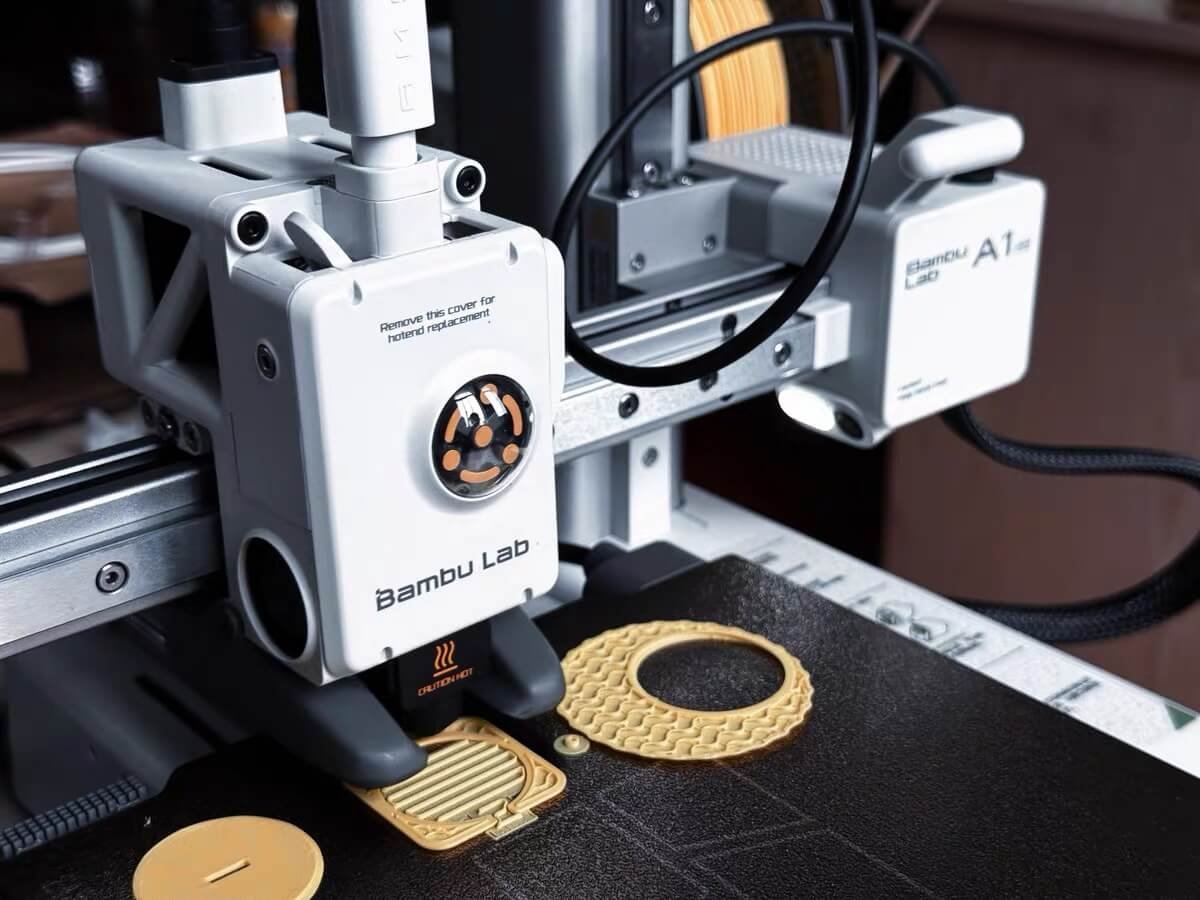
3. Bambu Lab A1 Mini — Best “Plug-and-Play” Beginner Experience
No products found.
Why it’s on the list:
The A1 Mini is the kind of machine you can give to a teen or a beginner without worrying. It’s compact, polished, and shockingly capable for its size. Many YouTube reviewers call it the first printer they would buy if starting again.
Best for:
- Newcomers who want smooth success in the first week
- Family makers with limited space
- No-tinkering, no-drama recipients
Gift advantage:
Very low friction. Easy setup. Quiet. Looks clean. It feels like a consumer gadget—not a project.
Not ideal for:
Large cosplay parts or recipients who want huge prints.
4. Anycubic Kobra 3 Combo — Best Affordable Multi-Color Gift
No products found.
Why it’s on the list:
Many buyers want a printer that can do “more than just one color.” The Kobra 3 Combo delivers multi-color printing at a far more accessible price than most AMS/CFS systems.
Best for:
- Creative users
- Teens who love colorful prints
- Beginners wanting to explore multi-color without spending $1,000+
Gift advantage:
It’s fun. Multi-color prints elevate the “wow factor” instantly—perfect for Christmas gifts.
Not ideal for:
Recipients who want the simplest setup possible; multi-color systems require slightly more management.
5. Bambu Lab P1S — Best All-Rounder for Everyday Use

- Up to 16 Colors: Bring your designs to life with vibrant multi-color/multi-material printing capabilities, perfect for showcasing your creativity. Note: Connecting Bambu Lab AMS is required.
- 500mm/s and 20000 mm/s² Acceleration True High Speed: Don’t wait around for your masterpieces. Lightning-fast printing speed lets you focus on creating, not waiting.
- Enclosed Design: Fully enclosed body improves print performance for advanced filaments. Automatic Bed Leveling: Say hello to high-quality, successful prints. Auto bed leveling makes 3D printing such an easy thing.
- Set Up in 15 Minutes: Spend more time printing and less time setting up. User-friendly design ensures a hassle-free assembly experience for all skill levels.
- Supported Filament: Ideal: PLA, PETG, TPU, PVA, PET ABS, ASA; Capable : PA, PC; Not Recommended: Carbon/Glass Fiber Reinforced Polymer.
Why it’s on the list:
This is the printer for someone who will actually use it heavily. It’s fast, stable, works out-of-the-box, and has one of the smartest calibration systems in the market.
Best for:
- Adults who seriously want to print
- Hobbyists upgrading from older machines
- Busy people who want fast results with minimal tinkering
Gift advantage:
The P1S gives you “prosumer performance” without the complexity. It’s the machine that turns 3D printing from a hobby into a reliable tool.
Not ideal for:
Budget buyers or recipients who print only occasionally.
Best Premium Picks (For Serious Makers & Enthusiasts)
6. Creality K2 Plus — Best Multi-Color + Large Format Gift
No products found.
Why it’s on the list:
The K2 Plus has been appearing frequently in 2024/2025 “best high-end printer” lists, especially for its large build volume and multi-color capabilities. It’s ideal for makers who want to print bigger, faster, and in multiple colors.
Best for:
- Hardcore hobbyists
- Cosplayers
- Creative professionals
- Someone who already owns a smaller printer and wants a major upgrade
Gift advantage:
Large prints + multi-color + modern UX. It’s the kind of gift that instantly becomes the centerpiece of a workshop.
Not ideal for:
Beginners or buyers gifting into small apartments.
Best for Model Painters & Miniature Fans (Resin Category)
7. Elegoo Mars 5 Ultra — Best Resin Printer for High Detail

- 【9K High Precision Mono LCD】Featuring a 7-inch mono LCD with 9K ultra-high resolution and 18μm XY resolution, ELEGOO Mars 5 Ultra 3d Printer ensures the faithful reproduction of every intricate detail with stunning fidelity and breathtaking textures, bringing your visions to life with impeccable precision.
- 【Blazing Fast Speed with Tilt Release Innovation】Boasting a blazing fast speed of up to 150mm/h, ELEGOO Mars 5 Ultra resin 3d printer leaves competitors in the dust. Its revolutionary tilt release technology enables swift model peeling from the release film, ensuring lightning-fast printing without compromising on detail, accuracy or reliability. Seamlessly switch between the fast and slow print modes, unlocking unmatched flexibility and efficiency.
- 【AI Camera Acts as Your Eyes, Stay in Total Control】Say goodbye to costly failures and wasted time as the AI camera detects errors in real-time, guiding you to flawless results. Never worry about empty build plate or model warps again – ELEGOO Mars 5 Ultra 3d resin printer make it a thing of the past. The AI camera monitors every step, instantly alerting you to any errors for immediate resolutions.
- 【Print Smarter, Print Easily】With a smart mechanical sensor, ELEGOO Mars 5 Ultra impresora 3d supports residue detection to prevent damage to the LCD screen. Plus, timely alarms for resin shortages and leveling failures minimize waste and ensure uninterrupted efficiency. Print Easily and enjoy high-quality prints every time.
- 【Wi-Fi Cluster Printing, Redefining Efficiency & Productivity】Redefine efficiency and streamline your workflow with seamless control over multiple ELEGOO Mars 5 Ultra printers from one device. Harness the power of synchronized prints to supercharge your productivity and conquer ambitious projects with ease.
Why it’s on the list:
Resin shouldn’t be the default Christmas gift—but for miniature painters and model creators, nothing beats the clean detail of the Mars 5 Ultra. Smooth armor plates, crisp facial details, and top-tier surface finish straight out of the printer.
Best for:
- D&D, Warhammer, tabletop miniature creators
- Adult hobbyists with a workspace
- Experienced users who explicitly want resin
Gift advantage:
This is the tool for high-detail art. As long as the recipient knows resin workflow, this printer delivers elite-level results.
Not ideal for:
Kids, families, or small apartments without proper ventilation.
Best for Practical DIYers & Fix-Everything Types
8. Bambu Lab P1S (Engineering Use) or Creality Ender-3 V3 SE (Budget Fixer)
Why P1S fits this persona:
- Prints PETG, PLA+, ABS-like materials well
- Strong cooling + stable CoreXY
- Excellent for functional brackets, enclosures, parts
Why Ender-3 V3 SE fits budget DIYers:
- Cheap to maintain
- Works well with PLA+ functional prints
- Large community of printable upgrades
Gift advantage:
For DIYers, printing functional parts is addictive—they’ll use the printer weekly.
Quick Summary: The Right Printer for the Right Person
| Persona | Best Pick |
|---|---|
| Kids & teens | Bambu A1 Mini / Adventurer 5M |
| Budget beginner | Ender-3 V3 SE |
| Creative multi-color lovers | Anycubic Kobra 3 Combo |
| Everyday adult users | Bambu P1S |
| Enthusiast / Cosplay | Creality K2 Plus |
| Model painters / miniatures | Elegoo Mars 5 Ultra |
| DIY fixers | P1S or Ender-3 V3 SE |
Best 3D Printer Accessories to Gift (If They Already Own a Printer)
Sometimes the recipient already has a 3D printer—or even two.
In that case, accessories make fantastic Christmas gifts. They’re affordable, practical, and instantly useful.
More importantly, accessories help your recipient print better, safer, faster, or simply more creatively.
Below is a curated list of accessories that real makers consistently recommend, based on Reddit sentiment, YouTube gear reviews, and everyday user habits.
Best Gifts Under $30 (Useful, No-Risk, Always Appreciated)
1. High-Quality PLA Filament (Matte, Silk, or Specialty Colors)
Filament is the “ink” of 3D printing—and nobody ever has enough.
Specialty colors like matte black, silk gold, rainbow gradient, or marble PLA can dramatically elevate print quality and creativity.
Why it’s a good gift:
- Always needed
- Zero learning curve
- Lets the recipient try new styles immediately
Best for:
Anyone with an FDM printer.


2. Nozzle & Maintenance Kit
A small set that includes brass nozzles, needles, tweezers, and cleaning tools.
Why makers love it:
It solves 80% of minor printing problems and helps keep the printer running smoothly.
Best for:
All FDM users.


3. PEI or Textured Build Plate
Replacing the stock bed with a textured PEI plate makes first-layer adhesion far more consistent.
Why it matters:
Beginners often struggle with first-layer failures. A better bed fixes this instantly.
Best for:
- Ender-class machines
- Any printer with removable beds
Gifts Under $50–$80 (Performance Upgrades They’ll Actually Notice)
4. Filament Dry Box
PLA might seem dry, but it absorbs moisture over time—especially in humid environments.
A dry box:
- reduces stringing
- prevents brittle filament
- improves dimensional accuracy
- makes prints look noticeably cleaner
Best for:
All FDM users, especially those in humid regions.


5. Flexible Spring Steel or High-Temp Build Plates
These plates make it easier to remove large prints and reduce the risk of damaging the machine.
Best for: People printing functional or large objects.
6. High-End Nozzles (Hardened Steel or Ruby-Tipped)
Advanced users often print abrasive materials (PLA+ with carbon fiber, glow additives, etc.).
Standard brass nozzles wear out quickly.
Why it’s a good gift: A hardened nozzle lasts much longer and improves reliability for functional parts.
Best for: DIYers, engineers, functional print users.


Premium Accessories ($100+) That Feel Like “Mini Upgrades”
7. Multi-Color Filament Feeders / AMS-Compatible Accessories
For printers like Bambu or Creality K2 series, accessories that expand multi-color capability are a game changer.
Why it’s worth gifting:
- More creativity
- More complex designs
- More fun
Best for: Creative users who love color-rich prints.
8. Wash & Cure Station (for Resin Users)
If the recipient owns a resin printer, this is the most impactful accessory you can buy.
Why it matters:
- Faster workflow
- Cleaner workspace
- Safer resin handling
- Much easier post-processing
Best for:
Anyone with a resin printer (Elegoo, Anycubic, Phrozen).


9. Better Lighting or Enclosure Add-ons
LED lighting kits, camera upgrades, or simple enclosures reduce noise, improve print reliability, and help monitor long jobs.
Best for:
Frequent printers or people printing overnight.


Accessories That Make Terrific “Gift Bundles”
If you want to build a more complete present, here are combinations that feel thoughtful and useful:
🎁 For beginners
- PLA filament + PEI flex plate + toolkit
🎁 For kids or families
- Colorful filament pack + dry box + organizing bins
🎁 For hobbyists
- Hardened nozzle + precision scraper + high-temp bed
🎁 For resin users
- Wash & cure station + extra resin + silicone mats
🎁 For DIYers
- PLA+ engineering filament + hardened nozzle + caliper
These bundles create the feeling of a “custom gift box” without requiring specialized knowledge.
Frequently Asked Questions (FAQ)
3D printing looks complex from the outside, so it’s normal for beginners—and gift buyers—to have practical questions. Below are the most common ones people ask before buying their first machine.
“Is a 3D printer noisy? Will it bother people at night?”
Most printers aren’t loud—but they’re not silent.
You’ll hear fan noise, stepper motor movement, and occasional high-frequency tones when printing fast.
What matters most:
- Enclosed printers are noticeably quieter
- Fast CoreXY printers are louder during travel moves
- Bedrooms are not ideal locations
If the gift recipient lives in a small apartment or shares space, look for quiet-oriented machines like family-friendly enclosed models.
“How long does a typical print take?”
Faster than people think—but still not instant.
General rule of thumb:
- Small objects: 20–60 minutes
- Medium objects: 2–4 hours
- Large detailed pieces: 8–12+ hours
Modern high-speed printers can cut many jobs in half, but a 3D printer still isn’t “press a button, get it in 5 minutes.”
It’s a hobby of patience + creativity, not instant gratification.
“Do you need a powerful computer to slice models?”
No.
Even budget laptops work fine for slicing beginner prints.
You’ll only need stronger hardware if:
- You slice very large or detailed models
- You work with multi-color assemblies
- You use advanced CAD software
Most slicing tools today (Bambu Studio, Orca, Cura) run smoothly on an average machine.
“How much filament does a beginner actually use?”
More than you think—but much less than it costs to worry about.
One standard 1kg spool prints:
- 20–30 small items
- 10–15 medium prints
- 2–5 large prints
For new users, two spools of PLA is enough to last 1–2 months.
This is why filament makes such a great add-on gift—everyone needs more.
“Are 3D printers safe for apartments?”
Safety: Yes, with FDM.
Ventilation: Recommended but not mandatory (for PLA).
FDM printers printing PLA have very mild emissions—comparable to a warm glue gun. Many apartment users run printers in a home office or living room with no issues.
Not recommended:
- Using resin printers in small apartments
- Printing ABS in unventilated rooms
- Putting any printer in a bedroom
For resin, ventilation and a dedicated workspace are must-haves.
“What’s the difference between PLA and other materials?”
PLA is the starter material:
- low odor
- easy to print
- safe
- works in any environment
- great for toys, organizers, decorations
Other materials need more experience:
PETG
Stronger but trickier than PLA. Good for functional parts.
ABS
Needs ventilation and enclosure; not ideal for beginners.
TPU
Flexible; fun but requires slower speeds.
If you’re giving a printer as a gift, include PLA only.
“Should beginners worry about maintenance?”
Minimal, but not zero.
Basic upkeep includes:
- Wiping dust off rails
- Cleaning the bed surface
- Changing the nozzle occasionally
- Keeping filament dry
Think of it like maintaining a bicycle—not a car.
Small tasks keep the machine performing beautifully, but nothing is overly technical.
“Is multi-color printing worth it for beginners?”
It depends on the personality of the recipient.
YES if they are:
- Creative
- Artistic
- Love colorful objects
- Teens / kids who design things in Tinkercad
- Cosplayers
NO if they are:
- Easily frustrated
- Prefer simple functional parts
- Minimalists
- Very busy adults
Multi-color is fun and beautiful, but adds complexity.
Choose wisely based on the person—not the feature.
“Do 3D printers need Wi-Fi or the cloud?”
Not required, but very convenient.
Wi-Fi/cloud helps with:
- Over-the-air firmware updates
- Pushing prints from laptop/phone
- Remote monitoring
- Faster slicing workflow
USB/SD printing works fine too
All printers still support offline printing.
Final Recommendation: Choose the Right 3D Printer in 30 Seconds
If you’ve made it this far and just want the simplest, most confident way to choose a printer, here it is — the 30-second answer.
These are the picks that match real people, not just specs:
For teens & first-time beginners
👉 Bambu Lab A1 Mini
Smooth, quiet, compact, and almost impossible to mess up.
This is the “I want my first print to succeed” machine.
For families & shared home use
👉 Flashforge Adventurer 5M
Safe, semi-enclosed, quieter, and forgiving.
Great for kids printing school projects or simple toys.
For creative users who want multi-color prints
👉 Anycubic Kobra 3 Combo
Affordable path to multi-color printing.
Fun, expressive, slightly more complex — but worth it.
For adults who want reliability without drama
👉 Bambu Lab P1S
Fast, stable, trustworthy.
If the recipient will print regularly, this one “just works.”
For enthusiasts, cosplay, and big ambitious prints
👉 Creality K2 Plus
Large volume + multi-color + modern CoreXY.
This is the upgrade people dream of when they outgrow entry-level machines.
For miniature painters / tabletop gamers (resin lovers)
👉 Elegoo Mars 5 Ultra
Elite detail for tiny models — as long as the recipient is an adult with proper ventilation.
For budget beginners
👉 Creality Ender-3 V3 SE
Simple, cheap, reliable, and massively supported by the community.
For DIY fix-everything types (functional prints)
👉 Bambu P1S (performance)
👉 Ender-3 V3 SE (budget)
These users print brackets, mounts, clips, and practical parts — both machines excel here.
If you still can’t decide?
Use this one-sentence rule:
Buy the A1 Mini if the person is new, buy the P1S if they’ll print often, and buy the K2 Plus if they’re already an enthusiast.
That’s it — 30 seconds, zero stress.
You’ve now made a confident Christmas gift decision.