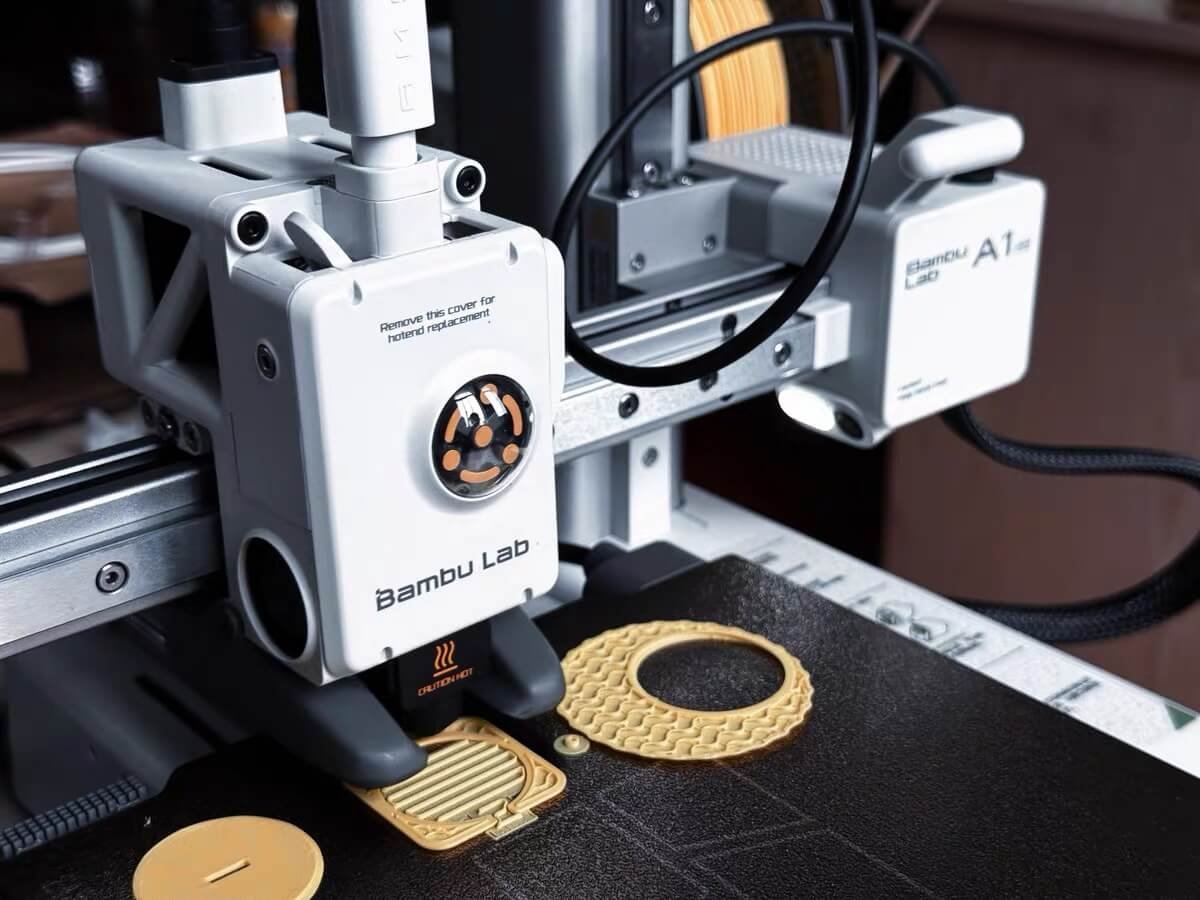
Let’s be honest for a second: if you’ve been 3D printing for more than a month, you probably have a “Bin of Shame.” You know the one—filled with failed supports, bird-nested spaghetti, and that colorful “poop” from your multi-material towers.
For years, we’ve been told to “recycle it,” but unless you had $5,000 and a spare garage for industrial gear, that waste just sat there.
Well, the game just changed.
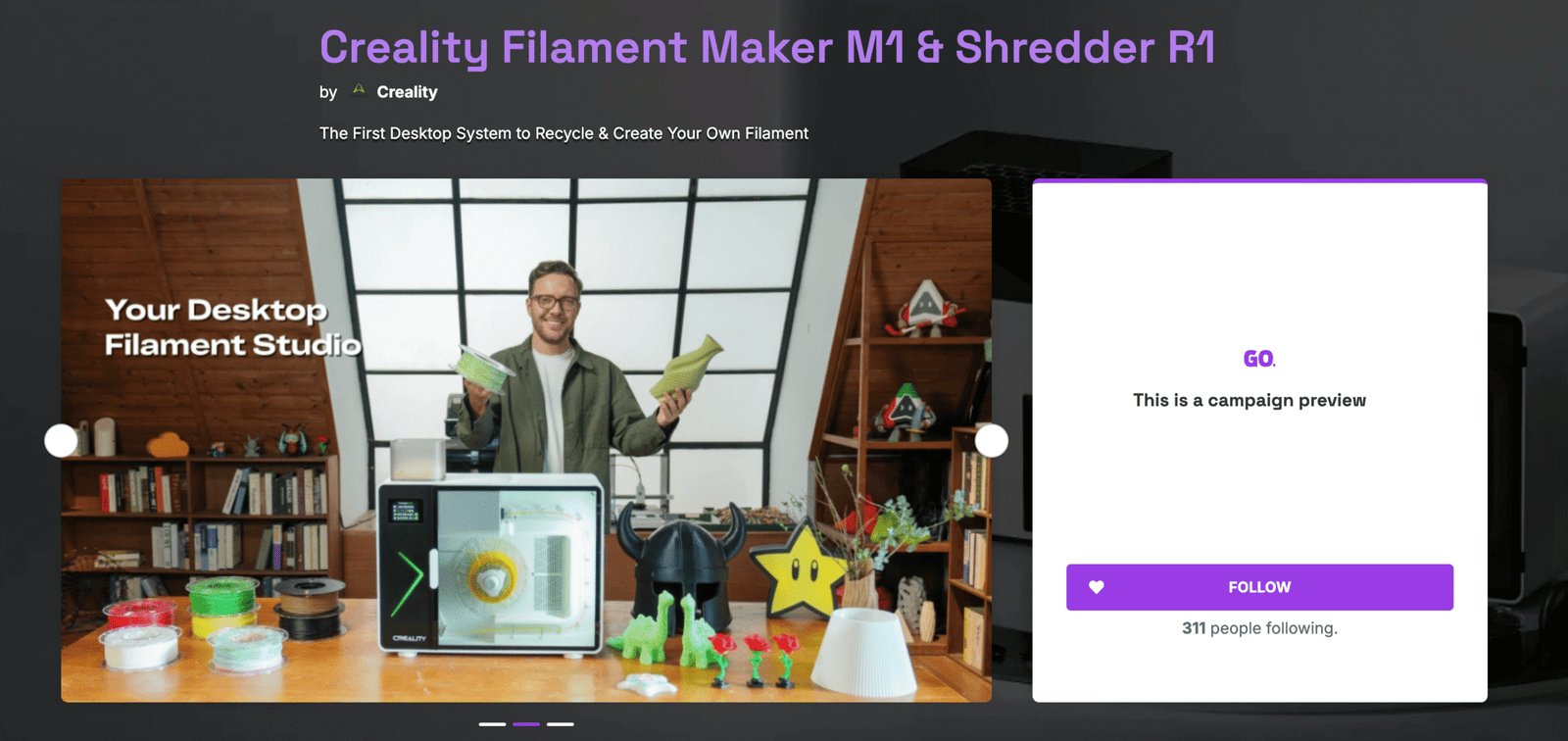
Creality recently dropped their Filament Maker M1 and Shredder R1 (the “Filastudio” combo) on Indiegogo, and the maker community didn’t just show up—they kicked the door down.
The “16-Minute” Miracle
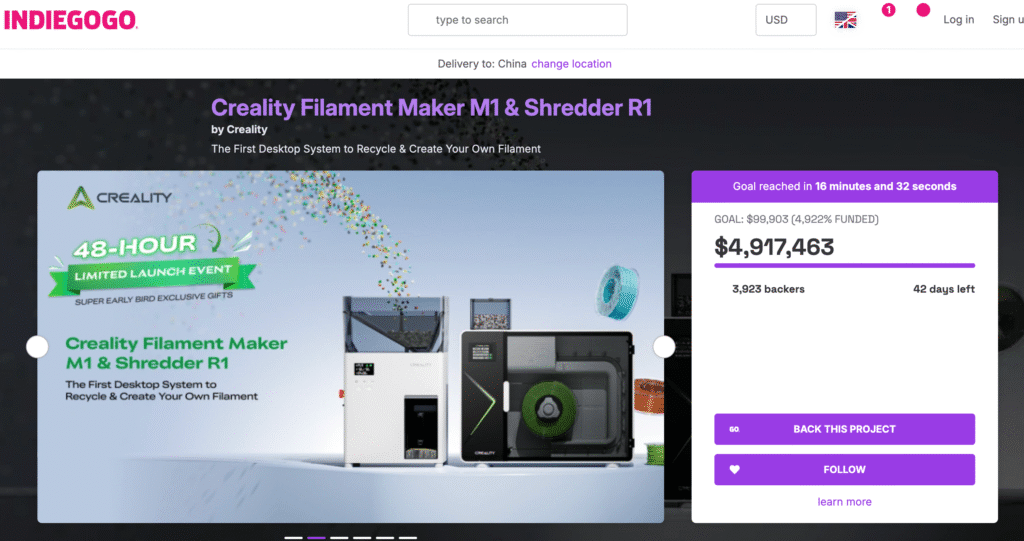
We’ve been tracking the Filament Maker M1 and Shredder R1 live on makers101, but the numbers here are genuinely staggering. Creality hit their 100% funding goal in exactly 16 minutes and 32 seconds.
As of today, they’ve cleared over $4,917,463 from more than 3,900 backers. That’s not just “brand loyalty”; that’s a loud, clear signal that we are all collectively exhausted with throwing plastic in the trash.
The $899 VIP price point for the combo was the “sweet spot” that finally made desktop recycling feel like a reality rather than a pipe dream.
The Hardware: Under the Hood of the M1 & R1
| Feature | Filament Maker M1 | Shredder R1 |
|---|---|---|
| Primary Function | Extrusion (Filament Making) | Shredding (Waste Recycling) |
| Tolerance | ±0.1mm | N/A |
| Early Bird Price | $649 (Standalone) | $349 (Standalone) |
So, what are we actually getting for our hard-earned cash?
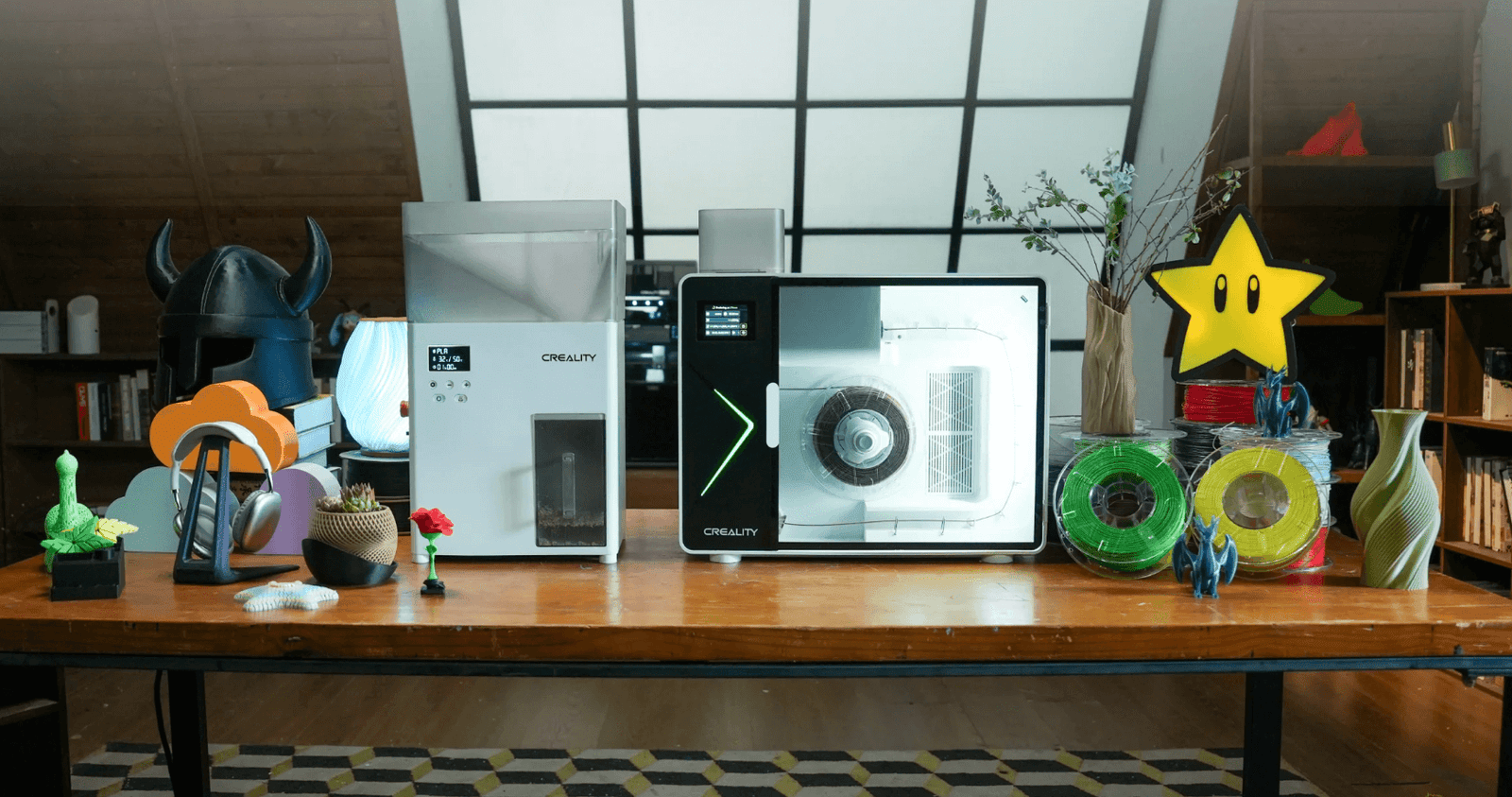
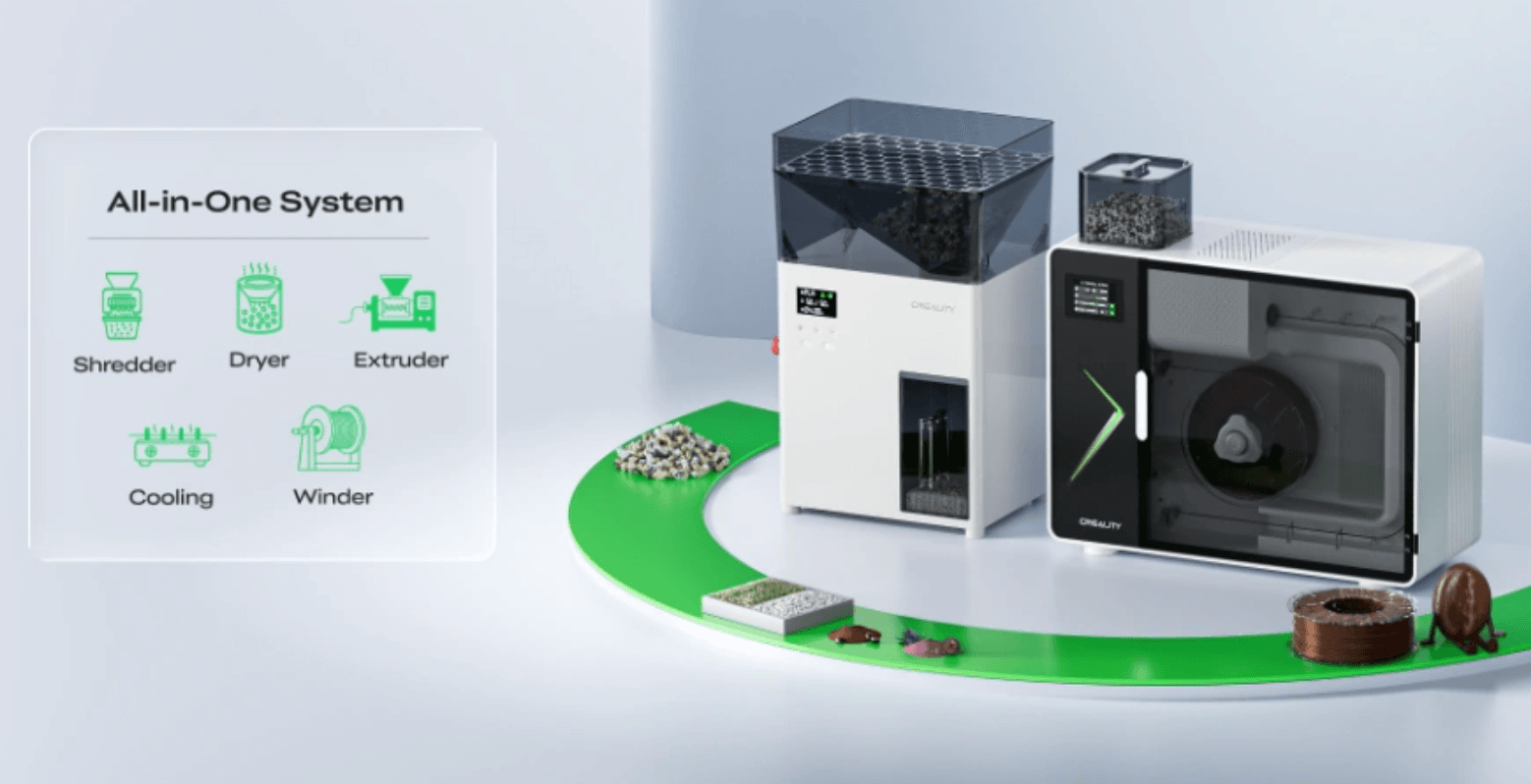
- The Shredder R1: This is the gatekeeper. It’s designed to take your chunky PETG failures and PLA scraps and turn them into uniform granules. It’s got a high-torque motor and a blade design meant for hobbyist-level throughput. Creality added some decent safety sensors here, too—crucial, because nobody wants to lose a finger while trying to save $20 on a spool of filament.
- The Filament Maker M1: This is where the magic happens. It takes those granules, melts them, and extrudes them back into a 1.75mm line. The big claim here is the ±0.1mm tolerance. Now, let’s be real: that’s not as tight as the ±0.03mm you get from premium “virgin” filament, but for 90% of functional prints and prototypes, it’s more than enough to get the job done.
The “secret sauce” is the ecosystem. It supports 8 major material families out of the box and features an OTA-updatable brain that manages the cooling and extrusion speed automatically. It’s trying to be the “Apple of recycling”—it just wants to work.
The “Elephant in the Room”: Is it Actually Worth It?
I know what the skeptics are saying in the comments, and you’re not wrong to ask. Let’s look at the ROI (Return on Investment) or you can check our ROI caculator.
If you’re snagging the combo at the $899 early bird price, and a decent roll of PLA costs you about $15-$20, you need to recycle roughly 50 to 60 kilograms of waste just to break even.
For a casual hobbyist printing once a week, that might take years. But for print farms, schools, or “high-volume” makers running a fleet of K1s or Bambus? You’ll hit that ROI in months.
Then there’s the Quality Question. Every time you melt plastic, the polymer chains degrade slightly. You can’t recycle the same piece of plastic ten times and expect it to hold up like carbon fiber.
Creality’s solution is suggesting a “blend”—mixing your recycled regrind with some “virgin” pellets (which they conveniently sell as add-ons). It’s a smart compromise.
The Industry Ripple Effect
This launch is a shot across the bow for the rest of the industry. Creality is no longer just a “printer company”; they are trying to own the entire lifecycle of the plastic.
By bringing the price of a full recycling setup down from $3,000+ to under $1,000, they are forcing other giants to either innovate or watch their customers stop buying as much “official” filament.
The Makers101 Verdict
Is it for you? If you’re a “Zero Waste” enthusiast or a Small Lab, this is a no-brainer. The tech has finally reached the “Prosumer” level.
If you’re a High-Precision Engineer needing aerospace-grade tolerances, you might want to wait for the independent reviews to see how that ±0.1mm difference holds up in the real world.
Bottom line: Creality just made “closed-loop” printing a mainstream conversation. Whether the M1 becomes the “Ender 3 of recycling” remains to be seen, but the era of the “Bin of Shame” might finally be coming to an end.

- Custom High-Precision Filament:Create filaments with custom colors, and materials Waste Recycling:Recycle all 3D printing waste (finished/failed prints, supports, Brim、skirts) Material R&D:Conduct blending experiments Develop innovative composites and functional filaments Professional Use:Aerospace: Small-batch high-strength specialty filaments Medical/Education: Biocompatible or educational materials