
- Three different Shenzhen companies, InfiMaker, IFMAKER, and Xhorse3D, each ran a desktop 5-axis CNC Kickstarter campaign inside the same six-week span between late July and mid-September 2026, and every single one passed $1 million pledged despite starting from three very different funding goals.
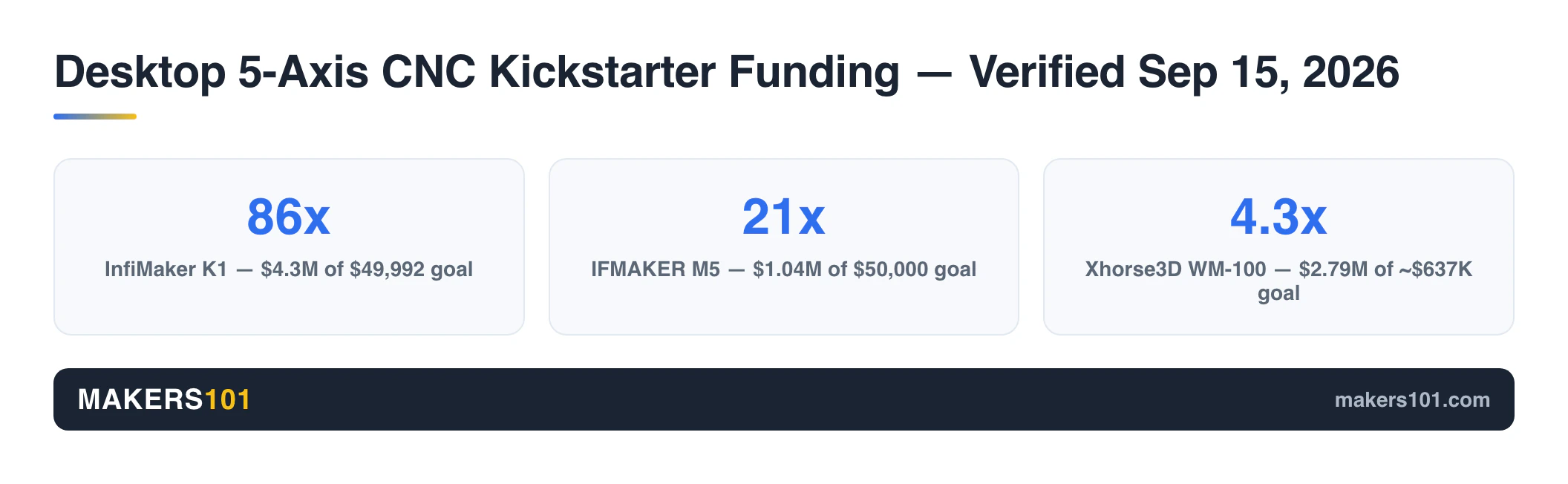
- InfiMaker K1 is the runaway leader: $4.3 million pledged, about 86 times its $49,992 goal, with less than two weeks left in its campaign as of September 15.
- IFMAKER M5 already closed successfully on September 13 at $1.04 million, roughly 21 times its $50,000 goal.
- Xhorse3D WM-100 raised $2.77 million against a goal worth about $637,000, roughly 4.3 times funded. Some coverage has repeated a “42 times” figure that doesn’t hold up.
- All three are still months from shipping, and machinists on Reddit are already asking whether “desktop 5-axis” means real simultaneous motion or dressed-up 3+2 indexing.
For years, true 5-axis CNC machining meant a six-figure machine bolted to a factory floor. If you wanted that kind of freedom on a hobby budget, you settled for 3-axis and learned to live with it.
That assumption just took a hit. Three companies out of Shenzhen put desktop 5-axis CNC machines on Kickstarter within six weeks of each other, and all three cleared seven figures in pledges. I checked each campaign page myself on September 15, because the funding numbers floating around online are already stale, and one of them is flat-out wrong. Here’s what’s actually happening, machine by machine, with the real numbers and the real questions nobody’s answered yet.
Table of Contents
- What Happened: Three Shenzhen Makers Launched a Desktop 5-Axis CNC Kickstarter Race
- K1, M5, WM-100 at a Glance
- InfiMaker K1’s Kickstarter Numbers, Verified September 15
- IFMAKER M5’s Kickstarter Numbers: Already a Successful Close
- Xhorse3D WM-100’s Kickstarter Numbers: Funded 4.3x, Not the “42x” You May Have Seen
- Three Different Bets: AI Software, Cast-Iron Rigidity, or Automated Probing
- Is This Real Simultaneous 5-Axis, or 3+2 Dressed Up as One?
- Why It Matters: Desktop 5-Axis CNC Is Leaving the Factory Floor
- What’s Next: Delivery Dates and the Real Test Comes After Shipping
- My Take on the Desktop 5-Axis CNC Boom
- FAQ: Desktop 5-Axis CNC Kickstarter Questions
What Happened: Three Shenzhen Makers Launched a Desktop 5-Axis CNC Kickstarter Race
IFMAKER and InfiMaker both launched on July 30, 2026. Xhorse3D followed on September 11. All three are made in Shenzhen, and all three are chasing the same idea: squeeze industrial-grade 5-axis simultaneous machining into something that fits on a desk.
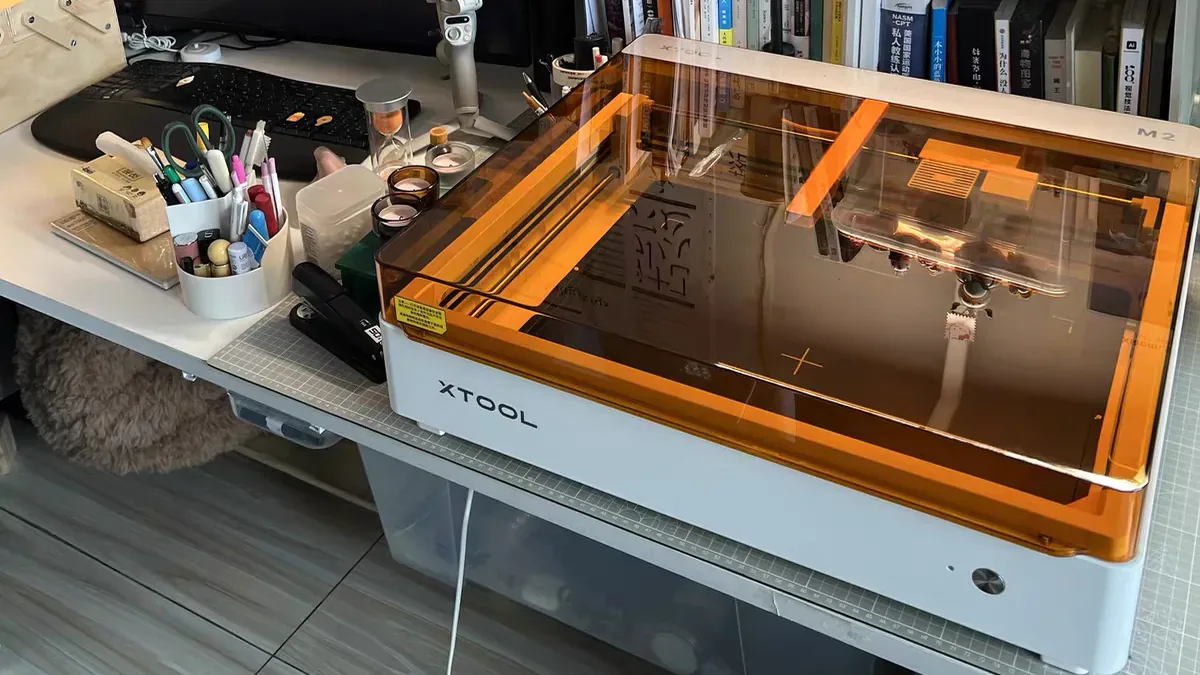
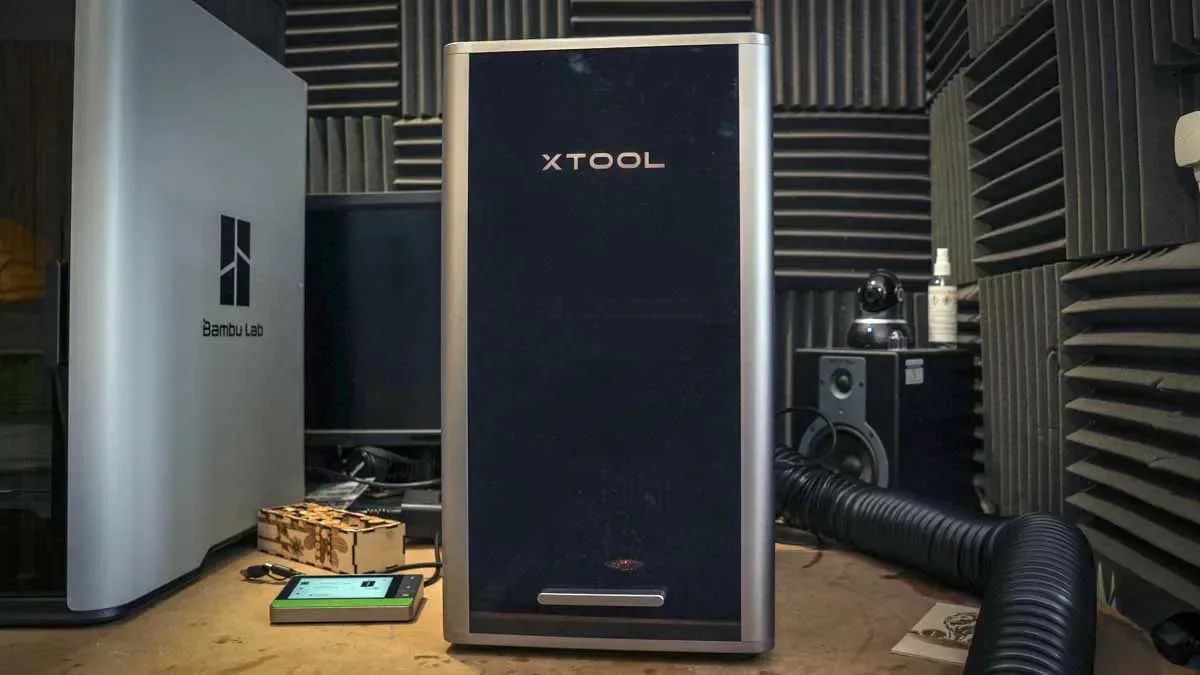
IFMAKER M5 targets makers who want rigidity above all else. InfiMaker K1 leans on AI-assisted software and a more mature CAM ecosystem. Xhorse3D’s WM-100 bets on automation, using laser positioning and self-calibration to cut down on manual setup work.
The company behind WM-100 isn’t new to hardware. Xhorse3D is a division of Xhorse, the Shenzhen electronics company known for automotive key-programming tools. Its previous machine, the XM-100, has already shipped more than 1,000 units to over 10,000 users, which gives WM-100 a delivery track record the other two don’t have yet.
K1, M5, WM-100 at a Glance
| Machine | Spindle | Precision | Early Bird | Funded (Sep 15, 2026) |
|---|---|---|---|---|
| InfiMaker K1 | 1,500W · 20,000 RPM | ±0.01mm | $5,999 (36% off $9,399 MSRP) | $4.30M · ~86x goal · ships Dec 2026 |
| IFMAKER M5 | 2.2kW · 60,000 RPM | ±0.01mm (3-axis) / ±0.06mm (5-axis) | $5,299 | $1.04M · ~21x goal · campaign closed Sep 13, ships Dec 2026 |
| Xhorse3D WM-100 | 1,500W · 20,000 RPM | ±0.01mm | $5,899 (30% off $8,399 MSRP) | $2.77M · ~4.3x goal · ships Jan 2027 |
K1’s funding multiple looks the most dramatic because its dollar goal was the smallest of the three. M5’s goal was already a round number in US dollars, no conversion needed. WM-100 priced its goal in Hong Kong dollars, and that’s where a lot of the public numbers get confused. More on that below.
InfiMaker K1’s Kickstarter Numbers, Verified September 15
K1 is the runaway hit of the three. As of September 15, its Kickstarter page shows $4,296,911 pledged against a $49,992 goal, roughly 86 times funded, from 759 backers. If you’re tracking the campaign, it has 11 days left before closing on September 26.
Kickstarter gave K1 its “Project We Love” badge, and it also picked up the Netzwelt Innovation Award at IFA 2026. InfiMaker says it has backing from Kunlun Capital and IDG Capital, and that its supply chain can already support 3,000 units a month. A handful of outlets, including Android Authority and Make Something, have published hands-on looks at pre-production units.
The Super Early Bird bundle runs $5,999, a 36% discount off the $9,399 MSRP. Only 22 of 600 slots were left as of this writing. Shipping is planned for December 2026.
IFMAKER M5’s Kickstarter Numbers: Already a Successful Close
M5’s campaign already ended. Its Kickstarter page shows it closed successfully on September 13, 2026, having raised $1,038,908 against a $50,000 goal, about 21 times funded, from 202 backers. Kickstarter still accepts late pledges, but the countdown clock is gone.
M5 also earned a “Project We Love” badge, something earlier coverage of the campaign didn’t mention. The company shipped its first review units to the US, Canada, and France before the campaign even closed, an unusually fast turnaround for crowdfunded hardware.
Early Bird pricing landed at $5,299, with shipping targeted for the same window as K1.
Xhorse3D WM-100’s Kickstarter Numbers: Funded 4.3x, Not the “42x” You May Have Seen
WM-100 is funded roughly 4.3 times its goal, not the 42 times figure some coverage has repeated. I checked directly on WM-100’s Kickstarter page: the pledged total carries a small currency-conversion icon, and clicking it shows the original figures. On September 15, that tooltip read “converted from a HK$5,000,000 goal, HK$21,845,336 pledged.”
The 42x figure comes from a currency mix-up. WM-100’s campaign is denominated in Hong Kong dollars. Kickstarter converts the displayed total to your local currency automatically, and if you only glance at that converted number, you can miss the original goal entirely.
The actual target is HK$5,000,000, which converts to roughly $637,000. HK$21,845,336 pledged, about $2,785,123, works out to roughly 4.3 times the goal.
That’s still a real result. It’s just a different story than the one making the rounds. WM-100 has 396 backers and 40 days left, with the campaign closing October 25.
WM-100 is aimed at institutional buyers, and Xhorse3D has said some regions won’t be able to order it at all. Every backer also gets a wireless measuring probe worth $389 included free. Neither K1 nor M5 lists a comparable region restriction on its campaign page, though neither has confirmed final shipping availability for every country either.
Three Different Bets: AI Software, Cast-Iron Rigidity, or Automated Probing
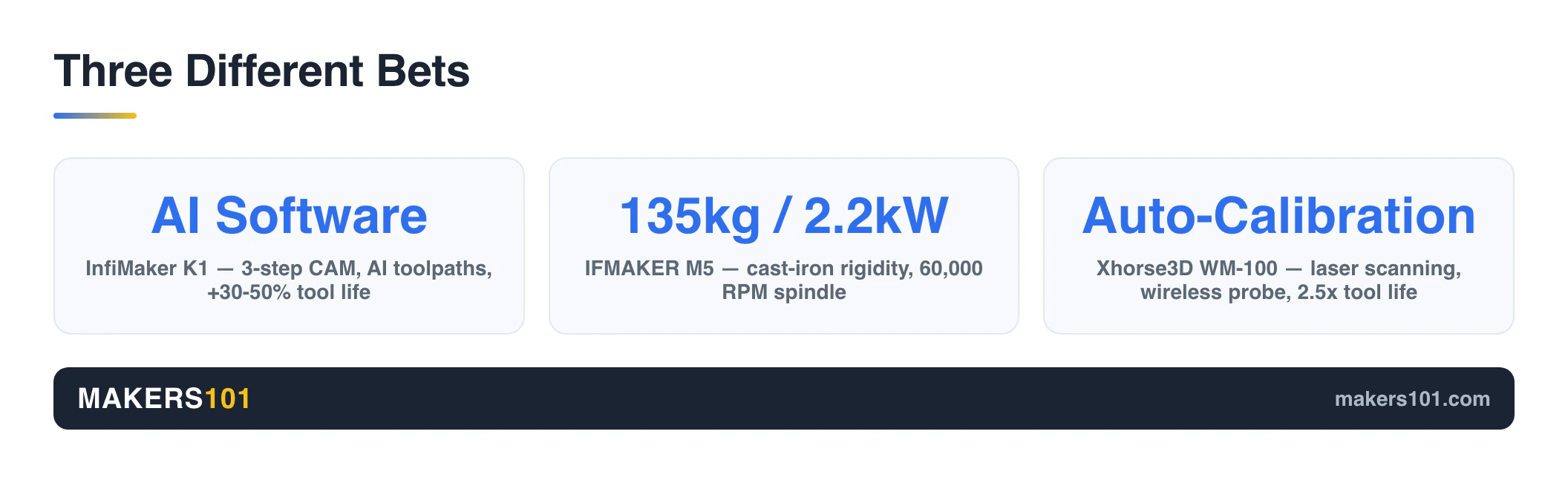
Strip away the marketing and each machine is making a different bet on what buyers actually need.
K1 bets on software. Its InfiStudio platform compresses the usual CAM workflow into three steps and can generate toolpaths with AI assistance, while staying compatible with Fusion 360 and Mastercam if you’d rather work there. A built-in camera watches for four categories of failure and can resume a job after a power cut. High-pressure coolant is rated to extend tool life by 30 to 50%, and the machine is rated to cut titanium, stainless steel, brass, copper, aluminum, acrylic, hardwood, jade, and jeweler’s wax.
M5 bets on mass. Its 135kg HT300 cast-iron frame and 2.2kW spindle spinning up to 60,000 RPM sit closer to how an industrial mill is built than anything else in this category. IfCAM, its bundled software, runs the full CAD-to-G-code pipeline offline for free, so you’re not paying for Fusion 360 on top of the machine itself.
WM-100 bets on automation. It uses laser 3D scanning for positioning, a wireless probe for automatic axis calibration, and a plasma module to cut down on static buildup during cutting. Its dual cooling system (air and mist) claims to stretch tool life to 2.5 times normal. The idea is you spend less time dialing in the machine and more time actually cutting.
Is This Real Simultaneous 5-Axis, or 3+2 Dressed Up as One?
A thread on r/hobbycnc raised the question everyone in this category should be asking. The original poster, a longtime Shapeoko 3 owner, wanted to know if K1’s claimed simultaneous 5-axis motion was the real thing or just indexed 3+2 machining with better marketing.
The answers got technical fast. Cheap hobby controllers (grbHAL, FluidNC, Mach3/4, UCCNC, LinuxCNC) can all move five axes at once. That doesn’t make them true simultaneous 5-axis.
Real RTCP, rotation tool center point control, requires the machine to solve inverse kinematics in real time, converting a tool vector into axis positions on the fly. Most hobby controllers don’t do that. According to the thread, LinuxCNC is the only free hobby controller with genuine RTCP support, and the professional controllers that do it well are priced accordingly.
One commenter dropped a genuinely surprising fact: real simultaneous 5-axis controllers fall under US export controls, classified as ECCN 2B001 under ITAR. That’s usually a category reserved for industrial machinery, an odd fit for a Kickstarter reward tier.
Software adds another wrinkle. Fusion 360’s multi-axis add-on alone runs over $1,300 a year, and even with access to proper 5-axis CAM, getting a working post-processor for a specific machine is its own project. None of this proves K1, M5, or WM-100 are faking their specs. It means a “simultaneous 5-axis” claim on a spec sheet and one verified by an independent machinist aren’t automatically the same thing.
Why It Matters: Desktop 5-Axis CNC Is Leaving the Factory Floor
Three campaigns clearing $1 million each is a real signal. Desktop CNC buyers have been asking for more axes and more rigidity for years, and three companies answered at once.
What isn’t settled is durability. A ±0.01mm spec on launch day doesn’t tell you what that machine measures after a thousand hours cutting titanium, and none of these companies has a long service record to point to yet.
WM-100 carries a complication K1 and M5 don’t face: export review. It’s sold to institutional buyers only, and Xhorse3D has confirmed some regions can’t order it at all. That doesn’t say anything about how well the machine cuts. It determines who gets to find out.
What’s Next: Delivery Dates and the Real Test Comes After Shipping
K1 and M5 are both targeting December 2026 delivery. WM-100 is aiming for January 2027. All three dates are still promises.
The honest test starts once backers actually have these machines running. Whether the RTCP claims hold up under independent scrutiny, whether the coolant systems really extend tool life as advertised, and whether support holds up once the Kickstarter spotlight fades are all questions a campaign page can’t answer.
My Take on the Desktop 5-Axis CNC Boom
I don’t think there’s a clean winner here, because the three machines aren’t really competing on the same axis. If you want software that gets you cutting without learning a CAM package, K1’s approach makes sense. If mass and rigidity matter more to you than polish, M5’s cast-iron frame is the more industrial choice. If you’d rather the machine handle its own calibration, WM-100’s automation is the differentiator.
What I’d actually watch for isn’t the spec sheet. It’s whether an independent reviewer with no stake in the campaign runs a real five-axis toolpath through one of these machines and measures the result against the claim. Kickstarter videos show smooth motion. They don’t show tolerance drift after the fiftieth part.
If you’re backing any of these, treat the early bird price as a discount on a bet. Crowdfunded hardware slips its ship date more often than it hits one, and a desktop 5-axis mill is a harder machine to get right than a 3D printer.
FAQ: Desktop 5-Axis CNC Kickstarter Questions
What is the difference between the InfiMaker K1, IFMAKER M5, and Xhorse3D WM-100?
All three come out of the same desktop 5-axis CNC Kickstarter wave, but they’re not interchangeable. K1’s edge is software: AI-assisted toolpaths and a CAM ecosystem that’s further along than the other two. M5’s edge is mass: a heavier 135kg cast-iron frame and a more powerful 2.2kW spindle, built more like an industrial mill than a hobby machine. WM-100’s edge is automation: laser scanning and a wireless probe that handle positioning and calibration for you.
Is a desktop 5-axis CNC really capable of true simultaneous 5-axis machining?
That’s still an open question. Machinists discussing the category on Reddit point out that genuine simultaneous 5-axis requires RTCP, real-time inverse kinematics that most affordable controllers don’t implement. The companies claim RTCP-based motion, but independent verification will have to wait until backers receive their machines and run real toolpaths.
When will the InfiMaker K1, IFMAKER M5, and Xhorse3D WM-100 ship?
K1 and M5 are both targeting the end of 2026. WM-100 is targeting January 2027. All three are estimates from active or recently closed crowdfunding campaigns, and crowdfunded hardware regularly ships later than planned.
Can you still back the K1 or WM-100 Kickstarter campaigns?
As of September 15, 2026, yes. K1 has 11 days left with 22 of 600 Super Early Bird slots remaining. WM-100 has 40 days left. IFMAKER M5’s campaign closed on September 13, though Kickstarter still allows late pledges on projects that have ended.
Why do different reports give different funding percentages for the Xhorse3D WM-100?
Its Kickstarter goal is priced in Hong Kong dollars. Some coverage read the converted US dollar total against an assumed $60,000 goal, which produces an inflated multiple like 42 times funded. The actual goal is HK$5,000,000, about $637,000, and the campaign is funded roughly 4.3 times over as of September 15.