
I earn a commission if you buy through links on this page, at no extra cost to you. As an Amazon Associate, I earn from qualifying purchases.
There is a Reddit thread with nearly 800 upvotes where a beginner posts a close-up photo of a purple glue stick and asks, half-embarrassed, “when people say to apply glue stick to the bed, do you mean this?” That thread is the whole topic in one image. Glue sticks for 3D printing sound simple, yet almost nobody explains which one to buy, when you actually need it, or how to put it on so your first layer sticks the first time.
It also gets weirdly heated. Half the forums treat glue as cheating. The other half swears by it. Meanwhile the buying is very real: one affiliate link for Amazon Basics purple sticks moved over 29,000 units in eight months. People are clearly reaching for the glue.
So let’s cut through it. This guide covers the glue sticks worth buying, which filament needs which one, how to apply it the right way, and the times you should skip it entirely.
Table of Contents
- Do You Even Need a Glue Stick?
- How Glue Sticks Actually Work (and Why the Purple Ones)
- Best Glue Sticks for 3D Printing at a Glance
- Elmer’s Disappearing Purple Glue Stick: Best Overall
- Amazon Basics Purple Washable Glue Sticks: Best Value
- Avery Permanent Glue Stic: Best for a Stronger, Hotter-Bed Hold
- FYSETC PVP Glue Stick: Best Purpose-Made Stick
- When a Glue Stick Isn’t Enough: Dedicated Bed Adhesives
- Which Glue Stick for Which Filament
- How to Apply Glue Stick the Right Way
- Cleaning Up and Protecting Your Bed
- Pro Tips Most Guides Skip
- Mistakes to Avoid
- Frequently Asked Questions
Do You Even Need a Glue Stick?
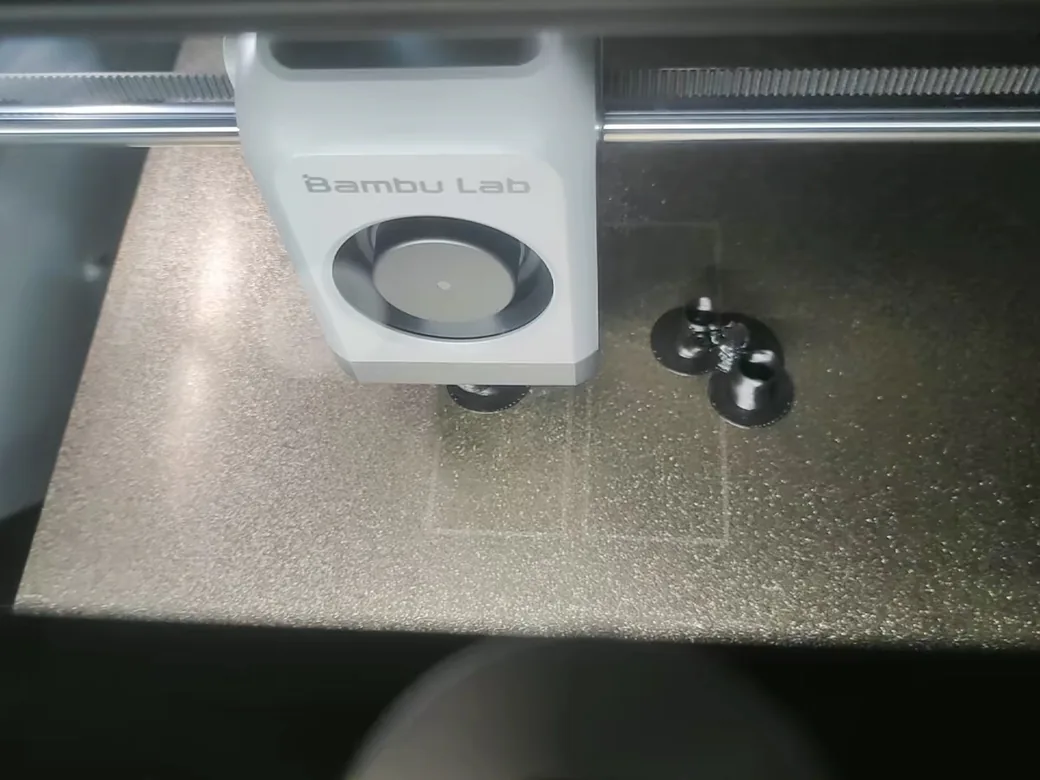
Sometimes yes. Often no. It comes down to your build surface and what you’re printing.
Here’s the part most guides skip: a clean, degreased PEI plate is a genuinely good adhesive on its own. In one head-to-head test of seven adhesives across five materials, bare PEI with nothing on it ranked third overall, beating most of the glue sticks in the lineup. Odd footnote from the research: in one 2023 emissions study, the irritant compound measured around a PLA printer traced back to the glue stick on the bed, not the filament. More in our look at PLA fumes. For everyday PLA and PETG on a fresh textured plate, you may never touch a glue stick.
Modern printers tilt the odds further. An enclosed machine with a heated chamber holds parts down so well that most materials don’t need any help at all.
A glue stick earns its place in specific spots:
- Glass or worn beds that have lost their grip
- Warp-prone materials like ABS and ASA
- Tall prints or big flat first layers that peel at the corners
- Any time you want an easy-release layer so a stubborn part doesn’t tear your plate
And the mindset: a glue stick is insurance, not a confession that you tuned badly. Bambu Lab even recommends “seasoning” a new plate with a coat of PVA so early prints don’t bond too hard and chip the surface. If your first layer still refuses to stick after glue, the fix is upstream, and our guide on why a first layer won’t stick walks through it.
How Glue Sticks Actually Work (and Why the Purple Ones)
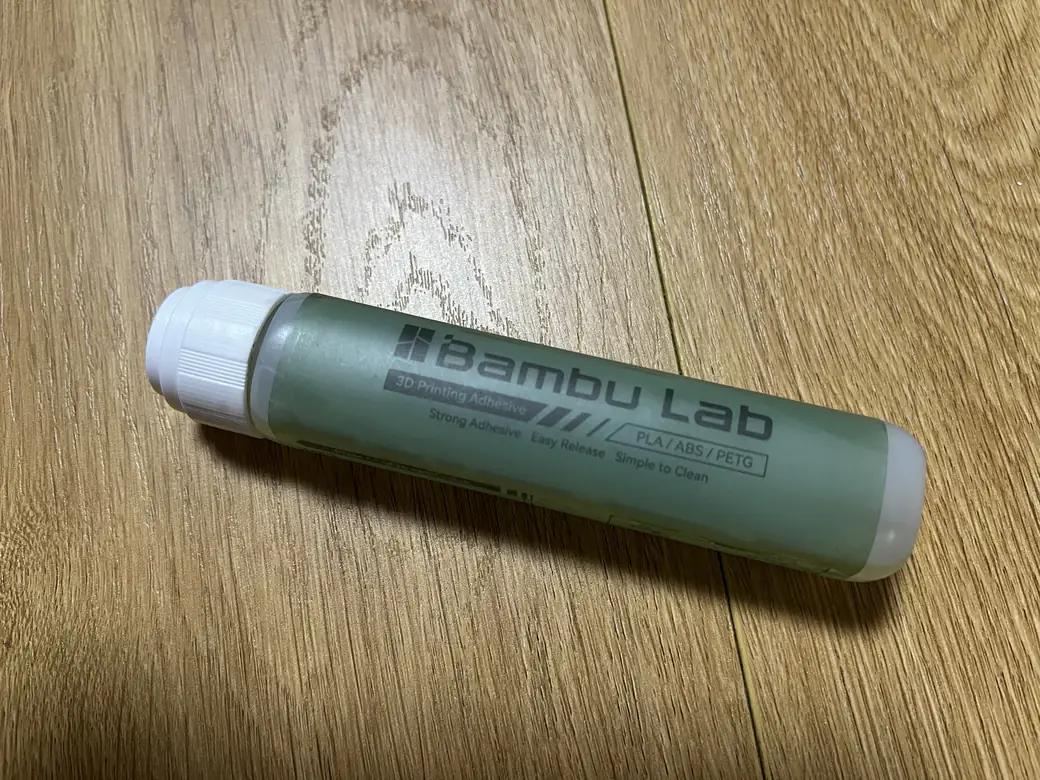
A 3D printing glue stick is mostly PVA, or polyvinyl alcohol. Bed heat softens it, it grips the underside of your first layer, and then it lets go with a little water. That water solubility is the whole trick. It’s why glue protects a plate instead of welding your print to it.
The purple “disappearing” sticks add one more thing: visual feedback. They go on purple so you can see your coverage, then dry clear when the bed is warm and ready. No guessing whether you missed a spot.
That also answers the common question of what actually sticks to your filament. It isn’t the plastic bonding to the glass. It’s the softened PVA layer holding the plastic while it cools.
Best Glue Sticks for 3D Printing at a Glance
Every pick below is something you can buy today. Prices are rough tiers, not exact figures, since they move around.
| Pick | Best for | Type | Price tier | Washable |
|---|---|---|---|---|
| Elmer’s Disappearing Purple | Best overall / beginners | PVA stick | Cheap | Yes |
| Amazon Basics Purple | Cheapest in bulk | PVA stick | Cheapest | Yes |
| Avery Permanent Glue Stic | Stronger hold, hotter beds | PVA stick | Cheap | Yes (in practice) |
| FYSETC PVP Glue Stick | Made for print beds | PVP stick | Low | Yes |
| Magigoo / 3DLac | ABS, ASA, nylon, multi-material | Dedicated adhesive | Mid | Yes |
Want your slicer settings dialed in so you need less glue in the first place? The print settings finder is a good starting point.
Elmer’s Disappearing Purple Glue Stick: Best Overall
If you buy one glue stick and stop reading here, buy this one. It’s cheap, it’s everywhere, and the purple-to-clear feedback makes it almost foolproof for a beginner.
Specs:
- PVA formula, washable, non-toxic, acid-free
- Purple when wet, clear once the bed warms up
- Comes as a 22-gram stick or a pack of smaller ones
Best for: PLA and PETG beginners printing on glass or a worn PEI sheet.
Nik’s Take: This is the stick I keep within arm’s reach of the printer. Nine times out of ten, when a bed level test square won’t stay put, one pass of purple fixes it and I move on. It won’t save an ABS print in a drafty room, but for the everyday stuff it’s all most people need.

Amazon Basics Purple Washable Glue Sticks: Best Value
Same purple PVA, same job, a fraction of the price when you buy the box. If you reapply glue often, this is how you stop thinking about the cost.
Remember that 29,000-sticks-in-eight-months number? These are those sticks. The community bought a small mountain of them for a reason: they work like the name-brand purple ones and cost less per stick in a 30 or 60-pack.
Specs:
- PVA, purple going on, dries clear, washable
- 0.24-ounce sticks in 30-pack or 60-pack boxes
Best for: Anyone who applies glue every print and wants to buy once, glue for a year.
Nik’s Take: There’s no magic here, and that’s the point. Buy a box, toss a stick in your tool drawer, and forget about it.
Avery Permanent Glue Stic: Best for a Stronger, Hotter-Bed Hold
When a washable purple stick gives up too early, this is the next step before you spend real money on a dedicated adhesive.
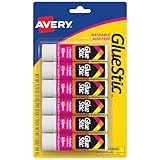
Some experienced users prefer Avery’s permanent stick over the Elmer’s purple, and forum testers have reported it holding through 15-plus prints at bed temperatures in the 75 to 90°C range. Despite the “permanent” label, it still cleans off with water in practice.
Specs:
- 0.26-ounce sticks, sold in a 6-pack
- Labeled permanent, but water-removable in real use
- White going on, so no color feedback
Best for: Slightly warp-prone prints or hotter beds where purple washable sticks release too soon.
Nik’s Take: I reach for this when a part keeps lifting at one corner and I don’t want to break out the Magigoo. It’s a nice middle rung on the ladder.

FYSETC PVP Glue Stick: Best Purpose-Made Stick
This is the stick that actually shows up when you search for glue sticks for 3D printing, and it’s the one to grab if you’d rather not raid the kids’ craft supplies.
Instead of PVA, it uses PVP, a similar water-soluble polymer, and it’s marketed straight at printer owners. The label lists compatibility with heated glass plates on machines like the Ender 3 and Prusa MK3S, and with PLA, ABS, and PETG.
Specs:
- PVP solid glue, not PVA
- Sold as a 3-pack
- Marketed for heated glass beds and common filaments
Best for: People who want a “3D printer” stick on the label rather than a school-supply one.
Nik’s Take: Honestly, the performance gap between this and a purple Elmer’s is small. You’re paying a little for the label. If that gives you peace of mind, it’s still cheap.

When a Glue Stick Isn’t Enough: Dedicated Bed Adhesives
If you print ABS, ASA, nylon, polycarbonate, or you run multi-material jobs, it’s time to upgrade. Plain PVA just doesn’t hold those materials as they shrink and pull.
The test data backs this up. Across seven adhesives and five materials, 3DLac came out strongest overall, with Magigoo a close second, only about 3 Newtons behind on average. Just as important, the dedicated adhesives held their grip over repeated prints while the plain glue sticks faded with use.
There’s a newer category too. Nanopolymer adhesives, like the one from Vision Miner, claim 30 to 50 prints per application, activate around 50 to 60°C, and rinse off with water.
| Adhesive | Best filament | Format |
|---|---|---|
| Magigoo | ABS, PETG, all-rounder | Pen with applicator tip |
| Magigoo (nylon formula) | Nylon | Pen |
| 3DLac | ABS, multi-material | Spray |
| Nanopolymer (Vision Miner) | Exotic, high-temp | Bottle |
Best for: High-warp and engineering materials, or anyone tired of reapplying a stick every couple of prints.
Nik’s Take: For pure PLA, spending on Magigoo is overkill. The moment you get into ABS or nylon, it stops being optional.

Which Glue Stick for Which Filament
This is the table nobody seems to publish, and it’s the one that actually saves you a failed print. There is no single best adhesive. The right pick depends entirely on what you’re running.
| Filament | Best pick | Why |
|---|---|---|
| PLA | Plain purple stick, or nothing on clean PEI | Sticks edge out bare PEI only slightly |
| PETG | Clean PEI, or a thin stick as a release layer | PETG bonds too hard to bare glass and can chip it |
| ASA | Glue stick | Surprisingly beat dedicated adhesives in testing |
| ABS | 3DLac or Magigoo | Plain PVA usually isn’t enough |
| Nylon | Magigoo’s nylon formula | Far ahead of everything else tested |
Two of those deserve a note. PETG is the material that will happily fuse to a bare glass plate and take a chunk of glass with it when you pop the print off. A thin coat of glue there isn’t for grip, it’s a sacrificial barrier. And ASA’s result was a genuine surprise even to the tester, so treat it as “a stick works fine” rather than gospel.
If you’re still deciding what to run, match the surface to the plastic first. Our beginner’s guide to filaments covers how each one behaves.
How to Apply Glue Stick the Right Way
Most glue stick problems are application problems. Get these four things right and you’ll rarely have an issue.
Apply a thin, even coat, and only over the area where the print and any purge line will sit. You don’t need to paint the whole plate. A light film is doing the work, not a thick smear.
One swipe. That’s the rule. If a single coat isn’t holding, more glue is not the answer. The real culprit is almost always bed leveling, bed temperature, or wet filament. Fix those first.
Reapply every few prints. On a worn plate, a single coat is usually good for five or six prints before it needs a refresh.
For stubborn parts, slow the first layer to around 20 mm/s and add a brim. The extra time and surface area make a real difference on the pieces that like to curl.
Cleaning Up and Protecting Your Bed
When residue builds up or you switch to a material that doesn’t want glue, wash the plate with warm, soapy water until it’s clean, then dry it completely. On a spring steel plate, drying matters, because trapped moisture invites rust.
This is also the quiet reason glue stick is so friendly to your hardware. Because it dissolves in water, it acts as a buffer between the print and the plate. Prints that bond directly to bare PEI or glass can tear the sheet or crack the glass when they hold too well. The glue takes that hit instead.
Pro Tips Most Guides Skip
A few tricks that don’t show up in the usual glue stick advice.
The overnight power-loss trick. Starting a 16-hour print before bed makes a lot of people nervous. One workaround: apply glue stick, start the print, then pause it and cut the power. The glue holds the model firmly in place even as the bed cools overnight. In the morning, power back on, let the printer resume, and it picks up right where it left off.
Buy during back-to-school season. These are the same sticks the whole world buys for classrooms in late summer, and they go on deep discount. Stock up then.
Revive a worn bed. If your plate has stopped gripping and a new one isn’t in the budget this week, a single swipe of glue stick brings it back to life. It’s a stopgap, but a good one.
Mistakes to Avoid
A short list of the ways people get this wrong.
Never use super glue or Gorilla Glue on the bed. Cyanoacrylate and polyurethane bond permanently to the plate and can ruin it. There’s a reason Bambu owners keep posting about super glue frosting their prints. Those glues are for assembling parts, not for bed adhesion.
Don’t slather it on. A thick coat can emboss itself into the bottom of your print and leave a scarred first layer. Thin and even wins. One place to skip glue entirely is a print that’ll touch food. Bambu says so on its own certified filament page.
Don’t use glue to paper over a bad level. Glue is a helper, not a cure. If you’re leaning on it every print, level and re-check your Z offset first.
Frequently Asked Questions
What is the best glue stick for 3D printing? For most people, an Elmer’s Disappearing Purple stick is the best all-around choice. It’s cheap, it gives you purple-to-clear visual feedback, and it washes off with water. If you need a firmer hold on a hotter bed, an Avery permanent stick or a purpose-made FYSETC stick steps things up.
Do glue sticks help with 3D printing? Yes. They improve first-layer adhesion and add a protective, water-soluble buffer that keeps a stubborn print from tearing your build surface. What they can’t do is fix bad leveling or wrong temperatures, so treat glue as insurance rather than a repair.
Should I use a glue stick with PLA? Often you don’t have to. A fresh textured plate usually grips PLA fine on its own. On a glass bed or a tired PEI sheet, a thin coat of purple stick makes it reliable.
Can I use a regular office glue stick? Yes, a purple PVA school stick is exactly what most people use. Just keep cyanoacrylate products off the build surface, since those bond permanently and can damage it.
What’s a good glue stick alternative? For everyday materials, a clean PEI sheet or a light hairspray both work. For ABS, ASA, and nylon, a purpose-built pen or spray outperforms any stick. If you’re gluing finished parts together rather than to the bed, that’s a different job, covered in our post-processing guide.
Last updated July 2026.
CERTAIN CONTENT THAT APPEARS ON THIS SITE COMES FROM AMAZON. THIS CONTENT IS PROVIDED ‘AS IS’ AND IS SUBJECT TO CHANGE OR REMOVAL AT ANY TIME.
Price details
Product prices and availability are accurate as of the date/time indicated and are subject to change. Any price and availability information displayed on Amazon.com at the time of purchase will apply to the purchase of this product.