
You bought the printer. Now you’re standing next to your car, wondering what’s actually worth making for it.
Most “cool car print” lists skip the one detail that decides everything. Half of those parts will droop into abstract art the first hot afternoon, because they were printed in PLA. Here are 18 genuinely useful 3D printed car accessories, sorted by what they do, plus the simple material rule that keeps them from melting on your dashboard.
- The projects that earn a spot in a car fall into four buckets: interior storage and maintenance helpers, plus repair parts and personalization. Material decides whether they last. PLA warps in a hot interior, so PETG is the safe default, ASA or ABS handle a sun-baked dashboard, TPU covers flexible parts, and nylon handles load-bearing ones.
- The one rule to remember: don’t print car parts in PLA.
- Best all-round filament: PETG.
- Quickest win on this list: a sunglasses visor clip, roughly 23 minutes to print.
- Where to get the models: free sites like Printables and MakerWorld, or Etsy if you just want the finished part.
Table of Contents
- Why Material Comes First (Don’t Skip This)
- Interior Organization and Storage (7 prints)
- Cleaning and Maintenance Helpers (5 prints)
- Repair and Replacement Parts (great for older cars)
- Personalization and Just-for-Fun (3 prints)
- Print Settings That Actually Matter for Car Parts
- Where to Find the Models (Free and Paid)
- Safety: What You Should Not 3D Print for Your Car
- FAQ
Why Material Comes First (Don’t Skip This)
Before you download a single model, pick your material. Everything else on this list depends on it.
Here’s why. A part left on your dashboard sits in real heat. A sunny dashboard can pass 70°C (160°F), and PLA starts softening around 60°C, its glass transition point. That gap is the whole problem. In one dashboard sun test, a PLA part warped badly after just one hour in direct sun, while the same shapes in ABS and PETG held their form. Another maker found an old PLA enclosure in his car had slowly sagged out of shape after years of heat. PLA is wonderful for prototypes. It is the wrong choice for anything that stays in a parked car.
PETG is the answer for most of the projects below. It prints almost as easily as PLA and shrugs off interior heat. It also sands and paints well if you want a cleaner finish. For a dashboard piece that faces direct sun all day, step up to ASA, which adds UV resistance on top of heat resistance. ABS handles heat too but is fussier to print. Flexible parts like seals and grippy straps want TPU. Load-bearing parts like hooks and brackets want nylon, printed dry and at high infill.
Not sure which roll to buy first? A single spool of PETG covers most of this list, and our filament picker tool can match a brand to your printer in a minute.
| Material | Handles car heat? | Best for | Difficulty |
|---|---|---|---|
| PLA | No | Indoor test prints only | Easy |
| PETG | Yes (interior) | Default for most car prints | Easy-ish |
| ASA | Yes, plus UV | Dashboard and sun-facing parts | Hard (enclosure) |
| ABS | Yes | Structural interior parts | Hard (enclosure) |
| TPU | Yes (flexible) | Seals, straps, grippy inserts | Medium |
| Nylon (PA) | Yes, very tough | Load-bearing hooks and brackets | Hard (dry it) |
Want the full breakdown of each filament’s strengths and print temps? See our complete 3D printing filament guide. For now, just remember the short version: PETG unless you have a reason to go otherwise.
Interior Organization and Storage (7 prints)
The fastest payoff from a printer is interior organization. These parts fix the small daily annoyances of a cluttered cabin, and most fit on a single build plate.
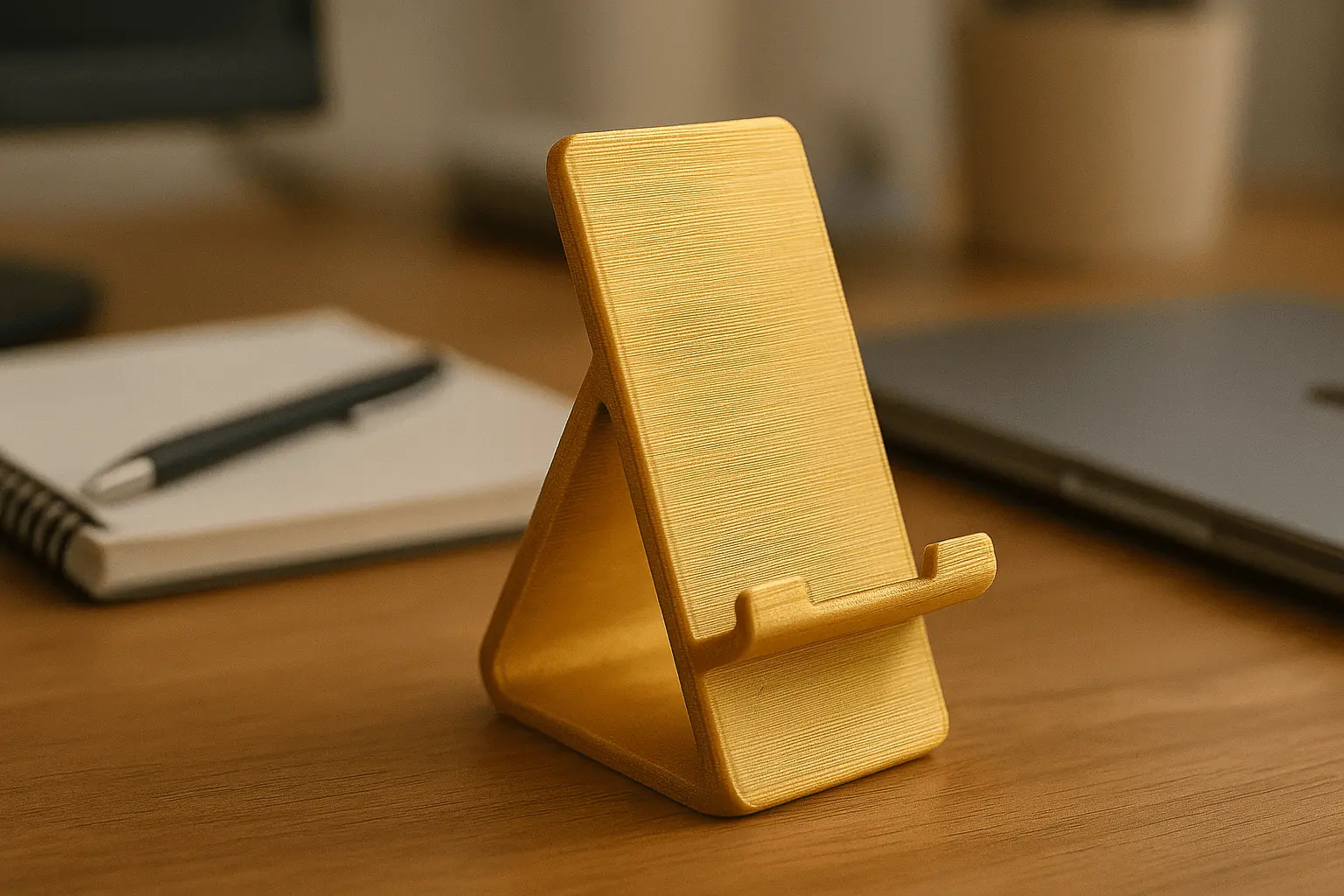
1. Custom phone mount. A generic clamp mount blocks a vent or slides around. A model made for your exact dashboard or vent sits solid and looks factory. Print it in PETG so summer heat doesn’t loosen the grip. It’s one of the most-requested car prints in the Bambu Lab community, and for good reason.
2. Cup holder adapter or insert. Two versions solve two problems. An adapter widens a too-small holder to fit an oversized bottle. An elevator insert lifts a can up so you can actually grab it instead of fishing around the bottom. One maker even built a spring-loaded sliding version that adjusts to any cup size, a small upgrade the factory never offered.
3. Seat gap organizer. The abyss between seat and console swallows phones and loose change. A gap filler blocks it and adds a tray. Print the strap section in TPU so it flexes over the seatbelt buckle, and the body in PETG for structure. That two-material combo is a nice beginner intro to mixing filaments.
4. Sunglasses visor clip. The fastest project here, around 23 minutes to print. It clips onto the sun visor and holds your sunglasses so they stop rattling around the cabin and getting scratched. A perfect first functional print.
5. Headrest and bag hooks. These slide onto the headrest posts and give you a place to hang grocery bags or a backpack. Because they carry weight and swing, print them in nylon for strength. PETG works for lighter loads.
6. Sun visor pouch and tissue holder. A slim pouch or tissue box that tucks against the visor keeps registration and napkins in reach without cluttering the glovebox. Low stress, so PETG is plenty.
7. Trash bin or small-item caddy. A compact bin that mounts to a console side or back of a seat keeps wrappers off the floor. Design it to snap over an existing panel edge so you don’t need adhesive.
Cleaning and Maintenance Helpers (5 prints)
These prints make routine car care easier. Each one is simple and functional, the kind of thing you never knew you needed until you print one.
8. Oil funnel with air vent. A funnel shaped to fit your oil bottle, with a vent hole so the oil pours smoothly instead of glugging and splashing. Faster, cleaner oil changes with no mess down the side of the engine. Print in PETG since it may see engine bay warmth.
9. Car wash and vacuum hose guide. A two-piece guide with a spinning roller that keeps a hose from snagging under a tire or catching on a corner while you wash or vacuum. A five-hour PETG print that saves a lot of swearing.
10. Vacuum crevice tool. A narrow nozzle that fits your shop vac and reaches into seat rails and vents that the stock attachments can’t. Match the diameter to your vacuum’s hose and you’ve got a tool that would cost more to buy than to print.
11. Parking time disk. In regions that require one, a sturdy printed parking clock beats the floppy cardboard version. Print it in PETG, not PLA. Left on a hot dash, a PLA disk can literally take the shape of your dashboard.
12. Dent and hail finder. A simple tool that helps you spot dents and dings by catching reflections across a body panel. It’s most useful when inspecting a used car before you buy, less so once the car is yours.
Repair and Replacement Parts (great for older cars)
If your car is more than a decade old, this category alone justifies the printer. Interior plastics wear out, and the parts are often discontinued or absurdly overpriced. Printing your own is cheaper and faster than hunting a junkyard.
13. Trim clips and fasteners. The little clips that hold door cards and panels snap constantly. Generic replacement clips are one of the most useful things you can keep a stock of. Print a dozen in PETG and never wait on a dealer again.
14. Knobs, handles, and seat latches. When a knob cracks or a seat-release handle breaks, you can measure the original with calipers, model it, and print a replacement. The trick most people miss: you don’t have to recreate the whole part. Just copy the mounting points and rebuild the shape around them.
15. Center console latch or bucket. These are common failure points, and swaps between trim levels often don’t fit. A bit of CAD and an ABS or PETG print gives an old console a brand-new feel. One truck owner on Reddit printed a latch in ABS to make a console swap fit their Silverado.
For any repair part, print a quick, cheap PLA prototype first to check the fit. It doesn’t need to look good, just confirm the part mounts and works. Once the fit is right, print the final in PETG at high infill. Then you can sand and paint the part to match your interior so it doesn’t look printed at all.
Personalization and Just-for-Fun (3 prints)
Not everything has to be practical. These make the car feel like yours.
16. Air vent aroma diffuser. A small clip-on unit whose fan is spun by the vent’s airflow, dispersing scent from a scented cotton pad. It’s about seven parts and roughly two and a half hours to print, and by most accounts it works better than you’d expect.
17. Hitch receiver cover. A cover for an exposed trailer hitch that you can stamp with any design, from a favorite logo to a Mandalorian helmet. Print in ASA since it lives outside in the sun and weather.
18. Floor mat logo stencil. A stencil that lets you brush your car’s logo or your own design into the carpet pile for a detailed, showroom look. Quick to print and genuinely fun if you enjoy detailing.
Print Settings That Actually Matter for Car Parts
Once the material is right, a few settings decide whether a part survives daily use. You don’t need to touch everything, just these.
Infill. Match it to the job. Parts under real load, like hooks and handles, should be printed dense, up to 100% for anything under stress. Purely cosmetic parts can go as low as 10 to 15% to save time and filament.
Walls over infill. For functional parts, adding wall lines (perimeters) often adds more real strength than cranking infill. Three to five walls is a good range for anything structural.
Heat-resistant printing. ASA and ABS resist car heat best, but they warp and crack without a stable, warm chamber. If you plan to print them, you’ll want an enclosed printer for ASA or ABS. If you don’t have one, stick with PETG, which prints fine in the open air and still handles interior heat. The dashboard is the brutal exception, though. We put numbers on which filament survives a hot dashboard and where plain PLA is still fine.
Prototype cheap, finish right. Print test versions in cheap PLA at draft quality to dial in the fit, then commit to PETG for the final. Not sure what temperature or speed to run? Our print settings finder gives you a starting profile by material and printer.
Where to Find the Models (Free and Paid)
You don’t need to design anything. Nearly every part on this list already exists as a free download, and the search trick below saves a lot of time.
Start with three big free libraries: Printables, MakerWorld, Thingiverse. Between them you’ll find thousands of car models, from phone mounts to full trim pieces. Cults3D hosts a large mix of free and paid designs, including collections built specifically for cars. Many creators also take requests, so if a model is close but the size is off, ask for a custom fit.
If you only check one, make it Printables. It has the cleanest search and the most consistent print quality in the comments. MakerWorld is a close second and often has more car models, especially if you run a Bambu printer. Thingiverse has the deepest back catalog, but expect older files and a clunkier search.
The search trick: include your exact car in the query. “Cup holder insert” returns a mess, but “2020 Nissan Rogue cup holder insert” gets you parts made for your cabin. Model-specific fit is the whole advantage of printing over buying generic.
Want to knock out a batch in one weekend? Print a small starter kit: a phone mount and a cup holder insert, plus a seat gap organizer and a sunglasses clip. That covers the daily-use essentials on one or two spools of PETG. And if you don’t own a printer yet, Etsy sellers will print and ship most of these finished, so you can test the idea before committing to a machine.
Safety: What You Should Not 3D Print for Your Car
Some parts are off-limits, full stop. Read this before you get ambitious.
Do not print anything safety-critical: airbag components and covers, plus seatbelt-load parts and anything in the braking or steering system. A home FDM part can fail suddenly under stress or heat, and these are the systems where failure hurts you.
Keep the long game in mind too. UV and vibration age plastic over time, and so do repeated heat cycles. Inspect functional parts now and then, and choose ASA for anything living in direct sun. Stick to convenience and cosmetic parts, and 3D printing is one of the best upgrades a car owner can make.
FAQ
Can you use PLA in a car? It’s not recommended. PLA softens around 60°C, and a parked car’s interior or dashboard can climb well past that on a sunny day. Parts made from PLA warp and sag out of shape. Use PETG as your default instead, or ASA for parts in direct sun.
What’s the best filament for 3D printed car accessories? PETG for most projects. It resists interior heat and prints easily, and beginners find it forgiving. Choose ASA for a part that sits in direct sun and needs UV resistance. Use TPU for flexible parts and nylon for load-bearing pieces like hooks and brackets.
Are 3D printed car accessories durable and worth it? Yes, when you match the material to the job. A PETG organizer or PETG phone mount will last for years of normal use. Worth it depends on the part: printing beats buying for custom-fit items and discontinued repair parts, while cheap generic accessories may not be worth the print time.
Where can I find free STL files for car accessories? Printables and MakerWorld host thousands of free car models, and Thingiverse has a huge back catalog too. Search with your exact make and model, plus the year, to find parts designed for your cabin. Cults3D adds a large catalog with both free and paid models.
Can I 3D print replacement parts for an old car? Yes, and it’s one of the best uses of a printer. Measure the broken part with calipers and model it, where copying the original mounting points is usually enough. Print the result in PETG. Just avoid any safety-critical component, and prototype the fit in cheap PLA before your final print.