
I earn a commission if you buy through links on this page, at no extra cost to you. As an Amazon Associate, I earn from qualifying purchases.
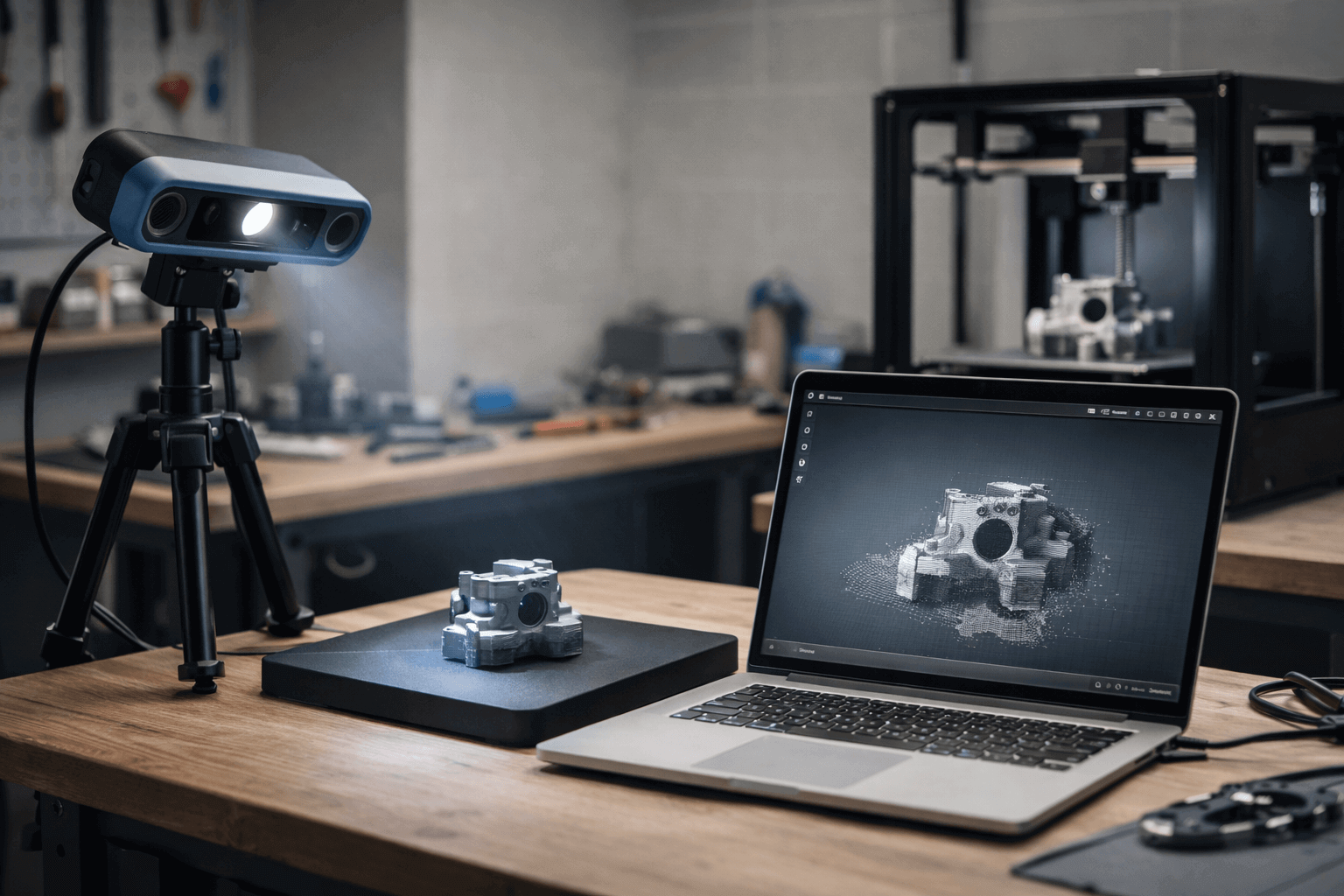
A 3D scanner used to feel like a luxury. Not anymore. Copying a part, fixing a broken object, or scanning a shape straight into your slicer are all within reach now.
The trouble is timing. Scanners don’t drop as hard as printers, and half the “deals” you’ll see are last month’s price in a shinier box. Pick the wrong one and you’ll fight reflections, noise, or bad alignment for years.
So here are ten scanners actually worth buying on sale, sorted by budget and use. Current prices are in each product card.
3D Scanner Sale Dates for 2026: Prime Day, Black Friday, Cyber Monday
Amazon’s two Prime events for 2026 are done. Prime Day ran June 23 to 26, and Prime Big Deal Days followed on October 6 and 7. The next window is Black Friday on November 27, with Cyber Monday on November 30.
Scanner brands run longer than one weekend. In 2025, Creality’s Black Friday sale started on November 3. Revopoint opened early-bird pricing on its newest models on November 10, ran its main sale from November 17 to December 7, and discounted on Amazon from November 20 to December 1. If 2026 follows the same pattern, the first cuts arrive in early November and the deepest Revopoint pricing from mid-month.
Is Prime Day a Good Time to Buy a 3D Scanner?
Short answer: yes, but go in with clear eyes. Scanners discount more gently than printers. A 10 to 25 percent cut is a strong result, and a few brands (Revopoint especially) push to 35 percent on older models.
The bigger decision is the technology. Blue laser scanners capture sharp detail on small parts. Structured-light units are faster and friendlier for beginners. Handheld scanners suit large objects and people, while a turntable setup wins on small, intricate pieces. We tested how the modes compare in our breakdown of blue laser vs infrared scanning.
On timing within a sale, there’s a simple rule. If a scanner you already researched hits a price you’d happily pay, buy it early, because scanner stock runs thinner than printer stock and good deals sell out. If you’re still torn between two models, wait until late in the sale, since prices sometimes soften toward the end. Either way, decide your shortlist before the sale starts so you’re not making a $500 call in a hurry.
One more honest filter before you spend. A scanner earns its place only if you regularly copy, repair, or modify real objects. If you scan twice a year, the math rarely works. If you scan weekly, the right unit pays for itself fast.
Black Friday vs Prime Day: Which Sale Is Better for a 3D Scanner?
For scanners, Black Friday gives you more to choose from. Prime Day discounts sit on Amazon listings only. In November, the scanner brands also cut prices in their own stores, and some stack a code on top.
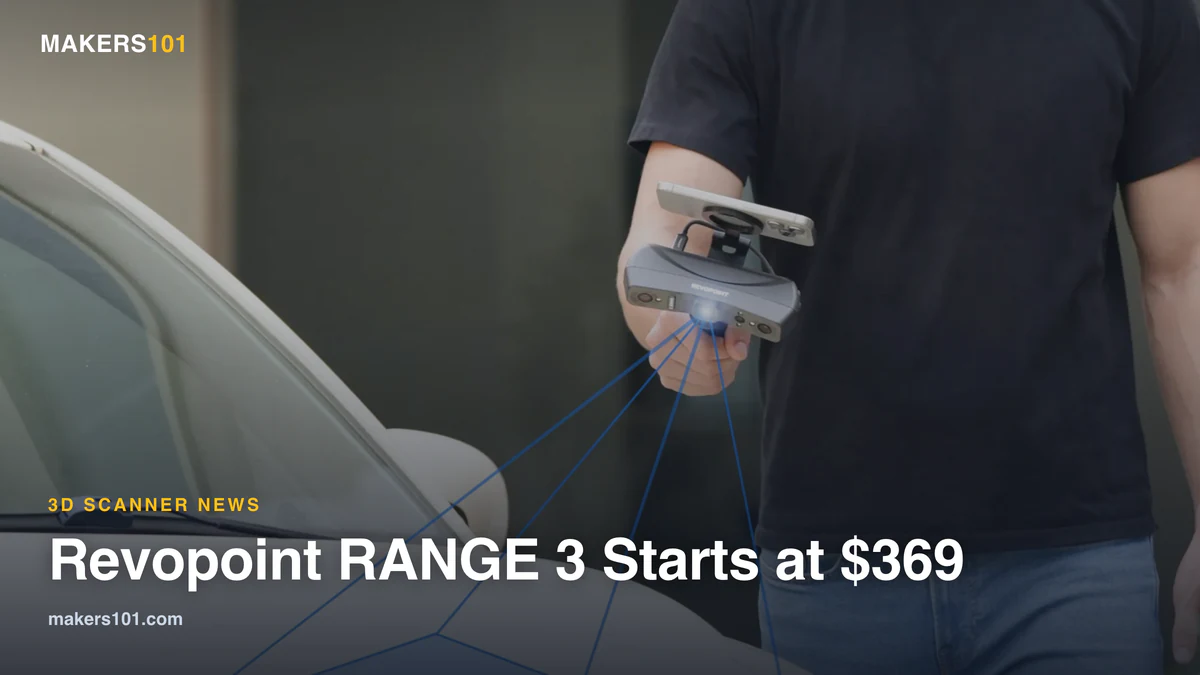
Last year’s numbers set a realistic bar. Revopoint took up to 25 percent off in its main sale and 15 percent off its newest scanners, plus another 5 percent with a code. Creality’s store ran its own sale from early November. That matches the 10 to 25 percent range from Prime Day, so don’t expect a good scanner to drop by half. Revopoint’s newest RANGE 3 scanner launched with a 5% pre-order discount, in line with that pattern.
This year has one extra wrinkle. Bambu Lab has teased its first 3D scanner, the S1, for November 2026, with no price or specs yet. If you’re spending $700 or more, it’s worth seeing where the S1 lands before you commit. We’re tracking it on our Bambu Lab S1 scanner page. If you’re after a budget unit and don’t need anything from Bambu, there’s no reason to wait.
How We Picked These Scanner Deals
Every scanner here clears the same bar, sale or no sale.
First, the price has to be a real cut against the recent street price, not a number inflated to look generous. Second, the scanner has to be worth owning at full price, because a cheap bad scanner just wastes filament and patience. Third, we favor units we or the wider community have actually tested, so the spec sheet matches reality.
We also spread the list across budgets on purpose. A maker scanning the odd cosplay prop needs something very different from a shop doing reverse-engineering. The ten picks below run from a budget starter to a metrology-class standalone, so there’s a sensible deal whatever your work looks like. Resolution and ease of use carried more weight than raw spec numbers, with real-world tracking as the tiebreaker.
Best 3D Scanner Deals at a Glance
Ten picks, from a budget starter to a standalone pro. Scan the table, then jump to the one that fits.
| Scanner | Best For | Tech | Amazon |
|---|---|---|---|
| Creality CR-Ferret SE | Tightest budget | Structured light | Check price |
| Creality CR-Scan Ferret Pro | Best overall value | Structured light | Check price |
| 3DMakerpro Seal Lite | Small objects | Blue light | Check price |
| Revopoint INSPIRE 2 | Mid-range all-rounder | Structured light | Check price |
| Revopoint POP3 Plus | Color texture | Dual mode | Check price |
| Revopoint Range 2 | Full-size objects | Infrared | Check price |
| Shining 3D Einstar | Pro entry | Structured light | Brand store |
| Creality CR-Scan Raptor | Highest detail | Blue laser + NIR | Check price |
| Revopoint MIRACO | Large handheld, no PC | Dual camera | Check price |
| Creality Sermoon P1 | All-in-one, no PC | Blue laser + IR | Check price |
1. Best Budget Pick: Creality CR-Ferret SE
If you just want to try scanning without a big spend, the CR-Ferret SE is the cheapest sensible way in. It handles medium objects with anti-shake tracking that forgives a wobbly hand.
Don’t expect jewelry-grade detail. Do expect a usable scan of a shoe, a bracket, or a bust on your first afternoon. It’s the right buy for a curious maker testing whether scanning fits the workflow before committing real money.
Pros: Cheapest way to try scanning; forgiving anti-shake tracking; handles medium objects without fuss.
Cons: Detail falls short on small or intricate parts.

2. Best Overall Value: Creality CR-Scan Ferret Pro
This is the one most makers should buy. The Ferret Pro is the value sweet spot of the whole list. It scans faster than the standard Ferret, tracks better in tricky light, then pairs cleanly with either a laptop or a phone.
For a first serious scanner that won’t frustrate you, this is the safe call, and a sale makes it an easy one. It covers small parts on a turntable and medium objects handheld, which is most of what a home maker actually scans.
Pros: Best all-round value here; fast and stable tracking; pairs with a laptop or a phone.
Cons: Fine jewelry-grade detail is beyond it.

3. Best for Small Objects: 3DMakerpro Seal Lite
Scanning tiny, detailed parts is where cheap scanners usually fall apart. The Seal Lite is built for exactly that. Its blue-light optics resolve small features that structured-light units tend to smear.
Miniatures, jewelry, or small mechanical parts all come out crisp. It’s a specialist rather than an all-rounder, so it’s a poor choice for scanning a person or a chair. For a desk full of fiddly objects, though, nothing else at this price competes.
Pros: Razor-sharp on tiny features; ideal for jewelry or miniatures; blue-light precision at a low price.
Cons: Too specialized for large objects or people.
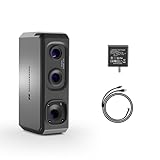
4. Best Mid-Range All-Rounder: Revopoint INSPIRE 2
The INSPIRE 2 is the do-everything pick. Accuracy reaches roughly 0.03mm, the workflow stays beginner-friendly, plus Revopoint’s software has matured a lot over the past year.
If you want one scanner that covers small parts and medium objects without fuss, this is it. Watch the price closely, since Revopoint tends to cut deepest of any brand during big sales. A 35 percent drop here would make it a genuine steal.
Pros: Genuine all-rounder; roughly 0.03mm accuracy; friendly software; usually the deepest sale cut.
Cons: No clear standout at any single task.

5. Best Color Scanner on a Budget: Revopoint POP3 Plus
Need the actual color and texture of an object, not just its shape? The POP3 Plus captures full-color scans that look right out of the box.
That makes it a favorite for figurines, art reproduction, or anything you want to display rather than reprint in one flat filament. It runs dual modes, so you can chase either speed or detail depending on the job. The trade-off is that pure-detail scanners edge it on the very finest features.
Pros: Full-color capture out of the box; great for figurines or display pieces; dual speed and detail modes.
Cons: Dedicated detail scanners pull ahead on the smallest geometry.

6. Best for Full-Size Objects: Revopoint Range 2
When your subject is a chair, a car panel, or a person, small-object scanners struggle. The Range 2 is tuned for big captures with a wide field of view and fast frame rates.
It trades a little fine detail for speed and reach, which is the right call when the goal is a whole object rather than a tiny part. Body scans, furniture, plus automotive work are its home turf. For a coin or a ring, look elsewhere on this list.
Pros: Built for big subjects; wide field of view; fast frames for body or furniture work.
Cons: Wrong tool for coins, rings, or tiny parts.

7. Best Pro Entry: Shining 3D Einstar
The Einstar is the cheapest doorway into genuinely professional scanning. Shining 3D builds industrial metrology gear, and the Einstar borrows that pedigree at a hobby-adjacent price.
Detail and reliability sit a clear step above budget units, and the software is built for real work rather than quick toys. If scanning is becoming a serious part of your projects, this is where the pro tier sensibly starts. Beginners may find it a touch more demanding to learn.
Pros: Cheapest path to pro-grade detail; industrial pedigree; dependable for real jobs.
Cons: Steeper learning curve than budget units.
8. Best High-Detail: Creality CR-Scan Raptor
For the sharpest results on this list short of the standalone units, the Raptor is the pick. It runs a 60fps blue laser plus near-infrared, so it nails fine detail and still tracks dark or shiny surfaces that defeat cheaper scanners.
We put it head to head with a rival and found it cleaner on the hard stuff. You can read the full comparison in our Raptor vs MetroX real-world test. For a maker who wants near-pro detail without a four-figure standalone, this is the smart middle ground.
Pros: Sharpest detail short of the standalones; 60fps blue laser plus NIR; tracks dark or shiny surfaces.
Cons: Pricier than entry handhelds, and more than a casual user needs.

9. Best Large Handheld Pro: Revopoint MIRACO
The MIRACO cuts the laptop loose. It’s a fully standalone handheld with its own screen, so you can scan a motorcycle or a statue without tethering to a computer.
Dual cameras handle both close detail and long range, and onboard processing means you see results as you work. For field work and large subjects, the freedom of an all-in-one device is worth the step up in price. It’s more scanner than a casual hobbyist needs.
Pros: Fully standalone with no laptop; onboard screen; dual cameras for close and long range.
Cons: Overkill and pricey for small-object hobby work.

10. Best All-in-One, No PC: Creality Sermoon P1
At the top sits the Sermoon P1. It’s a standalone scanner with a blue laser and built-in infrared metrology, so it captures pro-grade accuracy without a connected PC. Creality now lists a newer Sermoon P1S for less, though independent tests haven’t landed yet.
This is overkill for casual users and exactly right for someone scanning for engineering, reverse-engineering, or paid work. The price reflects metrology-class hardware, not hobby gear. For the full breakdown of what it does and who it suits, see our Sermoon P1 full specs.
Pros: Metrology-grade accuracy; standalone blue laser with infrared; needs no PC.
Cons: Premium price aimed at pros, not hobbyists.

Don’t Forget Scanner Accessories
A scanner is only half the kit. The cheap extras around it decide whether your scans come out clean or noisy.
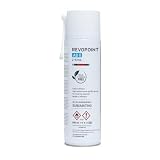
- Scanning spray. The single best upgrade. A light matte coat kills the glare on shiny or dark parts that wrecks most scans. Skip it and you’ll fight reflections all day.
- A motorized turntable. Spins the object for you, so small-part captures go hands-free and stay consistent across rotations.
- Markers and a calibration board. Reference dots keep alignment honest on larger objects, and a calibration board keeps accuracy true over time.
- A tripod or stand. Steady framing for turntable work, plus a rest for your arm on long handheld sessions.
None of this costs much, and a sale is the right time to round out the kit. Many makers spend hundreds on a scanner, then lose hours to bad scans for want of a $15 can of spray.


How to Spot a Fake Scanner “Deal”
Some discounts are real. Some are theater. Check the price history first, since tools like CamelCamelCamel show what a scanner actually sold for over time. Then open the brand’s own store, because Revopoint and Creality often match or beat Amazon during big sales. Finally, ignore the inflated MSRP and judge the street price you’d actually pay.
For codes that stack on top of sale prices, keep our current coupon codes page handy while you shop.
Don’t Buy a 3D Scanner on Sale If…
A deal only counts if you’ll use the thing. Skip it if you scan so rarely that outsourcing a one-off job is cheaper. Skip it if the model you actually want isn’t truly discounted, since settling for a worse scanner is a false saving. And be honest about your needs, because a phone photogrammetry app handles light hobby work for free.
FAQ
When is Amazon Prime Day 2026?
It ran from June 23 to 26, 2026, a four-day event for Prime members. The dates moved earlier from the usual July slot. Amazon’s second Prime event, Prime Big Deal Days, followed on October 6 and 7.
When is Black Friday 2026 for 3D scanners?
Black Friday falls on November 27, 2026, and Cyber Monday on November 30. Brand sales run longer. In 2025, Creality started on November 3, and Revopoint’s main sale ran November 17 to December 7.
Should I wait for the Bambu Lab S1 scanner?
If you’re spending $700 or more, waiting a few weeks costs little. Bambu Lab has confirmed a November 2026 launch for the S1, but no price or specs yet.
Are 3D scanners worth it for 3D printing?
Yes, if you copy, repair, or modify physical objects. A scanner turns a real shape into a printable model, which photogrammetry alone struggles to do cleanly.
Handheld or turntable scanner for makers?
Turntables win on small, detailed parts. Handheld units win on large objects and people. Several picks here, like the Ferret Pro, do both.
Blue laser or structured light?
Blue laser resolves finer detail and handles shiny surfaces better. Structured light is faster and easier for beginners. Match it to your subjects.
What’s the cheapest 3D scanner deal worth buying?
The value pick is the Ferret Pro. If your budget is tighter, the CR-Ferret SE costs less and still scans medium objects well. For the newest option, see our first look at the new Creality Pika, Creality’s $699 pocket scanner.
Do scanners discount much on Prime Day?
Less than printers. Expect 10 to 25 percent on most models, with Revopoint sometimes reaching 35 percent on older units.
Do I really need scanning spray?
For shiny, dark, or transparent objects, yes. Those surfaces confuse the optics and produce holes or noise in the scan. A light matte coat fixes it for a few dollars. Matte, light-colored objects often scan fine without it, so buy a can and use it only when a surface fights you.
Can my phone replace a 3D scanner?
For rough hobby work, sometimes. Photogrammetry apps stitch photos into a model and cost nothing to try. They struggle with featureless or shiny surfaces and rarely hit the accuracy a dedicated scanner gives, so they’re a starting point rather than a true substitute.
The Bottom Line
For most makers, the value pick this year is the Ferret Pro. Step up to the Raptor for detail, or the Sermoon P1 if you want a standalone pro workflow. Then spend a few dollars on scanning spray, because it improves your results more than any single spec.
This guide is part of our wider Prime Day deals guide for makers. For the next round of sales, see our Black Friday deals guide.
CERTAIN CONTENT THAT APPEARS ON THIS SITE COMES FROM AMAZON. THIS CONTENT IS PROVIDED ‘AS IS’ AND IS SUBJECT TO CHANGE OR REMOVAL AT ANY TIME.
Price details
Product prices and availability are accurate as of the date/time indicated and are subject to change. Any price and availability information displayed on Amazon.com at the time of purchase will apply to the purchase of this product.