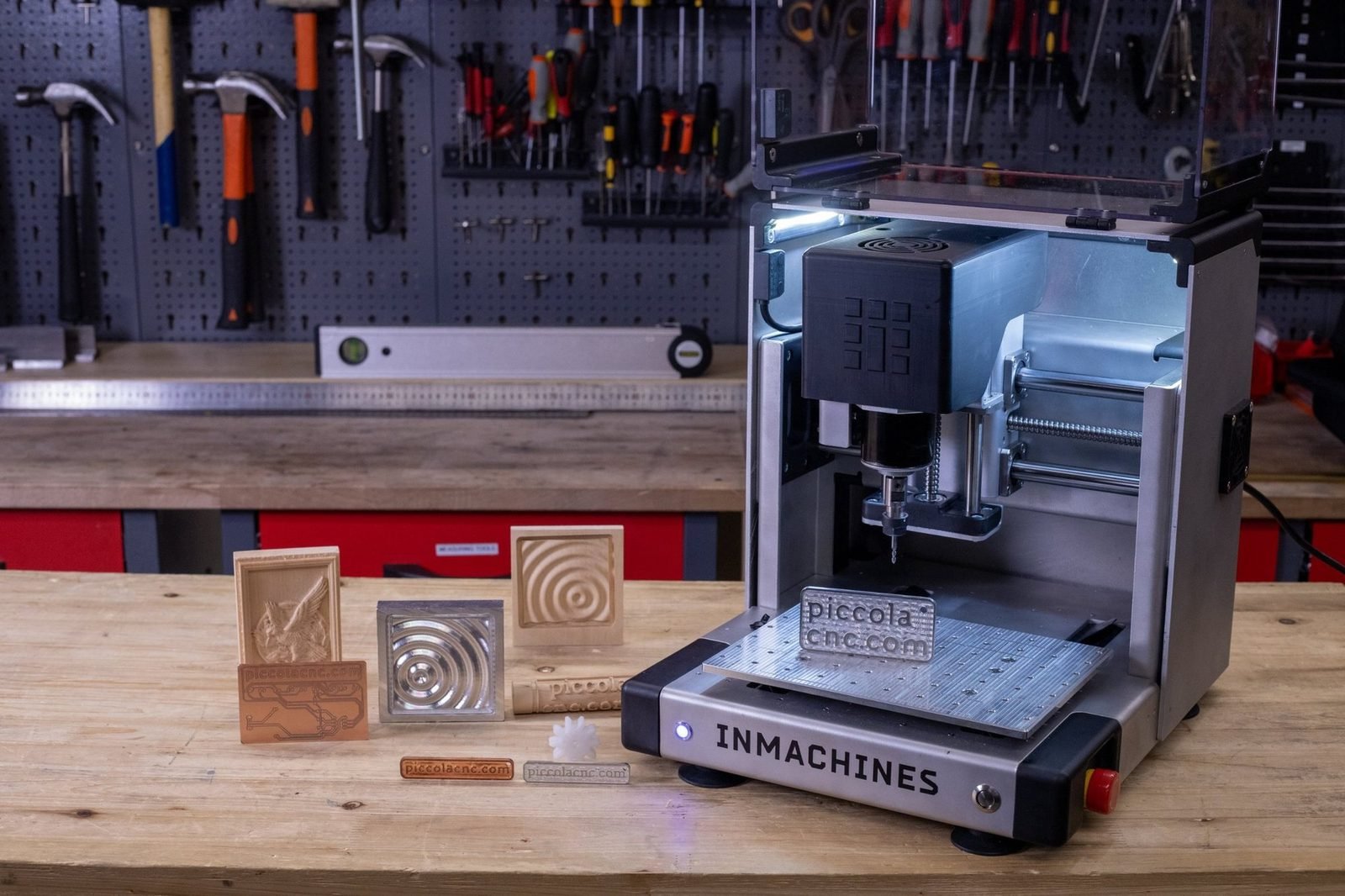

Piccola CNC, an open-source 3-axis desktop mill from the German company InMachines, goes live on Kickstarter on Tuesday, November 17, 2026, at 19:00 CET (10:00 a.m. PT). Until Sunday, November 15, 2026, at 19:00 CET (10:00 a.m. PT), anyone who reserves at piccolacnc.com gets the Super Early Bird price, which starts at €1,279 including 19% VAT for the Basic, or about $1,270 outside the EU before shipping and import costs.
InMachines pitches Piccola as the first mill for people who already own a 3D printer and want to start cutting parts and circuit boards, and it also aims the machine at schools and makerspaces. The headline promise is openness: the whole machine, firmware and software included, is due to be released as open source at delivery.
What the three Piccola CNC models cost
InMachines sent us these prices on November 14. Euro prices include 19% EU VAT. The dollar figures are the company’s approximate conversions for backers outside the EU, who pay no VAT, and because pledges are charged in euros the dollar amount will move with the exchange rate.
| Model | Spindle (per InMachines) | Enclosure and extras | Super Early Bird | Price after launch |
|---|---|---|---|---|
| Basic | 100W 24V brushed, 20,000 rpm | Open frame | €1,279 (~$1,270) | €1,499 (~$1,480) |
| Pro | 200W 48V brushed, 12,000 rpm | Full enclosure with door interlock and LED lighting | €1,679 (~$1,660) | €1,999 (~$1,980) |
| Ultimate | 200W 48V brushless, 12,000 rpm | Pro enclosure plus XY zero detection, center detection and 3D scanning | €1,979 (~$1,960) | €2,499 (~$2,480) |
For a shared room, the step from Basic to Pro is the one that matters. Pro gets the enclosure and a door interlock that cuts spindle power when the door opens. Ultimate adds the brushless spindle and probing that helps with double-sided work, where you flip the stock and have to find its edges or center again.
Specs, materials and PCB work
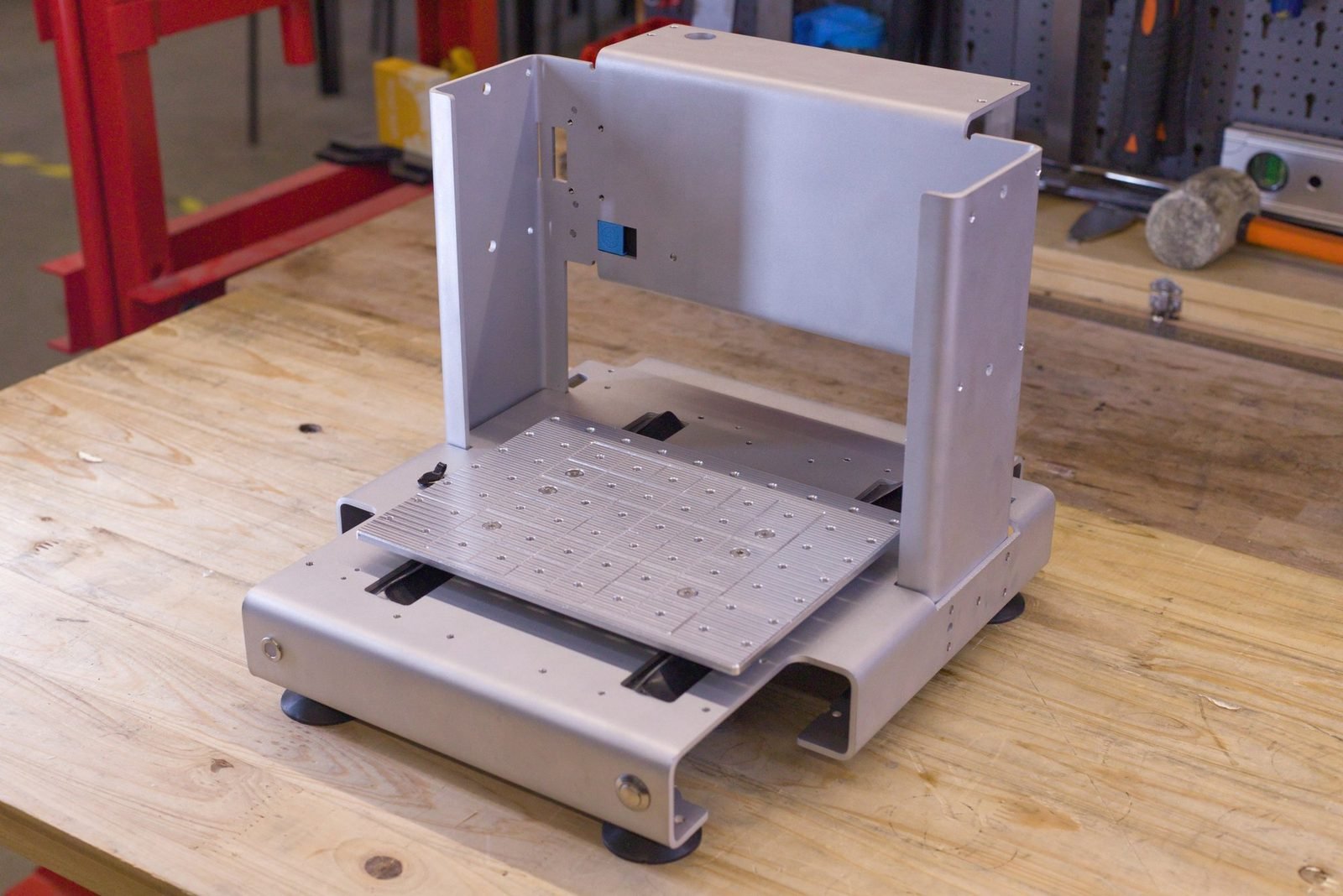
All three models share a 150 x 150 x 70 mm cutting area, belt-driven 1204 ballscrews on every axis, ER11 collets and a maximum travel speed of 2,000 mm/min. The frame is folded from aluminum sheet. Connections are USB-C and Wi-Fi, and InMachines lists tool length detection and height-map leveling on every model.
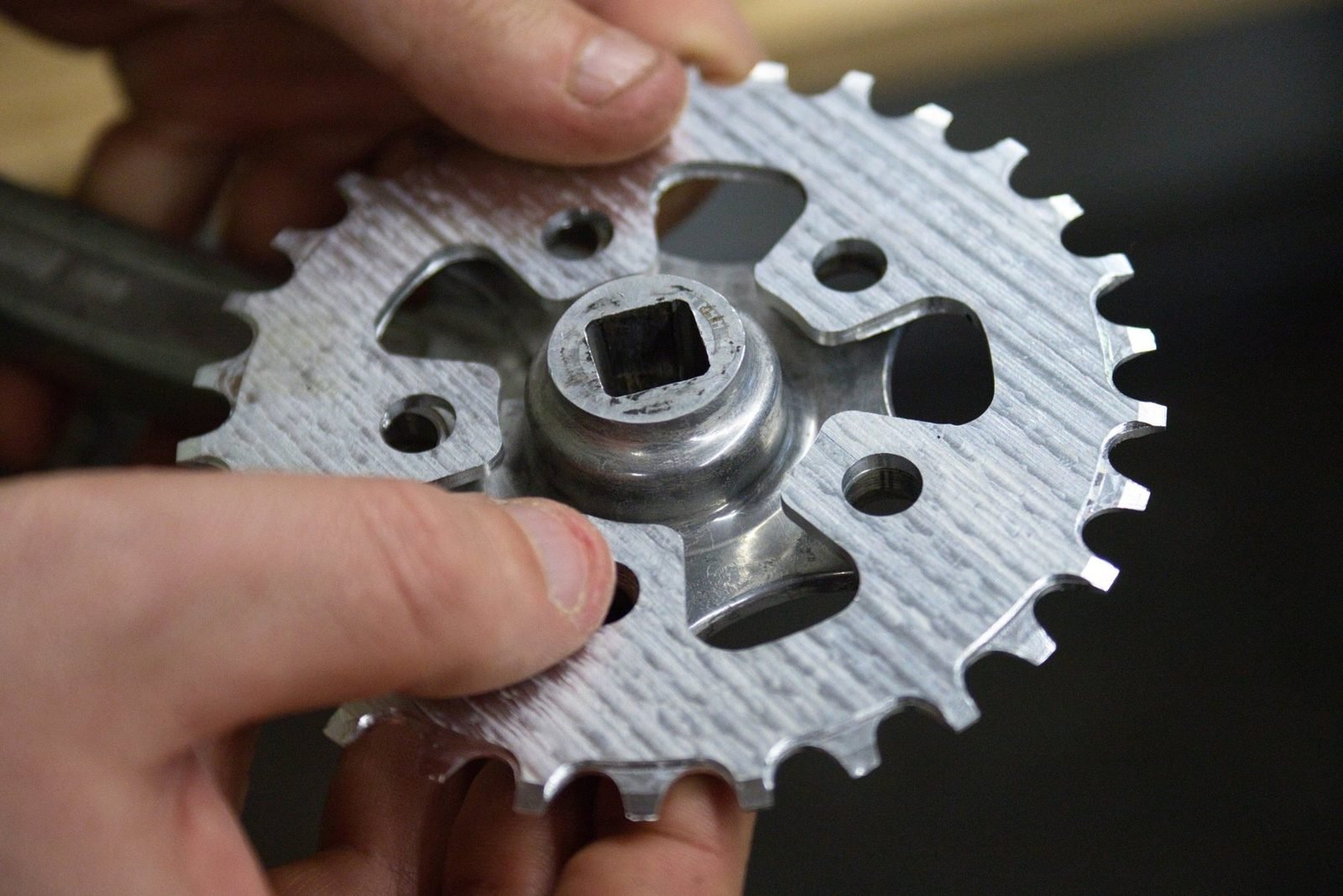
InMachines says Piccola mills aluminum, brass, copper and PCBs as well as wood and plastics. Set your expectations by the spindle. A 100W or 200W spindle on a machine this size means shallow passes and long cycle times in metal. That works for small parts like the chainring below, and it gets tedious if you plan to clear deep pockets in aluminum.
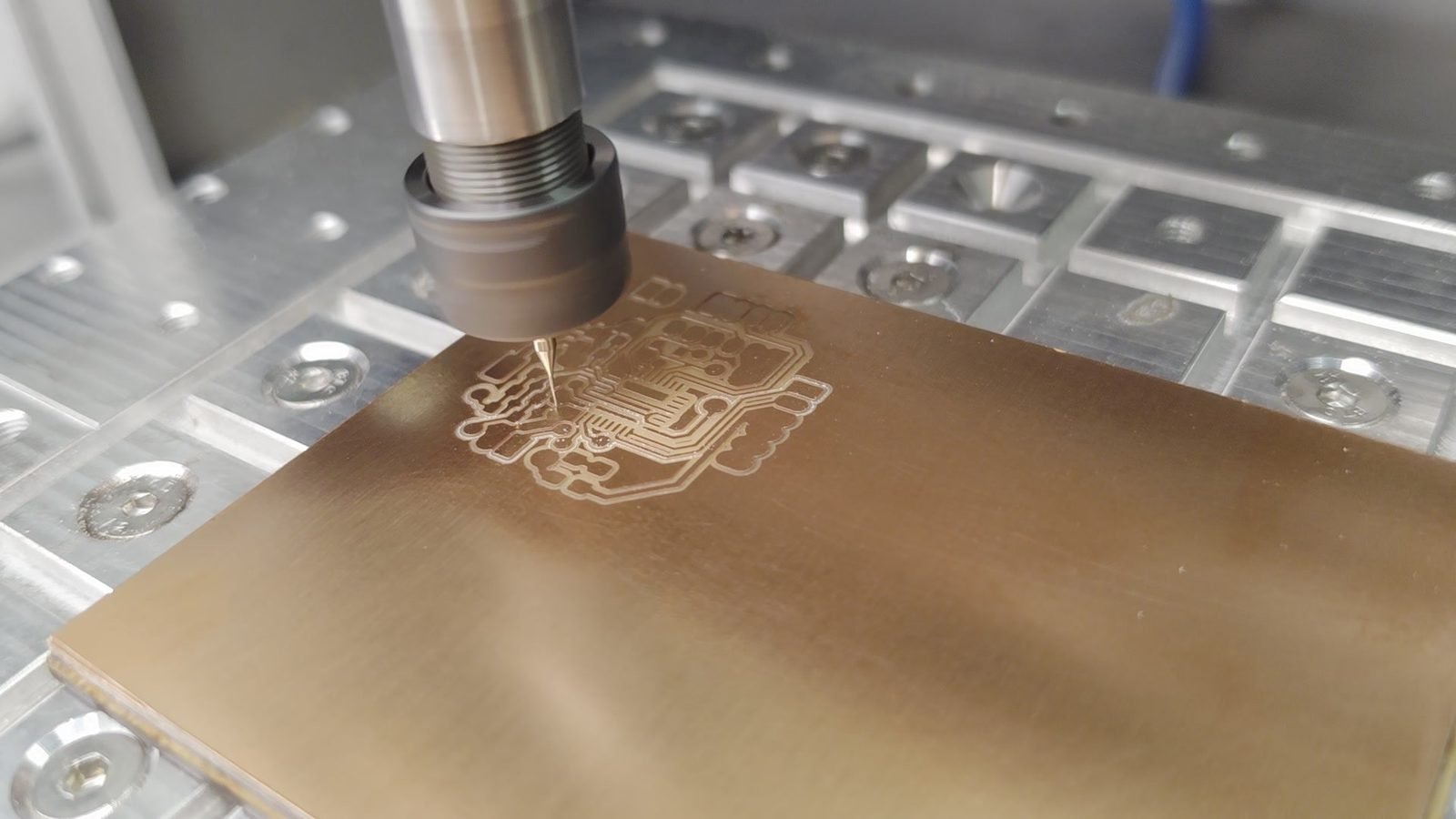
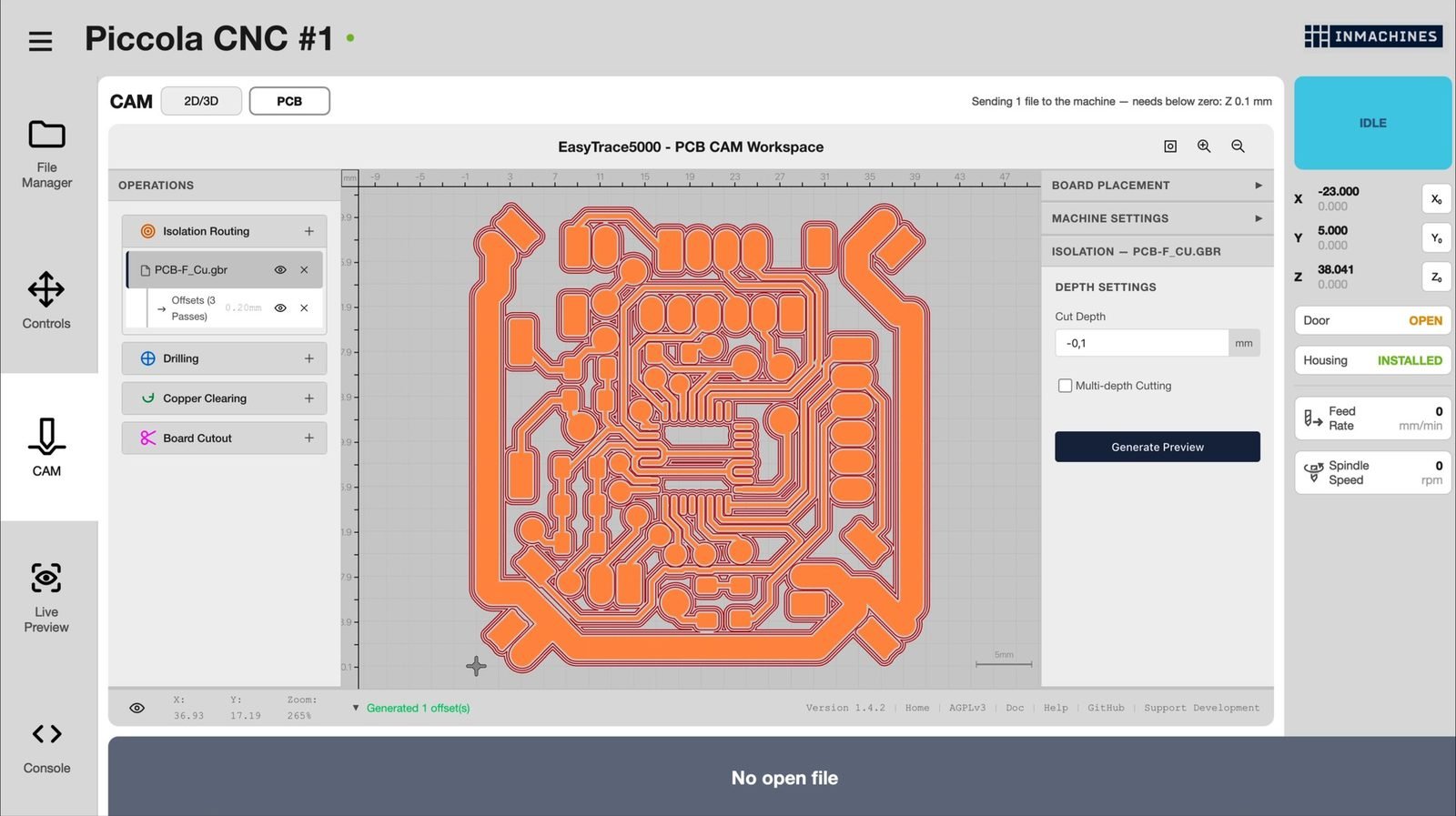
PCB work gets the most attention in InMachines’ material. Height-map leveling probes the copper board and compensates for warp, which matters for isolation routing because the cutter only skims the copper. The campaign page shows single- and double-sided boards milled on Piccola, including an open-source stepper driver that Ingrassia designed.
The desktop software, which InMachines says also runs on Linux, puts CAM and machine control in one app, with a mobile app for running jobs. PCB toolpaths come from EasyTrace5000, and 2D, 3D and rotary work goes through Kiri:Moto. Both are open-source projects, and a beginner doesn’t have to learn a separate CAM package before the first cut.
Precision and certification: what’s claimed and what’s pending
InMachines says repeatability is under 10 µm in 5 mm rapids and under 2 µm over 0.1 mm. Those numbers describe how consistently the machine returns to a position. They don’t give you the tolerance of a finished part under cutting load, which will be looser, and the listed 0.0025 mm resolution is a theoretical figure. We haven’t had a Piccola in our shop, so none of these claims have been checked by us.
On certification, InMachines told us on November 14 that the machine is RoHS compliant, with documentation in place. CE marking and a PL c safety assessment under EN ISO 13849-1 are in their final stage, InMachines says, and neither is complete yet. PL c applies only to the enclosed Pro and Ultimate, with their dual-channel magnetic door interlock, relay spindle cutoff and independent emergency stop. The Piccola website currently describes PL c as achieved, and InMachines told us it will update the site. If you’re buying for a school, wait for the finished CE and PL c paperwork before you sign off.
How Piccola compares with this fall’s bigger desktop CNC launches
The ToolDance X1 launched with a 1,500W spindle, a 400 x 265 x 180 mm work area and a $2,999 Super Early Bird price. The NestWorks C500 is pitched at titanium and stainless steel for $6,000. The machines in our desktop 5-axis CNC Kickstarter comparison aim higher still. Piccola is far smaller and cheaper, so weigh it against a hobby 3-axis router or a dedicated PCB mill.
Who’s behind Piccola
InMachines Ingrassia GmbH is based in Schwarzenbek near Hamburg, Germany, and says it has been publishing open-source hardware since 2015. Founder Daniele Ingrassia built the BigFDM large-format 3D printer, which is OSHWA certified, along with the LaserDuo laser cutter. The company’s Open Lab Starter Kit was featured in Make: Vol. 95 in December 2025.
Before you reserve or back Piccola CNC
The Super Early Bird price is for reservations made at piccolacnc.com by Sunday, November 15, 2026, at 19:00 CET (10:00 a.m. PT), according to InMachines. The “Reserve my price” button and countdown were still up when we checked on the evening of November 14 PT. The earlier €10 Early Contributor reservation is closed, so read the reservation terms before you submit anything.
Shipping is extra, and orders outside the EU ship DAP, which means you pay import duties and local taxes when the machine arrives. InMachines is targeting July 2027 for shipping. Treat that as a goal, since hardware campaigns often ship late. You can follow the Kickstarter pre-launch page to get a notice when the campaign opens on November 17, and we’ll add the campaign link and video here once it’s live.