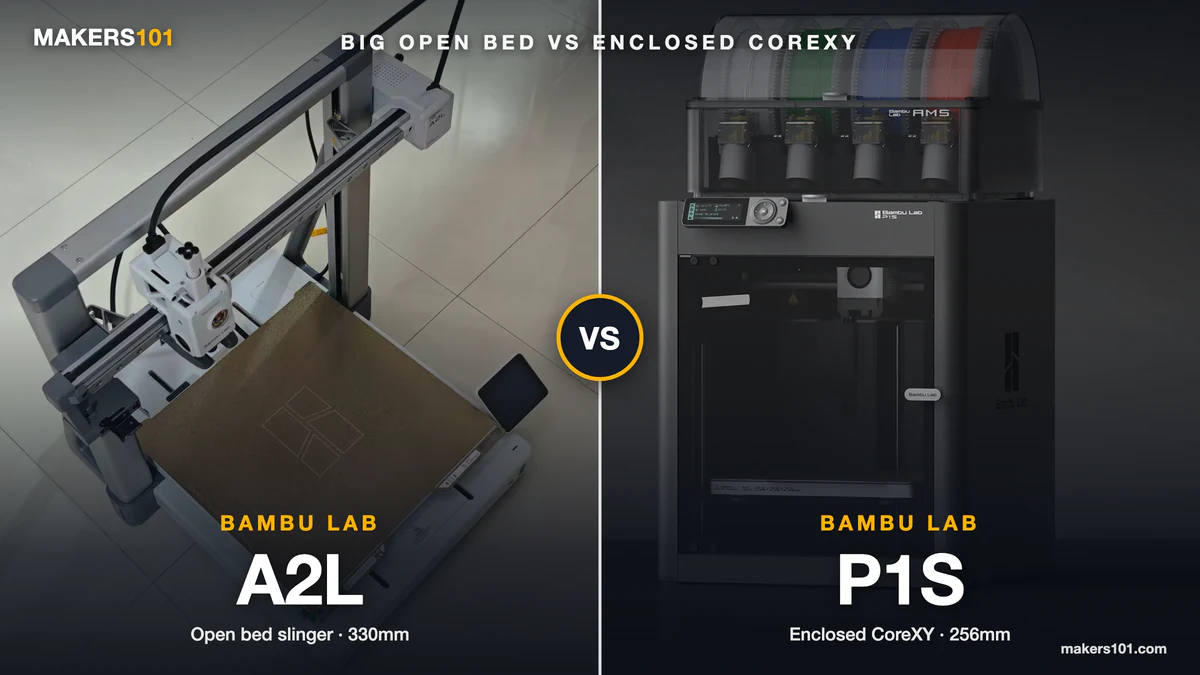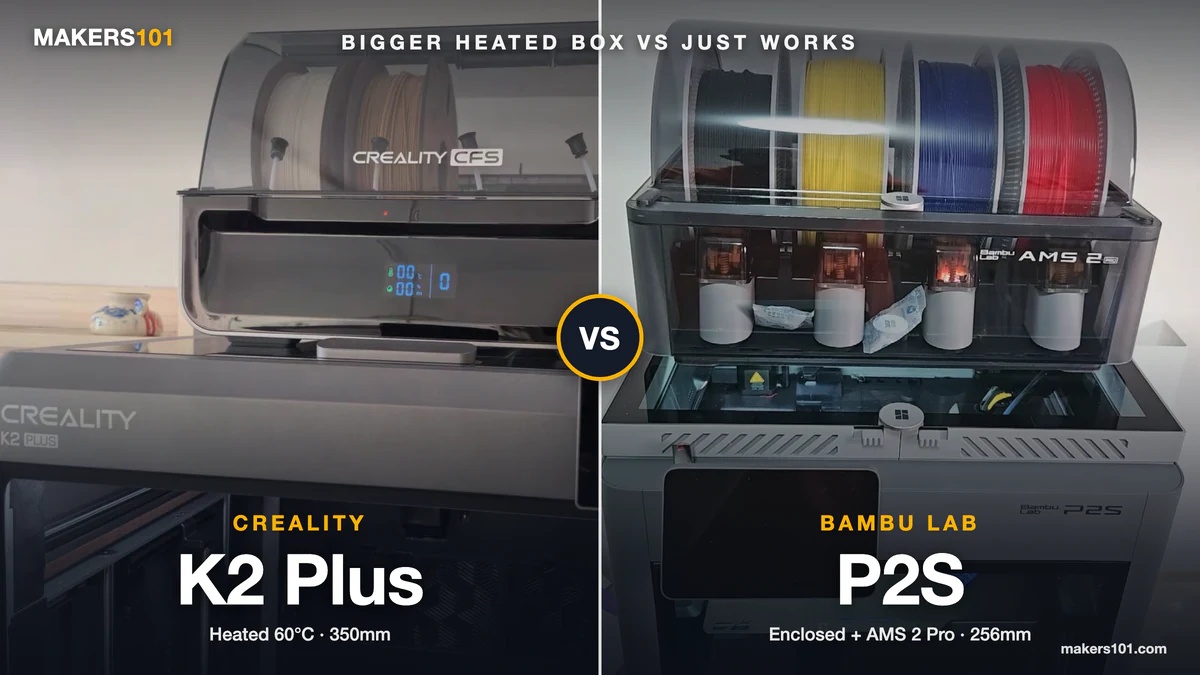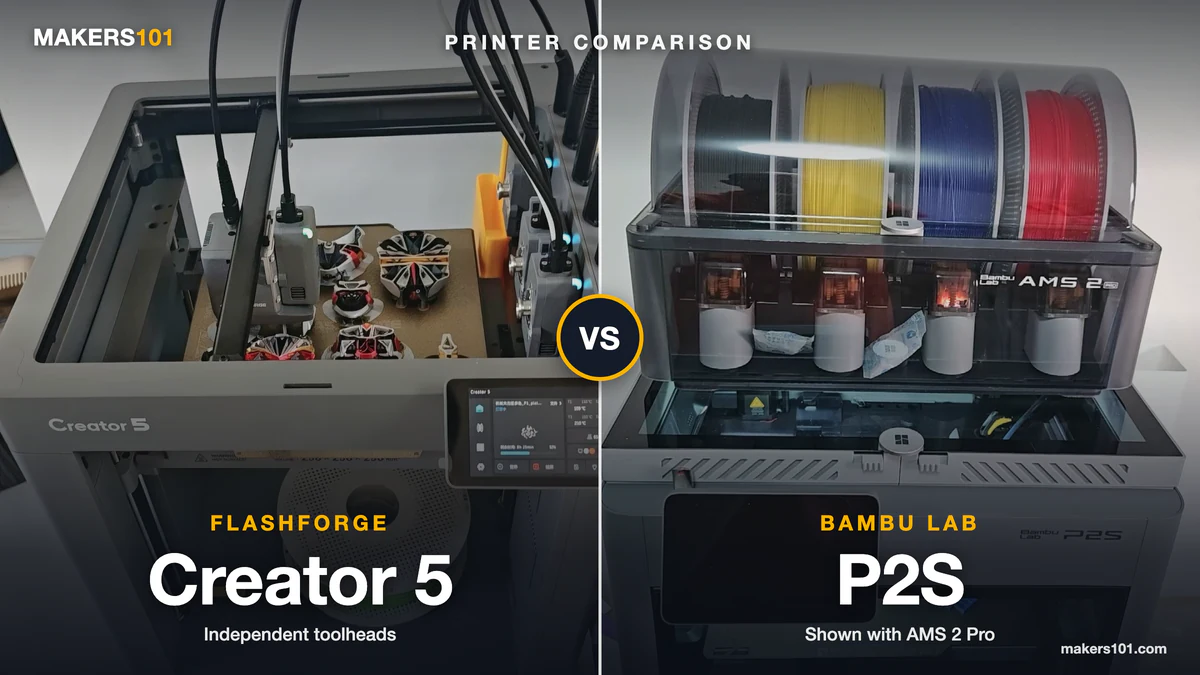

Bambu Lab has not announced a printer called the H3C. The name is what people landed on after the H2C and its Vortek hotend-swapping system shipped, and enough of them are searching it that Google now suggests it. Bambu’s own lineup does not include it. Here’s what the lineup does include, and who each model suits.
What does exist is evidence. On August 14, 2026, China’s National Intellectual Property Administration (CNIPA) published three invention patent applications from Shenzhen Bambu Lab Technology Co., Ltd. Between them they describe a printer with ten nozzles, a nine-dock printhead rack, and a toolhead that lights its own nozzle from inside the cooling duct. That is the closest thing to a look at Bambu’s next multi-nozzle machine that anyone has right now.
One date stands out. The rack’s base design was locked down 12 days before the H2C launched.
Table of Contents
- Is the Bambu Lab H3C real?
- What did Bambu Lab actually file?
- How many nozzles does the patented printer have?
- Why does the toolhead patent put a light inside the fan duct?
- How does the rack hold a printhead still?
- Why do unlocking and docking happen in one motion?
- What does the timeline reveal?
- Is Bambu Lab releasing a new printer in 2026?
- Frequently asked questions
Is the Bambu Lab H3C real?
Not as a product. There is no H3C on sale, no H3C announcement, and no H3C in any of these patents. Patent applications never name products; they describe mechanisms. Shopping now and not in 2027? Most multicolor buyers end up choosing between the P2S and the X2D.
What the patents do establish is that Bambu Lab has been working on a printhead-swapping system considerably larger than the one the H2C ships with, and that it filed for protection on the newest parts of that work in mid-2026. Whether it becomes an H3C, an H3, or nothing at all is not something these documents can tell you.
This is the same caution worth applying to any pre-launch signal. When Bambu teased its R1 laser, the teaser confirmed less than people assumed. A patent is stronger evidence than a teaser because it contains real engineering, but it is weaker evidence about timing, because companies patent things they never ship. Apple hit the same kind of gap with the iPhone Duo’s hinge cover, where the press release said more than the keynote did.
What did Bambu Lab actually file?
Three applications, filed the same day, from two different inventor teams on two different timelines.
| Publication no. | Title | Inventors | Priority claimed |
|---|---|---|---|
| CN 122560409 A | Toolhead, 3D Printer, and 3D Printing System | Liu Weitong, Chen Dangdang | None |
| CN 122560412 A | Placement Rack and 3D Printer | Chen Tianyi, Chen Peng, Xiong Xianwu, Liu Xin | CN 202511621848, filed 2025-11-06 |
| CN 122560413 A | Placement Rack and 3D Printer | Chen Tianyi, Chen Peng, Xiong Xianwu, Liu Xin | CN 202511621848, filed 2025-11-06 |
All three carry a June 30, 2026 filing date on the cover, which makes them look like one batch. The full texts say otherwise. The two placement-rack applications claim domestic priority reaching back to November 6, 2025, earlier than the H2C’s launch day. The toolhead application claims none.
How many nozzles does the patented printer have?
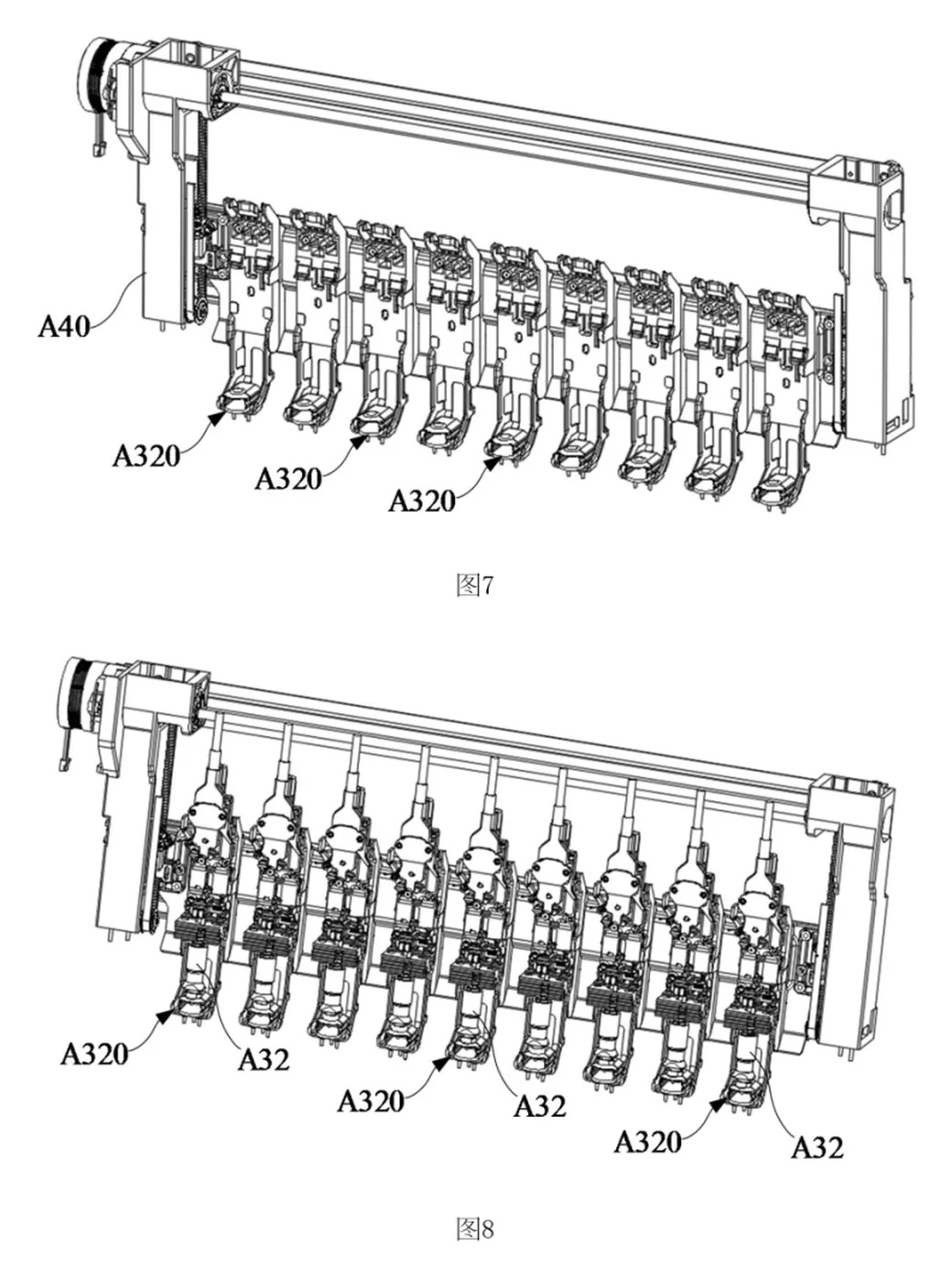
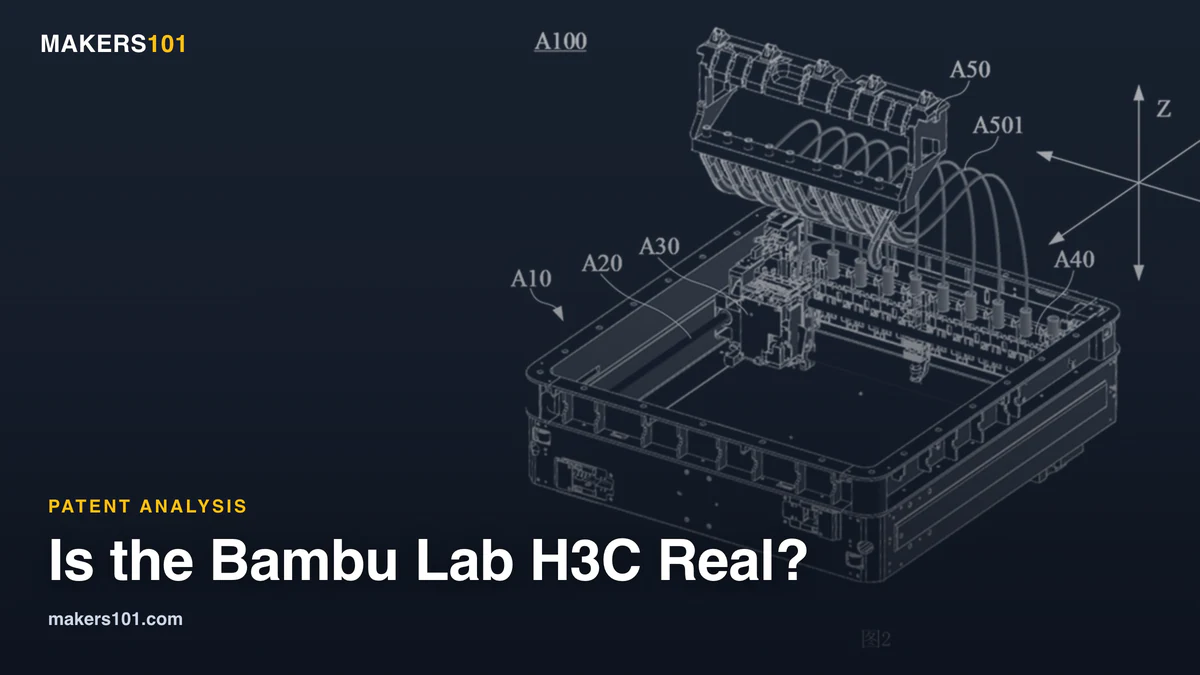
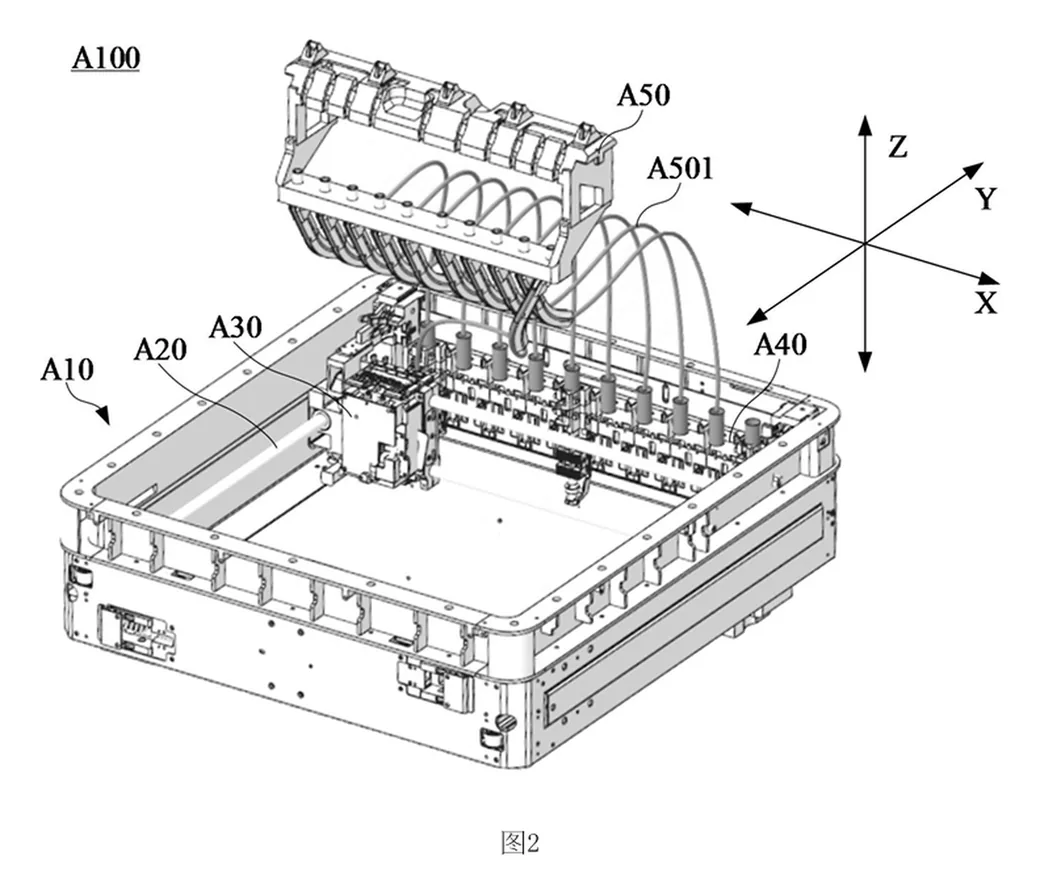
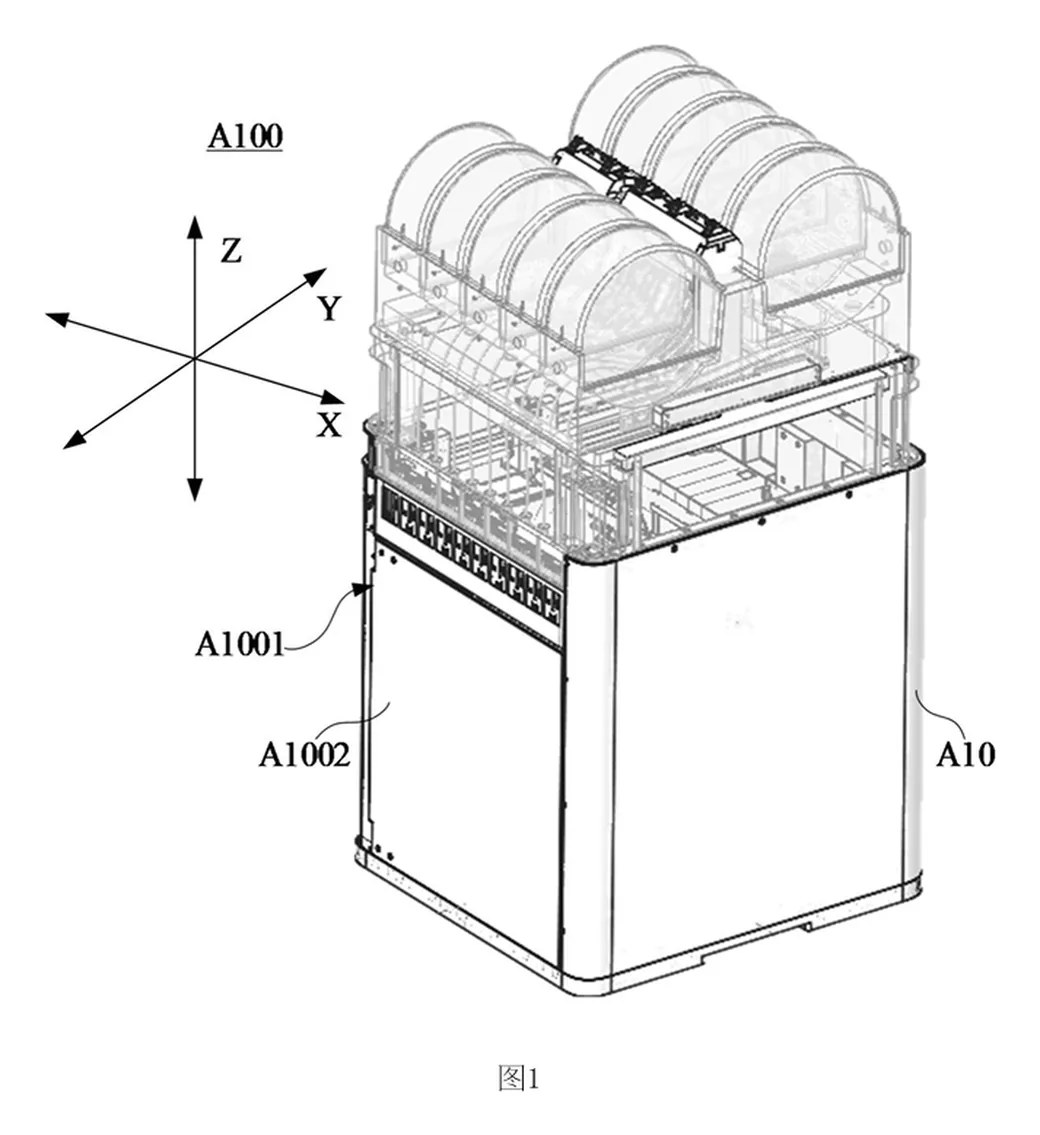
Ten. The rack in Figures 7 and 8 holds nine interchangeable printheads, and a tenth rides on the toolhead, which matches the ten filament spools drawn on the spool rack in Figure 2.
For scale, the shipping H2C’s Vortek system stores six hotends in a side-mounted exchange bay alongside one fixed liftable nozzle, for seven nozzles in reach. The patented rack is a substantially bigger magazine. Deciding between today’s H2C and the cheaper X2D? We compared the two here.
One claim explains how it gets that dense: the center-to-center spacing between two adjacent dock positions is smaller than the toolhead’s own width along the travel direction. The docks are packed tighter than one-slot-per-toolhead-width would allow, so more printheads fit in the same footprint.
Why does the toolhead patent put a light inside the fan duct?
Because a camera cannot judge a nozzle it cannot see, and a separate lamp would make the toolhead bigger.
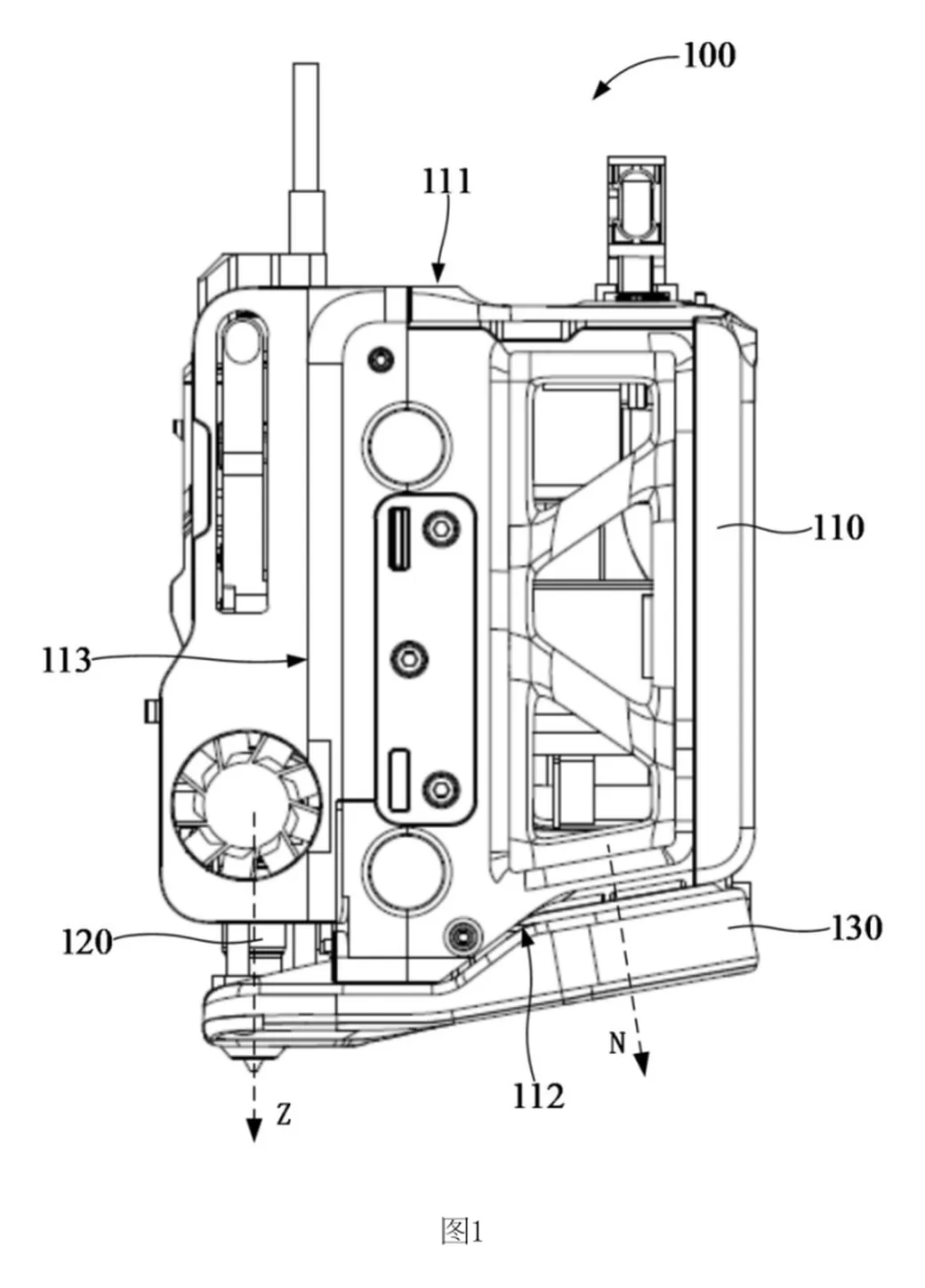
If a printer is going to use vision to catch clogs, stringing, or bad extrusion, the nozzle has to be lit. Bolt a light onto the toolhead and the toolhead grows, and a bigger toolhead eats usable build volume. Bambu’s answer is to put the illumination assembly inside the part-cooling duct, with the outlet aimed at the nozzle so light and air leave together.
The surface treatment is the clever bit. The duct’s inner wall carries a first surface in matte black and a second in matte white. Black absorbs, white bounces. The described result is a brightly lit nozzle tip above a dim print area, which is what stops a camera from blowing out its exposure every time it looks down.
That matters for the AI vision features Bambu markets: spaghetti detection, nozzle blobs, foreign object checks. Better lighting beats a better sensor here.
It also dates the patent. Every Bambu machine on sale today lights the nozzle with a chamber light strip plus LEDs on the outside of the toolhead. None routes light through the duct, and none uses a black-and-white split interior to steer it. This is a toolhead you cannot currently buy.
How does the rack hold a printhead still?
With three locating members, each removing freedom of movement along one axis.
The hardest problem in a multi-nozzle system is not printing, it is the swap. The toolhead sets a finished printhead down, then picks up another. Anywhere in that sequence, a printhead that wobbles is one that drops, collides, or seats crooked.
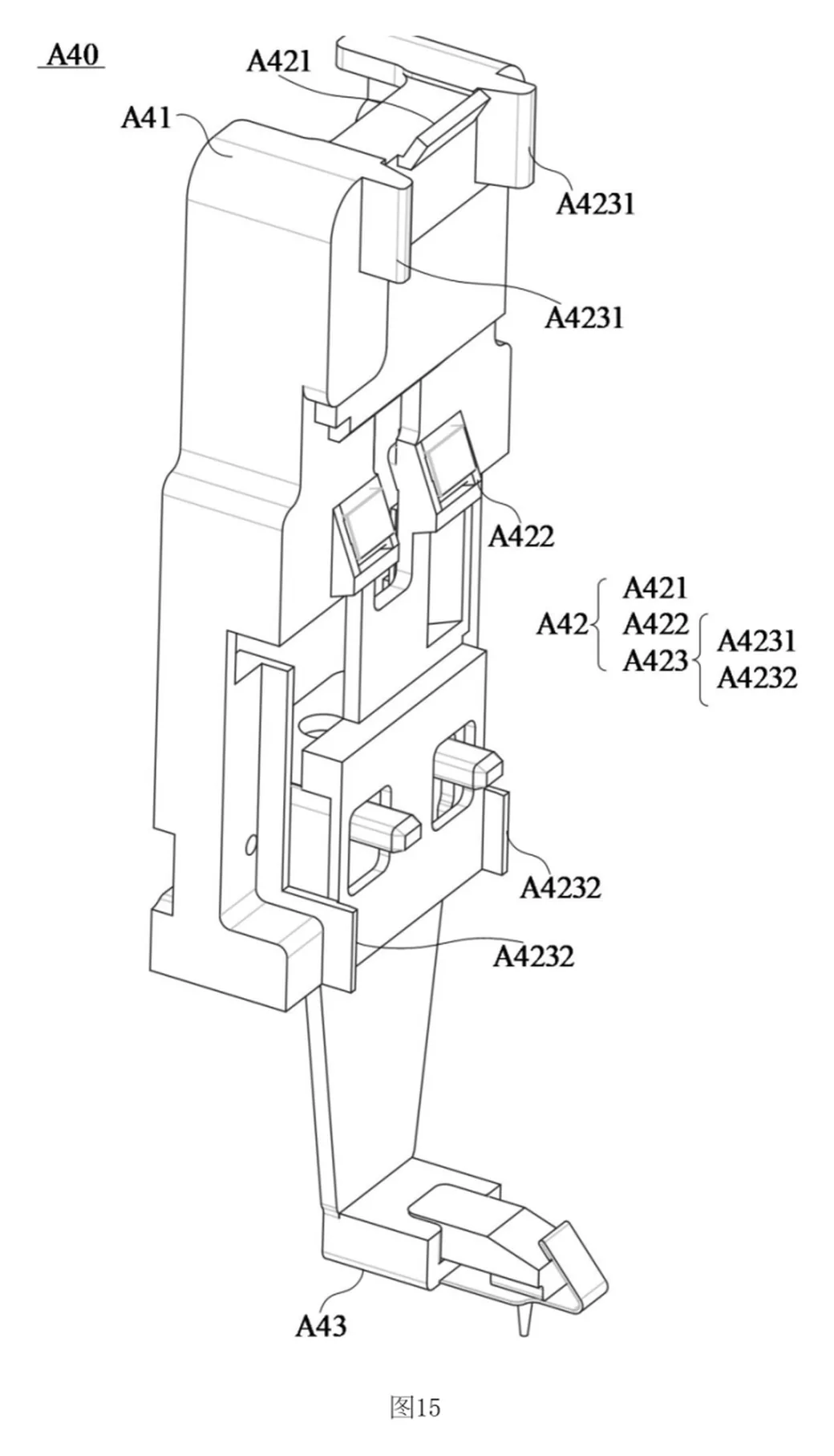
- A421 constrains the alignment direction (Y)
- A422 constrains the assembly direction (Z, gravity)
- A423 constrains the travel direction (X)
The third is easy to overlook and does the most work. While the toolhead pushes a printhead in along the alignment direction, nothing holds it in X, so side-to-side sway is the failure mode. The third member’s two sub-portions clamp first and steady it; the other two lock down afterward, in sequence.
The second member can use magnets plus a compression spring, with the magnetic face angled 15° to 40° off the assembly direction. That angle is functional. On approach the effective pull is weak and does not drag the printhead off course; once seated it pulls hard and holds.
Why do unlocking and docking happen in one motion?
To cut a step out of every swap.
The conventional sequence is to unlock the printhead, then run a separate placement move to set it down. The third application claims that the printhead’s travel from engaged to released position is its travel into the rack. Two motions become one, which buys three things:
1. One fewer step, so swaps finish faster 2. The same drive and transmission does both jobs, so fewer mechanisms to build and fail 3. No free-floating moment between unlocked and seated, so the printhead never gets loose
A second detail says these were written by people thinking about real prints. When a swap happens at a print height between 0 and 20 mm, the printer lowers the heated bed first. Printheads sitting in the rack hang lower than the printing nozzle, so without dropping the bed, an incoming or outgoing head would clip the bed or the wiper zone on an early layer.
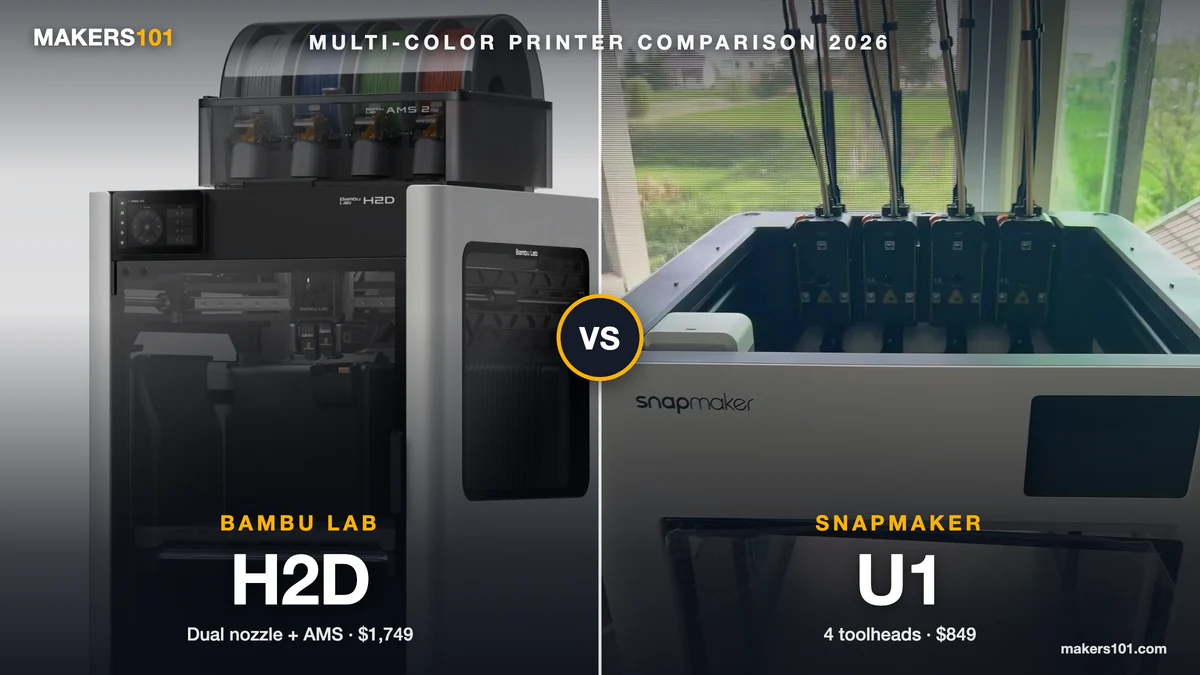
It is worth noting how differently the competition is solving this. Creality’s KliTek system puts a PTC heater in every head rather than using induction, and Snapmaker’s U1 takes the full tool changer route instead of swapping hotends. Nobody has agreed on the right answer yet.
What does the timeline reveal?
That two of these are enriched refilings of older work, and one is genuinely new.
| Date | Event |
|---|---|
| 2025-08-26 | H2C and H2S announced together |
| 2025-11-06 | Placement-rack priority application filed (CN 202511621848) |
| 2025-11-18 | H2C goes on sale with the Vortek 6 hotend swap system |
| 2026-06-30 | All three applications filed; the two rack applications claim priority |
| 2026-08-14 | All three published the same day |
The rack’s base design was locked down 12 days before the H2C launched. File first, disclose second is textbook practice. It means the Vortek swap mechanism got its patent coverage laid in parallel with the design freeze rather than scrambled together afterward. Given that Stratasys spent last year trying to block the H2C in Europe and lost, that discipline reads less like paperwork and more like preparation. The US side of that fight didn’t go as well, though — a Texas jury found Bambu Lab liable on four of five Stratasys patents this September and ordered $27.6 million in damages.
The June 30, 2026 filings are the original plus six months of additions. Chinese patent law lets an applicant merge an earlier application with later material and refile within 12 months while keeping the earliest date. The improvements that show up in these versions, the tight dock spacing, the simultaneous unlock-and-place, the angled magnetic seat, and above all the nine docks in the figures, are what got added during those six months. They point to a swap system with more capacity than the H2C’s.
The toolhead application is the outlier: the only one with no priority claim, a real 2026 filing, from an inventor team that does not overlap with the rack team. Pair that with a duct-lighting structure absent from every current machine, and the likeliest reading is groundwork for hardware not yet announced.
So the three sit at different layers. The two rack applications are the IP foundation under the shipping 6-station H2C system, plus groundwork laid for an 8-station upgrade path. The toolhead application is the leading edge of a new toolhead platform.
One last signal. Chinese invention patents normally take about 18 months from filing to publication. These went from June 30 to August 14, roughly six weeks. That only happens when the applicant requests early publication, and companies request it when they want the record to show, publicly and with a date attached, that the ground is already taken.
Is Bambu Lab releasing a new printer in 2026?
Bambu Lab has not confirmed one beyond what is already on sale. The company has shipped or announced a lot this cycle, the H2C and H2S, the X2D, the A2L, the P2S, and teased the R1 laser, so the question is which segment gets attention next rather than whether anything is coming.
These patents are the strongest public hint that the multi-nozzle line is where the engineering effort is going. They are not a launch date. If you are shopping now, buy on what is in stock; our guide to picking the right Bambu Lab printer covers the current lineup, and nothing in these filings should make you wait on a machine you need today.
Frequently asked questions
What is the Bambu Lab H3C?
There is no Bambu Lab H3C in Bambu Lab’s lineup. It is a name people started searching for after the H2C launched, on the assumption that a next-generation multi-material machine would follow the same naming pattern. Bambu Lab has not announced anything under it.
When is the Bambu Lab H3C release date?
There is no release date, because there is no announced product. The three patents published on August 14, 2026 describe mechanisms, not a launch. Patent publication tells you what a company protected, not what or when it will ship.
How many nozzles does the patented Bambu Lab printer have?
Ten. Nine interchangeable printheads sit in the rack and a tenth is mounted on the toolhead, fed by ten filament spools on the spool rack.
How would this differ from the H2C’s Vortek system?
The H2C’s Vortek bay stores six swappable hotends plus one fixed liftable nozzle. The patents describe a nine-dock rack with tighter spacing, a three-axis locating scheme, and a swap where unlocking and docking happen in a single motion.
Is this a Bambu Lab tool changer?
Closer to it than anything Bambu ships now, though the patents swap printheads into and out of one moving toolhead rather than parking complete independent tools. That puts it between the H2C’s hotend swapping and a classic tool changer like the Snapmaker U1.
Does this mean Bambu Lab is replacing the AMS?
No. These applications cover printhead storage and swapping, not filament routing. The drawings still show ten spools feeding through tubes, so material handling stays in the picture. If you are weighing feeder options today, the AMS alternatives guide is the practical read.
Where can I read the original patents?
All three are public under publication numbers CN 122560409 A, CN 122560412 A, and CN 122560413 A. They are searchable on CNIPA and mirrored on Espacenet, which also carries the bibliographic data confirming the priority and filing dates above.
Image credit: All drawings in this article are figures from Bambu Lab’s published patent applications CN 122560409 A, CN 122560412 A and CN 122560413 A, published by China’s National Intellectual Property Administration on August 14, 2026 and reproduced here for reporting and commentary. Figure numbers follow the original publications; bibliographic details were cross-checked against Espacenet.