
Heads up — some of the links below are affiliate links. If you buy through them, I earn a small commission (at no extra cost to you), which helps cover the gear I test. Thanks!
You’re looking at two bottles that cost the same. One says Standard. One says ABS-Like. Neither label gives you a single useful number.
The name suggests ABS-Like is simply the stronger one. Published category ranges say something stranger: its tensile strength often runs lower than standard resin’s.
That isn’t a typo, and it isn’t hidden either. JLC3DP prints it in its own comparison table. The real difference between ABS-Like and standard resin shows up in how a part fails, and that is the part worth walking through before you pick a bottle. Here’s what independent destructive testing shows, how big the gap really is, and when standard resin is still the smarter pick.
Last updated: August 16, 2026.
- ABS-Like buys you impact resistance and stretch, not raw strength. Published figures put its Izod impact at 41 to 48 J/m against 17 to 20 J/m for standard resin, roughly 2.4 times better. Its tensile strength runs 24 to 50 MPa, which is lower than standard resin’s 32 to 55 MPa.
- Drop tests show the widest gap. Figures survived three 2.5-meter falls onto tile in ABS-Like and lost limbs in standard resin.
- At Elegoo the price gap is zero. Its Standard and ABS-Like 1000g bottles both sell for $16.99, and its 8K Standard actually costs $4 more (as of August 16, 2026).
- Standard resin wins on stiffness and creep resistance. Don’t swap it out for jigs, brackets, or anything that carries a steady load.
- The detail penalty is real but small, and formulation quality decides sharpness more than resin category does.
- Over-curing cancels the toughness you paid for. A 20-minute cure snapped springs that survived at 2 minutes.
- One open question worth knowing before you commit: at least one returning printer reports ABS-Like parts going brittle after a few weeks. We found no reliable long-term testing either way.
Table of Contents
- What ABS-Like and Standard Resin Actually Are
- ABS-Like vs Standard Resin at a Glance
- “Stronger” Is the Wrong Word for the Difference Between ABS-Like and Standard Resin
- Where Standard Resin Still Wins
- The Detail Trade-Off Is Real, but Smaller Than You Think
- Curing Time Can Erase the Difference
- What Changes When You Switch Bottles
- The Price Gap Is Smaller Than the Spec Sheets Suggest
- Which One Should You Use?
- FAQ
What ABS-Like and Standard Resin Actually Are
Both are 405nm photopolymers that cure layer by layer in the same printer. The formulation is what separates them. And despite the name, ABS-Like resin contains no ABS plastic whatsoever.
Standard resin is tuned for detail and cure speed
Standard resin cures fast and cross-links tightly. That dense cross-link network is what gives you razor-sharp edges and quick layer times.
It’s also why the part snaps. A tightly cross-linked polymer has very little room to deform before it fractures, so stress goes straight to failure with no bending in between. If you want the full picture of what’s happening in the vat, our guide on how a resin printer works walks through the curing step in detail.
One thing resin does better than filament: it cures a whole layer at once, so there’s no weak seam between layers. FDM parts are famously weaker along the Z axis. Resin parts aren’t.
ABS-Like resin contains no ABS at all
ABS-Like is a photopolymer blend tuned to behave like ABS plastic under load. The name describes a performance target. Formlabs and Siraya both say plainly that there’s no ABS in the bottle.
This matters because of a common worry in resin forums: ABS filament off-gasses styrene and ultrafine particles at extrusion temperatures. That’s thermal decomposition. Resin cures at room temperature under UV light, so the exposure pathway is completely different.
You still need ventilation. Uncured photopolymer is a skin sensitizer and the fumes are an irritant, which is a separate problem with its own precautions. Our parent’s guide to 3D printing safety covers why resin needs more containment than filament does.
What does drive the difference is the reactive diluent package. Formlabs’ desktop tough resin is formulated ACMO-free, which Lychee’s teardown frames as the safer choice, and the trade is 6 to 8 second layer exposures and a thicker pour. What a resin does under load comes out of its chemistry. The word on the label just names the target.
ABS-Like vs Standard Resin at a Glance
Put the published numbers side by side and the reframe becomes obvious. ABS-Like’s real leads are impact and elongation, where the gaps are large. It trails on tensile strength and stiffness, and its heat advantage is about 5°C.
| Property | Standard resin | ABS-Like | What it means for you |
|---|---|---|---|
| Tensile strength | 32–55 MPa | 24–50 MPa | Pulling force: ABS-Like has no advantage |
| Elongation at break | 5–15% | 20–50% | How far it bends first: 3 to 4 times more |
| Izod impact | 17–20 J/m | 41–48 J/m | Drop survival: about 2.4 times better |
| Flexural modulus | 1.6–2.4 GPa | 1.4–2.1 GPa | Standard resin is stiffer under load |
| Heat deflection temp | 50–60°C | 55–65°C | ABS-Like buys about 5°C, not heat resistance |
| Price per kg | $20–30 | $35–55 | Retail reality is closer than this (see below) |
These are category-wide ranges compiled by JLC3DP, a 3D printing service bureau, retrieved August 2026. No individual manufacturer datasheet is behind them, the ranges overlap, and makers101 has not bench-tested any of it. Read the table as a map of the territory. The destructive-test results further down come from named third-party reviewers.
Look at the tensile row again. The two ranges overlap, but ABS-Like’s ceiling sits lower. An ABS-Like at 50 MPa still beats a standard resin at 32.
The heat row deserves a word, since “ABS-Like” implies ABS-grade heat tolerance. Formlabs lists injection-molded ABS at 100°C and ABS filament at 87°C. The resin numbers are messier than one range suggests. If you actually need injection-molded numbers, not resin trying to approximate them, desktop machines can shoot a real injection-molded part from a printed mold now, for about the price of a nice printer. JLC3DP puts the ABS-Like category at 55 to 65°C, while Formlabs measured one specific ABS-like resin (Loctite 3D IND6845) at 80°C and its own Tough 2000 at 70°C. At the low end you’re 30°C short of ABS filament. At the high end you’re within single digits of it. The spread is wide enough that the words on the bottle tell you nothing useful about heat.
“Stronger” Is the Wrong Word for the Difference Between ABS-Like and Standard Resin
ABS-Like survives impacts roughly 2.4 times better than standard resin while posting lower tensile strength. What you’re buying is toughness, which is a different property from strength. The distinction decides whether the upgrade is worth it for your parts.
Think of it like a biscuit and an eraser. The biscuit is harder and holds more weight before it gives. Drop both on the floor and only one of them is still in one piece.
Tensile strength measures how hard you can pull before something tears. Impact strength measures how much sudden energy it absorbs before it cracks. Stiffness measures how much it bends under steady load. Resin marketing collapses all three into the word “strong,” which is where the confusion starts.
Independent testing lines up with the spec sheets:
- Drop test. My Tech Fun dropped figures printed in Sunlu’s standard, ABS-Like, and PA-Like resins three times from 2.5 meters onto ceramic tile. Every ABS-Like figure survived. The standard and PA-Like figures lost legs and arms.
- Torque test. In the same run, standard resin snapped almost immediately. ABS-Like twisted nearly a full turn before breaking.
- Thread strength. Noizie Works measured ABS-Like holding 19 newtons (about 1.9 kg), tying with a dedicated tough resin. Standard resin failed the test outright.
- Thin parts. Gray Scalp Miniatures bent swords and axes printed in Elegoo ABS-Like without snapping them. The same geometry in standard resin breaks.
Read all four with the same caveat. These are single-sample destructive tests, each run on one reviewer’s own printer with their own settings. None of them is a lab study. What makes them worth citing is that three independent reviewers landed in the same place, and that place matches the published ranges.
There’s a useful counterexample buried in Formlabs’ data. A competing ABS-like resin (Loctite 3D IND6845) posts 48 MPa tensile, higher than Formlabs’ own Tough 2000. Its Gardner impact result is 0.34 J against the Formlabs resin’s 1.6 J. High tensile numbers tell you very little about whether a model survives a fall off the table.
I’d put it this way: if your parts break because you dropped them, ABS-Like fixes that. If they break because you overloaded them, it might not.
Where Standard Resin Still Wins
Loads and pressure are standard resin’s home ground. It’s stiffer, it resists creep better, and in several tests it outperformed the tougher resins outright. This is the part most comparison articles skip entirely.
In a stiffness test, standard resin sagged the least of four Sunlu resins: 1.5 cm at the midpoint and 5 cm at the end. A dedicated toughness resin sagged 11 cm and 12 cm in the same setup. The published flexural modulus figures agree, giving standard resin 1.6 to 2.4 GPa against ABS-Like’s 1.4 to 2.1 GPa.
Creep tells the same story. Under constant load over several days, standard resin deformed the least of three resins tested, while ABS-Like and PA-Like sagged further.
Two results cut against expectations. In Noizie Works’ gauntlet, standard resin placed ahead of a dedicated toughness resin in the pull test. And in My Tech Fun’s impact test, standard resin cured for 20 minutes came out much tougher than the same resin cured for 2 minutes. Read that second one carefully: the ABS-Like 20-minute sample was missing from that batch, so there’s no 20-minute head-to-head inside it.
Tough and stiff are two different properties. Reach for standard resin when the part has to hold its shape. Reach for ABS-Like when it has to survive a hit.
The Detail Trade-Off Is Real, but Smaller Than You Think
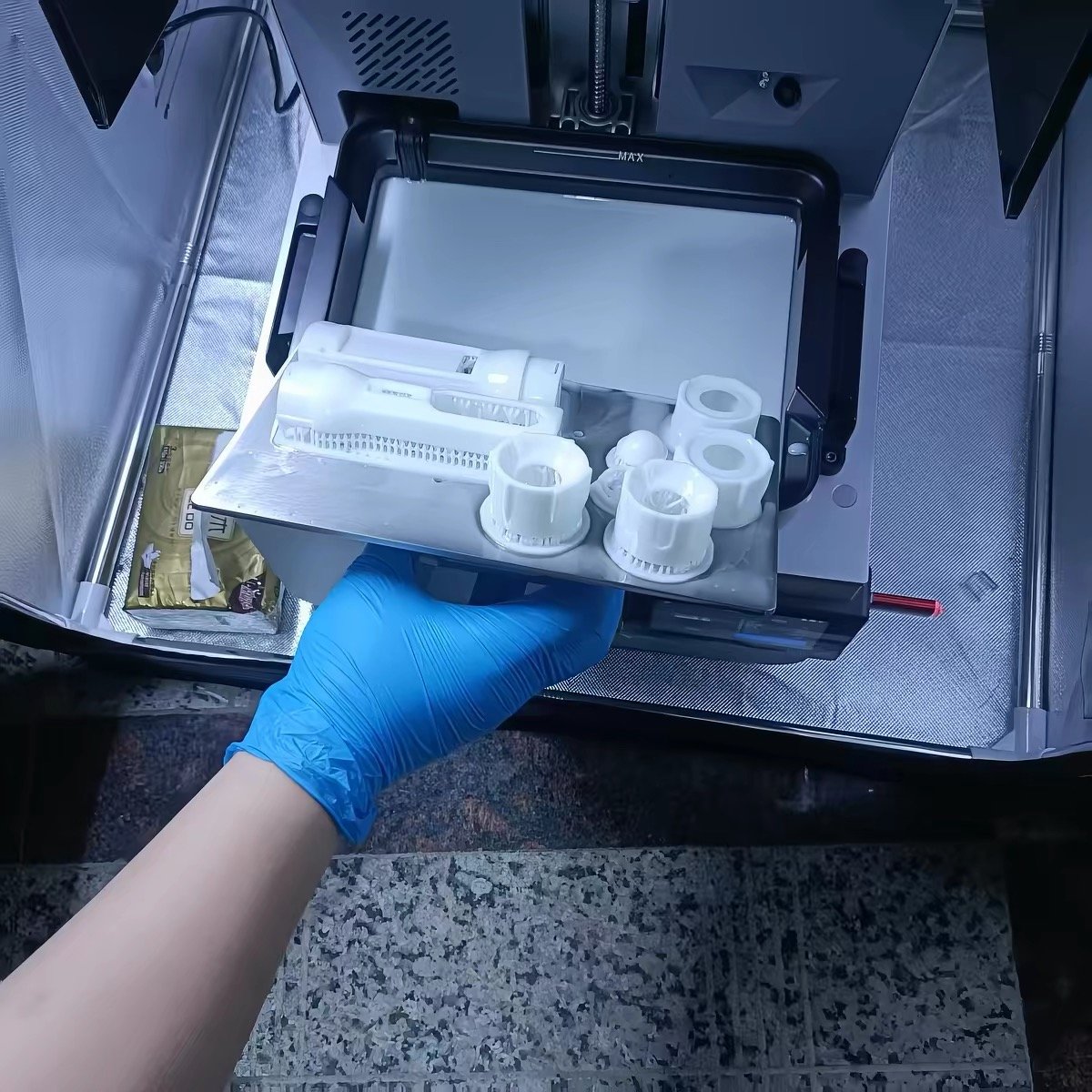
ABS-Like does give up some sharpness. In MimicHobby’s 13-resin comparison, ABS-Like formulations landed 7th (Elegoo), 10th (Anycubic), and 12th (Sunlu) out of 13 for detail. The catch is that standard resin didn’t win either.
That same test put Jayo Standard 11th for detail and 11th for durability. It lost both categories. Meanwhile the detail winner, Resione THHR at £48.69 per kg, finished 12th out of 13 for durability. What separates a crisp print from a soft one is formulation quality and price tier, and resin category barely predicts it.
Worth knowing about the method: that comparison printed one model per resin at the tester’s own settings, judged detail under a macro lens, and judged durability by flexing and snapping the model’s staff. MimicHobby says openly that results depend on their settings.
The bigger detail thief isn’t the material. It’s support removal. ABS-Like supports peel away where standard resin supports snap off clean, and the peeling drags residue and surface detail with it.
I’ve printed with Elegoo’s ABS-Like myself, and support removal is the part that stuck with me. They come off harder than standard resin does. Gray Scalp Miniatures hit the same wall independently, and found that dropping exposure time fixed most of it. Budget a calibration session before you blame the resin, and a coat of primer and paint for 3D prints hides what survives that.
Curing Time Can Erase the Difference
Post-curing too long undoes the impact resistance you bought. In one test, springs printed in ABS-Like and cured for 2 minutes carried a 5 kg load. The same springs cured for 20 minutes snapped.
Standard resin showed a related problem. In the same reviewer’s 240°C heat test, the 20-minute cured sample cracked from internal stress. That took heat to bring out. What it shows is that a long cure leaves stress behind in the part.
The trade runs both ways. Those 20-minute parts were clearly stronger in tensile tests and deformed less under sustained load. Longer curing buys stiffness and strength while spending flexibility, so the right answer depends on what the part has to survive.
Both Formlabs and JLC3DP note the same mechanism: excessive cross-linking destroys the elastomeric behavior that makes ABS-Like worth buying. A practical rule is to cure display pieces long and impact parts short, then test one throwaway print before committing a full plate. Our walkthrough on washing and curing resin prints covers the timing side in more depth.
What Changes When You Switch Bottles
Swapping to ABS-Like isn’t a drop-in change. Exposure times typically run 10 to 20% longer than standard resin, so reusing your old profile is the first thing to check when a first ABS-Like plate fails.
Longer isn’t automatically right, either. One tester printed successfully on the 8-second exposure recommended on the packaging, then found supports fused to the model and detail washing out. Dropping to 7 seconds fixed both. Run a proper resin exposure test before you commit a real print.
Four other things change with the bottle:
- It pours thicker. Anycubic rates its ABS-Like as moderate viscosity where standard resin sits low to medium. Anycubic also lists longer cure times for it. Whether the two are connected is our inference, not their claim.
- The smell travels. Standard resin tends to stay in the print room. ABS-Like odor spreads through the house and needs windows open or real extraction.
- Supports need to be denser. ABS-Like generally wants more support than standard resin, and they peel rather than snap when you remove them.
- It sits better in the vat. Old Ones With Dice reported leaving Sunlu ABS-Like in the vat for over a week with no separation, across six months and hundreds of prints. That’s one person’s long-run experience, logged rather than measured, so weigh it accordingly.
The Price Gap Is Smaller Than the Spec Sheets Suggest
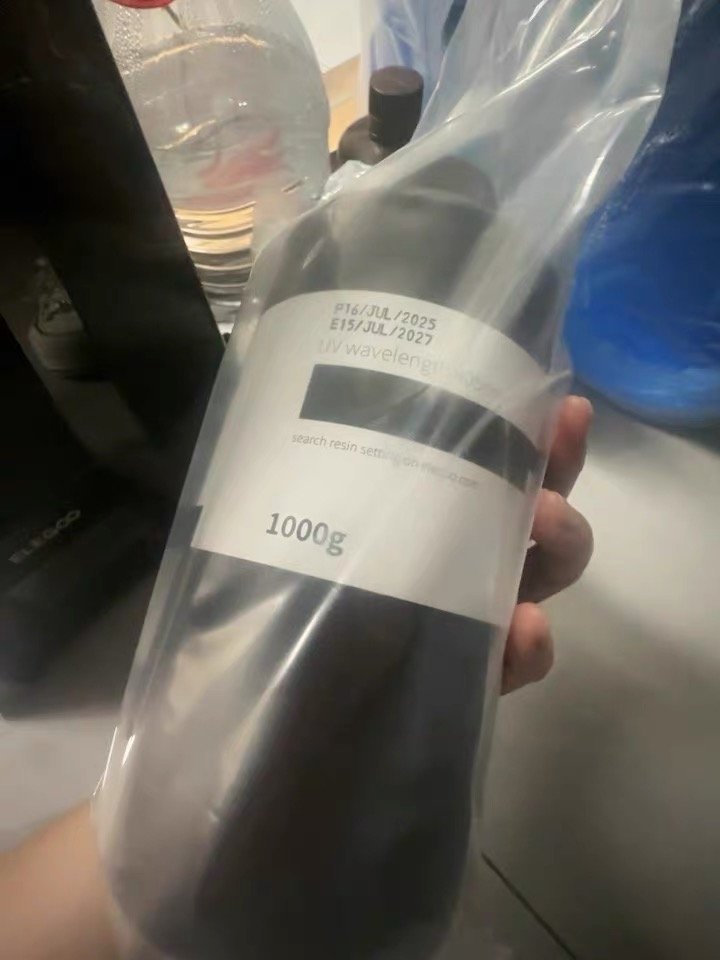
Spec sheets quote $20 to $30 per kg for standard resin against $35 to $55 for ABS-Like, which reads like a 50% premium. On the shelf, Elegoo charges exactly the same for both in the same bottle size.
| Product | ASIN | Price (Aug 16, 2026) |
|---|---|---|
| Elegoo Standard Photopolymer 1000g | B07Z986566 | $16.99 |
| Elegoo ABS-Like 3.0 1000g | B0CRDP8C2J | $16.99 |
| Elegoo 8K Standard 1000g | B0BWYJWPG9 | $20.99 |
| Sunlu ABS-Like 2000g | B0BBVNR1GB | $26.99 |
Read the third row twice. Elegoo’s 8K standard resin costs $4 more than its ABS-Like. Prices move with promotions, so read the table as one day’s snapshot. Within Elegoo’s own lineup, though, the ABS-Like bottle is priced as a sibling of the standard bottle.
The material cost difference is too small to drive your decision. What actually costs money is a failed plate, so budget your attention for calibration instead.
Which One Should You Use?
Choose based on how the part is likely to get destroyed. The price difference barely exists, and both resins run on the same printer with the same workflow.
| Your situation | Pick | Why |
|---|---|---|
| Display pieces that go straight in a cabinet | Standard | Sharp detail and enough stiffness, cheapest option |
| Tabletop minis handled every game night | ABS-Like | About 2.4× the impact resistance, survives drops |
| Thin swords, spears, antennae, tentacles | ABS-Like | Bends instead of snapping clean off |
| Large multi-part models you assemble | ABS-Like | Closest to nominal dimensions, parts fit better |
| Jigs, brackets, anything under steady load | Standard | Stiffer and better creep resistance |
| Tight budget | Either | At Elegoo, same size means same price |
| Poor ventilation | Standard | ABS-Like odor spreads well beyond the print room |
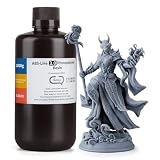
- 【High Strength and Toughness】ELEGOO ABS-like resin 3.0 is engineered for high strength, impact resistance, and toughness. The printed models can…
- 【High Precision & Low Shrinkage】 With lower volume shrinkage, our ABS-like resin 3.0 ensures high precision in your 3D prints, resulting in…
- 【Good Fluidity for Rapid Prototyping】 Our ABS-like resin 3.0 is formulated with low viscosity to provide good fluidity for faster curing. Its…
- 【Strong Stability】 Our ABS-like resin 3.0 is engineered to maintain good stability, ensuring that the resin does not delaminate or separate over…
- 【Wide Compatibility】 ELEGOO ABS-like resin 3.0 is compatible with a wide range of LCD/DLP 3D printers available on the market using 405nm UV…

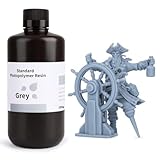
- 【Low Shrinkage and High Precision】ELEGOO photopolymer resin is specially designed for reducing volume shrinkage during the Photocuring process…
- 【Fast Curing and Great Stability】ELEGOO 405nm Rapid Resin was designed to significantly reduce printing time with its excellent fluidity…
- 【Bright and Stunning Colors】With high quality pigments and photo-initiators inside ELEGOO UV-Curing resin, the models printed with resin have a…
- 【Wide Applications】Given the outstanding performances, ELEGOO standard resin is suitable for most DLP/LCD 3D printers. Works best with the LCD 3D…
- 【Safe and Secure Packaging】Leak-proof bottle fully wrapped with a plastic bubble bag and exquisite designed package box make sure the resin stays…
Which ABS-like resin to pick
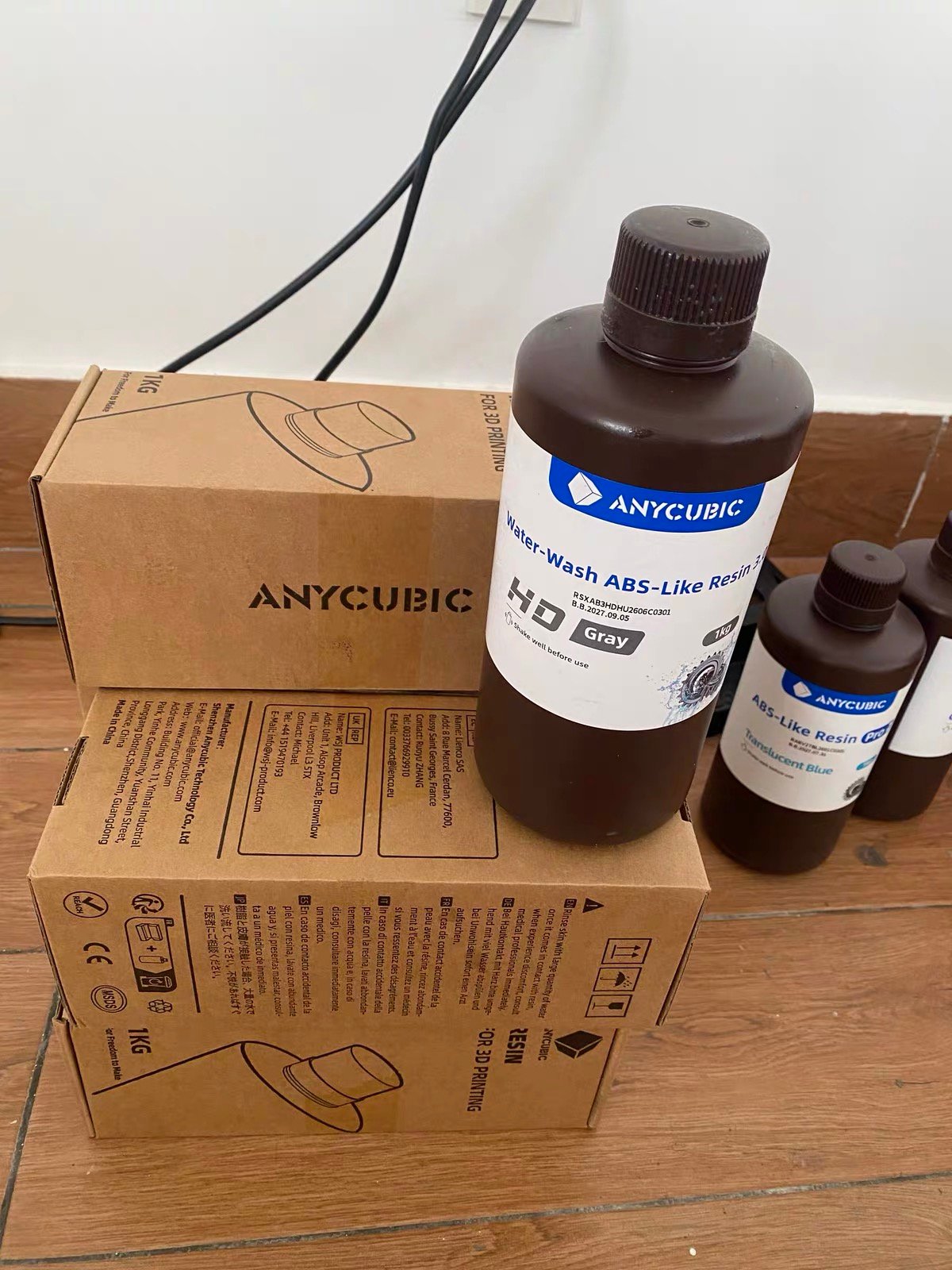
ABS-Like formulations differ more from each other than the category name suggests. The 13-resin comparison ranked three common options this way:
| Resin | Durability rank | Detail rank | Price (Aug 16, 2026) |
|---|---|---|---|
| Sunlu ABS-Like 2kg | 1st of 13 | 12th of 13 | $26.99 (~$13.50/kg) |
| Anycubic ABS-Like Pro 2 1kg | 2nd of 13 | 10th of 13 | $16.99 |
| Elegoo ABS-Like 3.0 1kg | 9th of 13 | 7th of 13 | $16.99 |
Sunlu is the pick when survival matters most and the model won’t be judged up close. Elegoo is the better balance for display pieces you also want to handle. One note on Anycubic: the Pro 2 sells under at least five listings at different pack sizes, and the sticker price hides which is which. These also move fast. We logged one 2kg listing at $24.69 and, checking again a day later, $44.99. Read the pack weight, divide it out, and re-check on the day you buy.
Where water-washable and tough resin fit
Water-washable resin is better than its reputation. It placed 3rd of 13 for durability in the multi-brand test, and in a separate gauntlet it was the first resin to thread a printed bolt into a printed nut with no binding at all. Its weakness is warping, described by one tester as coming out like a potato chip.
Dedicated tough resin sits one notch past ABS-Like on the same curve. Sunlu’s Toughness flexed without breaking where others snapped, but it also placed among the weakest in Noizie Works’ pull test and sagged the most in the stiffness test (11 cm against standard resin’s 1.5 cm). Lychee’s testing of Formlabs’ desktop tough resin found it gives up detail accuracy and makes supports harder to remove.
These four categories sit on one continuous trade-off curve. The tougher a resin gets, the softer and blunter it tends to become.
FAQ
Is ABS-like resin better than regular resin?
For anything that gets handled, dropped, or shipped, yes. It absorbs roughly 2.4 times more impact energy and stretches 3 to 4 times further before breaking. For display models, jigs, or parts under constant load, standard resin is stiffer and, at Elegoo, exactly as cheap.
How much stronger is ABS-like resin?
It isn’t stronger in the tensile sense. Published figures put ABS-Like at 24 to 50 MPa against 32 to 55 MPa for standard resin. The gain is in impact resistance (41 to 48 J/m versus 17 to 20 J/m, about 2.4 times) and elongation at break (20 to 50% versus 5 to 15%).
Can you mix ABS-like resin with standard resin?
You can, and it’s a known workaround for trading detail against flexibility; r/resinprinting has threads working out the ratios. Expect to recalibrate exposure from scratch, because the blend cures differently from either parent. Given that Elegoo charges the same for both, buying the bottle you actually want is simpler than mixing your own.
How long does abs-like resin last?
Sealed and stored away from light, a bottle keeps for around a year. Printed parts are a different question. One returning printer on r/resinprinting recalls ABS-Like parts ending up “just as brittle and weak as normal resin” a few weeks after curing, which would erase the whole advantage. Pushing the other way, Old Ones With Dice ran Sunlu ABS-Like across a six-month stretch without reporting anything like it. Neither is a controlled long-term study, and we found no mechanical testing that settles it, so treat durability over months as an open question.
Which ABS-like resin is the best?
Sunlu ABS-Like topped the durability ranking in that 13-resin test, at the cost of 12th place for detail. Anycubic’s ABS-Like Pro 2 finished 2nd for durability. Elegoo ABS-Like 3.0 is the balanced option, landing 7th on the detail board and 9th on durability. Pick by which property you need most.
Is ABS-like resin toxic like ABS filament?
The risks are real but different. ABS filament releases styrene and ultrafine particles because extrusion temperatures break the plastic down. ABS-Like resin has none of those ingredients and cures under UV at room temperature, so nothing thermally decomposes. Uncured resin still sensitizes skin and its vapor irritates airways, so gloves and ventilation stay mandatory.
Is ABS-like or standard resin better for miniatures?
It depends on whether the minis get played with. Display pieces favor standard resin for sharpness and price. Gaming minis with thin weapons favor ABS-Like, since those parts bend instead of snapping when a model tips over. Priming closes most of the visible detail gap either way.